MOVING TIPS & ADVICE
How to Handle Valuable Large Furniture During a Move
Key answers
The safest way to move valuable large furniture is to measure the route first, check the item condition, dismantle and wrap it properly, then plan enough hands for the move. For stairs, tight corners, glass, antiques, or special installations, confirm the method with the mover in writing.
Assess the furniture and the moving route first
Before moving day, inspect each valuable large item and take photos of existing scratches, loose joints, cracks, or missing parts. Then measure the furniture and also the doorways, corridors, lift size, stair turns, and the new home entrance, so you do not discover a size problem on the day itself.
If the item is an antique, solid wood piece, stone-top table, or glass-front cabinet, decide in advance whether it needs extra protection and tell the mover about the weight, structure, and fragile points. If the item involves electrical wiring, built-in lighting, gas fittings, medical equipment, or other specialist installation, it should be handled by a qualified professional, not by DIY.
Prepare parts and protective materials before dismantling
If the item has removable parts such as table legs, bed frames, cabinet doors, shelves, or sofa feet, take them off before the move to reduce bulk and impact risk. Keep screws, washers, hinges, and small fittings in labelled bags so you can identify which parts belong to which item at the new place.
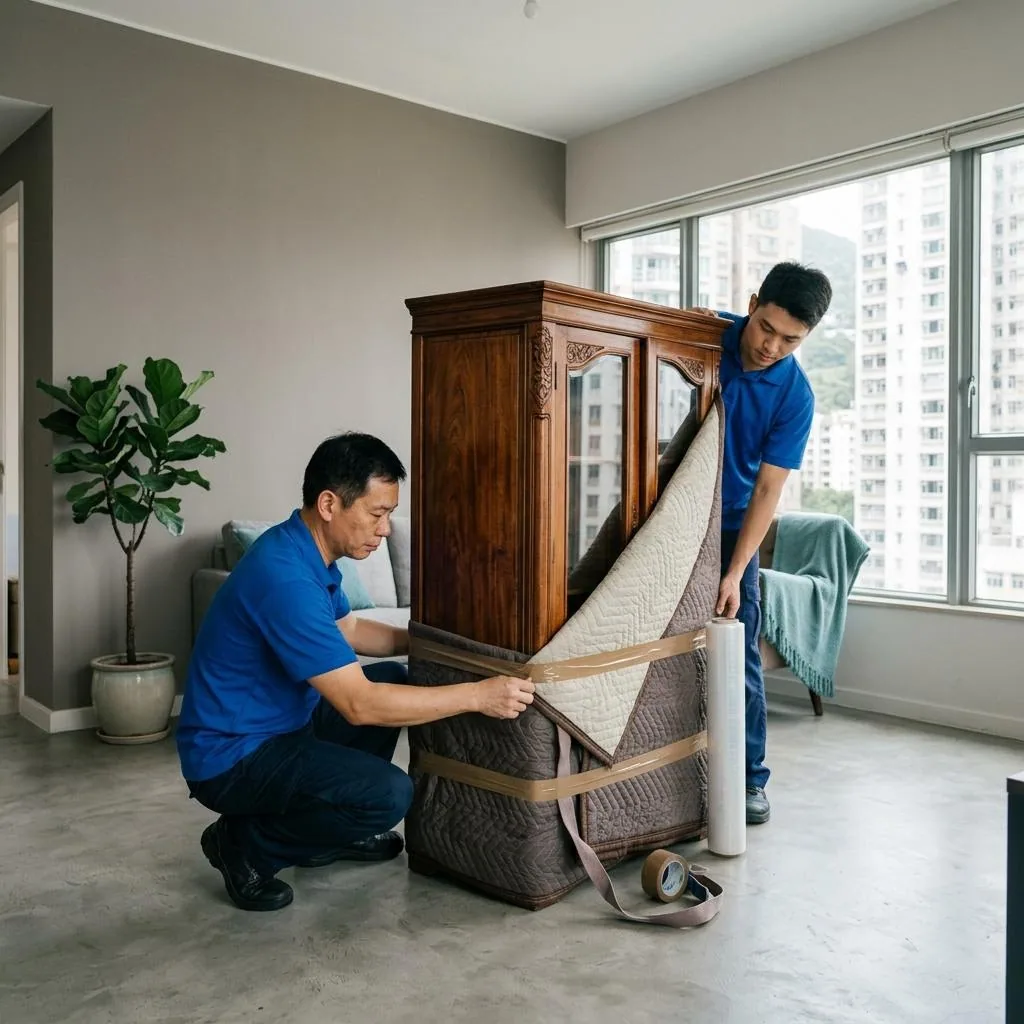
When wrapping, use blankets, foam, stretch film, or thick cardboard to protect edges and corners, but do not stick tape directly on wood, leather, or glossy finishes because it can leave marks. Glass, mirrors, and stone tops need extra padding and clear labels such as fragile, this side up, or do not stack.
Use the right manpower, posture, and moving tools
When moving valuable large furniture, assign clear roles in advance, such as lifting, guiding, opening doors, and watching clearances. Very heavy or oversized furniture should not be carried by one person alone, because that increases the risk of back strain and also makes it easier to scrape walls, floors, or the furniture itself.
If you use moving straps, sliders, dollies, or floor protection, make sure the route is level and slow down at corners, steps, and narrow points. If the staircase is tight, the turn is difficult, or the lift is too small, discuss a split-move plan with the mover ahead of time instead of forcing the item through.
Take extra care with antiques, glass, and high-value items
Antique furniture, custom-made pieces, leather sofas, and other large collectible items may be valuable not only because of the material, but also because of age, craftsmanship, and condition, so the packing and handling must be more careful. If there are carvings, thin edges, loose joints, or fragile finishes, point them out beforehand and ask the mover to confirm the protection plan before loading.
For glass tops, mirrors, stone surfaces, or display units with detachable parts, it is better to move them in sections. Remove what can be separated first, then secure the main body firmly. After arrival, do not rush to unwrap and assemble; check for shifts, pressure marks, cracks, or loose screws first, then reassemble once everything looks safe.
Check on arrival and avoid common mistakes
After arriving at the new home, compare each item with your photos and check the surfaces and fittings one by one. Also inspect door frames, floors, corners, and handrails for marks. If you find any issue, raise it with the person in charge immediately, keep the photos and item list, and request written confirmation of how it will be handled.
Common mistakes include failing to measure the route, leaving obstacles in place, mixing up small parts, wrapping too loosely, using cardboard directly on damp wood in humid weather, and ignoring the difference in temperature and humidity between old and new homes. Before moving day, clear the route, reserve the parking or loading spot, and confirm whether lift booking or time-slot approval is needed.
When to hire a professional moving team
If the furniture is very heavy, high in value, structurally complex, or the route includes stairs, tight corners, walk-up buildings, village-house slopes, or long corridors, an experienced moving team is usually the safer option. Before booking, ask whether dismantling is needed, whether glass or stone surfaces need special protection, whether enough people will be assigned, and how last-minute issues will be communicated.
When choosing a mover, do not look at price alone. Ask how they handle high-value furniture, whether they provide a pre-move assessment, what situations are excluded, and whether the terms are clearly set out in writing. If anything is unclear, request written confirmation first and then choose the service that fits your actual needs.
Frequently Asked Questions
What is the first thing to do before moving valuable large furniture?
Take photos of the current condition, then measure both the furniture and the route so you know whether the doorway, corridor, lift, and stairs are passable before moving day.
Which furniture items are usually better to dismantle first?
Removable parts such as table legs, bed frames, cabinet doors, shelves, and sofa feet are usually best taken off first, with screws and small fittings kept in labelled bags.
What is the most commonly overlooked part of packing valuable furniture?
People often forget that tape should not go directly on wood or leather, that glass and stone need stronger protection, and that small parts must be labelled so they do not get mixed up.
What should be done differently for antiques or high-value furniture?
Tell the mover about the material, age, fragile points, and weight in advance, ask them to confirm the protection method, and inspect the item again after arrival before assembly.
When should you choose a professional moving team?
If the item is heavy, expensive, complex, or the route has stairs, narrow turns, no lift, or a slope, a professional team is usually more suitable; ask for written confirmation of the details first.


