MOVING TIPS & ADVICE
How to Pack Pet Supplies When Moving: A Practical Checklist and Arrival Plan
Key answers
Separate pet items into what you need immediately and what can wait, then pack by use and label clearly. On arrival, set up food, water, litter or potty essentials first so your pet can settle faster.
Start with a pet-supplies checklist and separate essentials
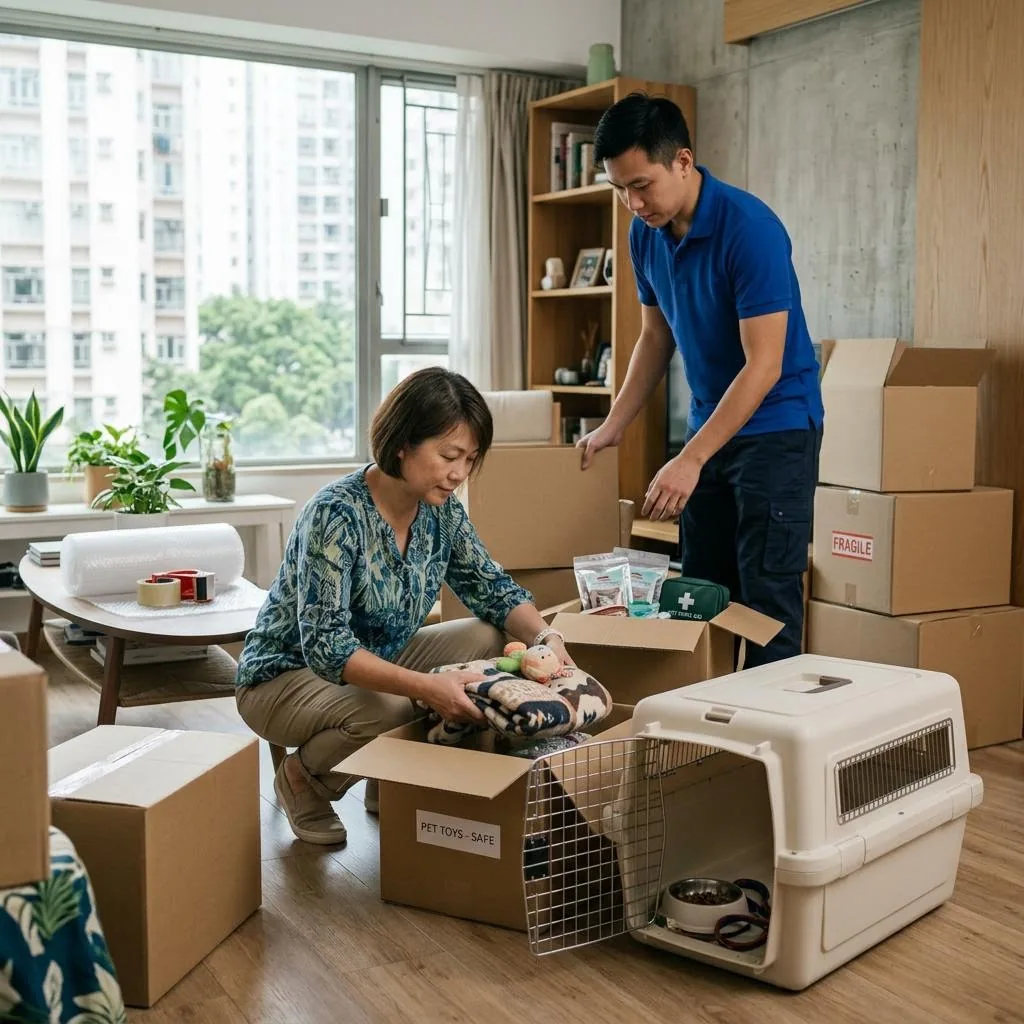
Before packing, list every item your pet uses in daily life: food, bowls, treats, toys, bedding, towels, cleaning items, waste bags, litter accessories, leash, and a carrier or travel crate. Do not write only broad categories; note actual quantities so you do not lose track once boxes are stacked in the new home.
Then split everything into two groups: items needed on moving day and within the first two days, and items that can stay packed a little longer. Keep the first group easy to reach and pack the second group with the rest of the household belongings. If you have more than one pet, separate items by pet so you can set up each animal’s space quickly.
Pack by category to avoid mixing items
Do not put food, cleaning products, toys, and bedding into one mixed box. Food should be sealed separately to avoid moisture and crushing; bottles and cleaning items should be packed on their own with caps tightened to prevent leaks from spreading to other belongings. Keep litter, sprays, and detergents apart from fabric items whenever possible.
For breakable bowls or dishes, wrap them individually and place them in a sturdy box with paper, old clothing, or towels filling the gaps. Write the contents and a handling note on the outside, such as pet bowls, open first, or fragile. This makes unloading and unpacking much easier and helps avoid accidental damage.
Use the right packing materials and keep items clean
When packing pet supplies, the goal is not to wrap everything in layers of material, but to keep items clean, stable, and easy to identify. Wash and dry blankets, beds, and cloth toys before packing them in dust covers or bags so they do not pick up dirt from floors or surrounding boxes. If an item has a strong smell, clean it early or repack it to reduce lingering odours in the new home.
For heavier or bulkier items such as large litter trays, storage tubs, or pet beds, empty and wipe them first, then pack only what can be safely carried. Do not overload one large box with too much weight, because the bottom may give way during moving. If you are unsure whether an item should share a box with other goods, pack it separately to lower the risk of damage.
Prepare an essentials box for immediate use after arrival
On moving day, prepare an essentials box for the items your pet will need first: a small amount of food, water bowls, waste bags, litter or potty items, towels, a favourite toy, and any temporary setup items. Keep this box separate from general cartons and carry it yourself if possible, so it is easy to find once you reach the new place.
After arrival, set up a quiet corner before unpacking everything else. Place familiar items there first, such as bedding, feeding areas, and the toilet area, so your pet can recognise the space. Do not spread every new and old item out at once, because too many changes can make it harder for your pet to settle. Restoring a simple routine first usually works better than unpacking all at once.
Reduce stress for your pet before and after the move
Pets often react to moving noise, strangers coming and going, and furniture being shifted around. During packing, keep them in a quiet room where doors and windows are secure, and make sure water, ventilation, and supervision are arranged. If you need to put away familiar items temporarily, leave one or two scented blankets or toys nearby to preserve a sense of safety.
Once in the new home, place food, water, resting, and toilet spots in familiar positions first instead of changing everything at once. If your pet seems especially unsettled, limit access to unfamiliar areas and let it explore gradually. For animals that are highly sensitive to change, ask a veterinarian or another qualified professional for appropriate care advice in advance rather than waiting until moving day.
When to ask the mover about special handling
If your pet items include a large crate, fragile bowls, heavy storage boxes, or anything that needs a specific loading position, tell the mover before booking and request written confirmation of the scope, access arrangements, and any required dismantling or coordination. Do not assume every detail will be handled automatically, especially where corridors are narrow, lift access is limited, or passage needs to be reserved.
If a box contains medication, special cleaning agents, or other materials that require professional handling, separate them and deal with them according to the proper rules instead of mixing them with ordinary belongings. Electrical items, heating devices, lighting units, or anything needing connection, repair, or technical installation should be left to qualified professionals; the key is safe separation during the move, not on-the-spot DIY handling.
Frequently Asked Questions
What should I pack first for my pet when moving house?
Pack the backup items first, then keep the essentials for moving day and the first two days in an easy-to-reach box, such as food, water bowls, waste bags, litter items, and a towel.
Can pet toys and bedding go in the same box as other household items?
Yes, but it is better to keep them separate from food and cleaning products. Wash and dry fabric items first, then pack them in their own bag or box.
What is the safest way to pack fragile pet bowls?
Wrap each bowl individually with paper, towels, or cushioning material, then place them in a smaller sturdy box and fill the gaps so they do not move during transit.
What should be set up first in the new home for a pet?
Start with water, feeding, and toilet areas so your pet can find familiar routines quickly, then arrange the rest of the items gradually.
How should I handle a large pet crate or special item?
Tell the mover the size, weight, and placement needs before booking, and ask for written confirmation. If an item needs specialist handling, arrange a qualified professional separately.


