MOVING TIPS & ADVICE
Furniture Disassembly Tips for Moving: Checks, Labelling, and Safe Handling
Key answers
Before moving, decide whether a piece should be disassembled, prepare tools and photos, and label every screw and part. For large, old, or complex furniture, confirm the plan in writing and avoid forcing unknown joints or any specialist technical work.
First decide whether disassembly is really needed
Not every piece of furniture should be taken apart. Check the width of stairs, lifts, corridors, and door frames first, then compare them with the furniture dimensions. If a piece can turn corners and pass through safely, moving it whole is often faster and reduces the risk of loose panels, scratches, and reassembly errors.
Only consider disassembly for modular or designed-to-be-separate items. For solid wood furniture, older joinery, glass inserts, thin shelves, or anything with an unclear structure, do not force it apart. Electrical, gas, built-in lighting, smart, or other wired components should be handled by the appropriate qualified professional.
Before you start: tools, photos, and parts control
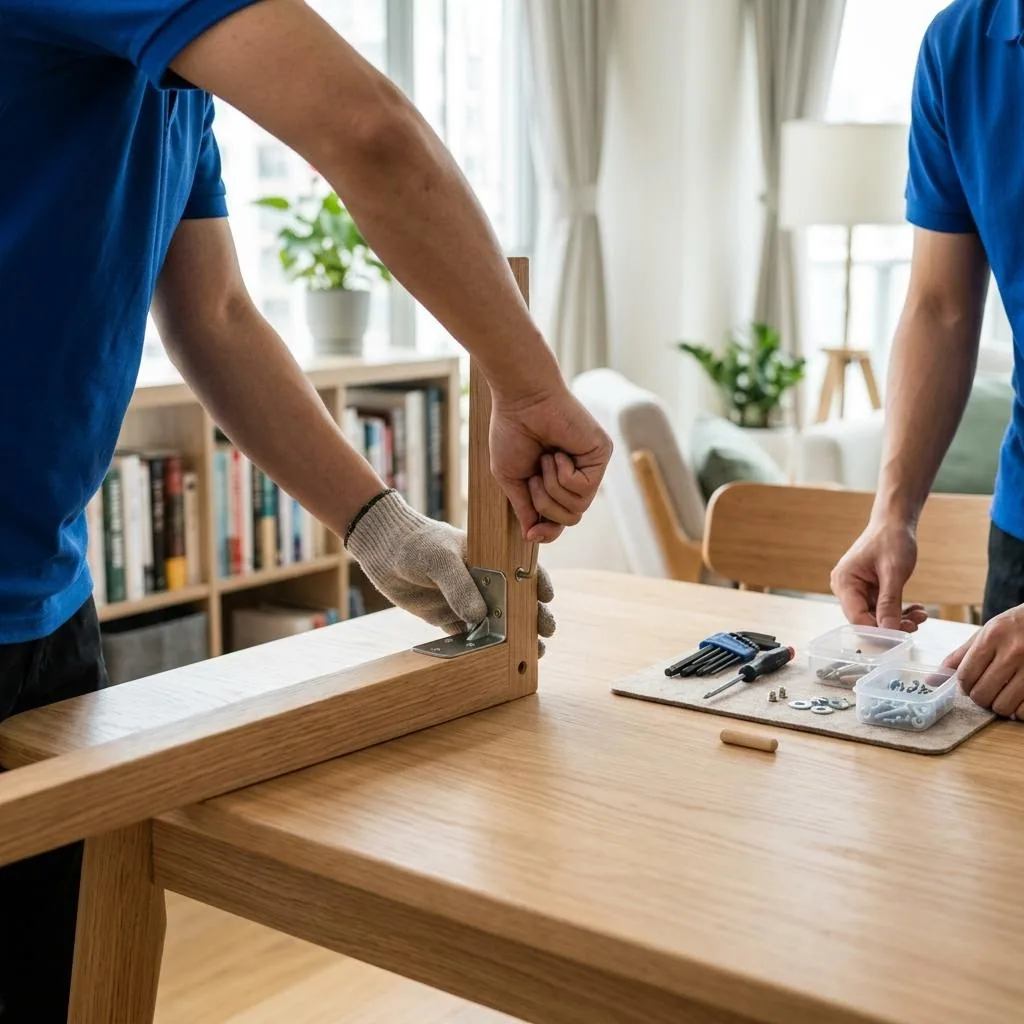
Before dismantling, empty drawers and cabinets completely, remove loose shelves, and prepare screwdrivers, hex keys, a wrench, plastic bags, tape, label stickers, and your phone camera. Take photos at each step, especially of holes, fittings, cable routes, and the direction of hardware, because reassembly becomes much easier later.
Keep screws, nuts, washers, and small fittings in separate bags by furniture item or part, and write the name and position on each bag, such as left bed head panel or upper wardrobe hinge. If you still have the instruction manual, keep it with the same set of parts so nothing gets lost after the move.
Practical points for larger furniture
Beds, wardrobes, dining tables, and modular cabinets usually start with outer fittings before the main frame. Loosen the fixings in the original load direction and remove them one by one. Do not take out every connection at once, or panels may drop suddenly, hole positions may be damaged, or boards may crack.
For sofas, mattresses, back panels, and removable seat cushions, separate the soft parts first and then handle the frame. If the backrest, armrest, or legs are clipped in, release them according to the original structure instead of pulling hard. Glass doors, mirrors, and fragile panels should be wrapped separately before the main body is handled, and they are usually safer to carry upright.
Labelling, grouping, and packing for easier reassembly
After disassembly, group parts immediately by room or by furniture type, and keep the fittings and accessories of the same item together. Labels should clearly show use, direction, and installation position. Colour-coding left, right, top, and bottom is especially useful for wardrobe doors, bed boards, and shelves that are easy to mix up.
For packing, use moving blankets, thick cloth, or bubble wrap to protect surfaces, but do not stick tape directly on veneer or lacquer finishes. Keep long screws, short screws, and special bolts separate. If any part is worn, stripped, or loose, ask the original manufacturer, a technician, or another qualified professional before deciding whether it should be replaced.
Move-out handling and reassembly at the new home
Measure turns, doorways, and lift sizes before moving out, and arrange enough helpers to support the weight without dragging items on the floor. If stairs are narrow or the building has more floors, smaller pieces may be easier to handle, but each panel still needs proper support so corners do not carry the full load.
At the new home, check the walls, floor, door frames, and furniture surfaces for damage before reassembly. Use your photos and labels to rebuild the main frame first, then add doors, shelves, and drawers. If holes do not align, boards are warped, screws will not hold, or the item needs electrical, gas, or structural fixing, stop and call the right professional instead of continuing DIY work.
Common mistakes and when to call a professional
Common mistakes include starting without photos, mixing up parts, forcing clips open, ignoring door-frame size, over-tightening during reassembly, and treating damp or brittle boards like ordinary furniture. For old solid wood pieces, custom-made items, fragile finishes, or furniture with an unknown internal structure, ask for a clear quote and scope in writing before you begin.
If you are unsure whether a piece can be dismantled safely, ask the moving company whether they can help with general furniture disassembly and confirm in writing who will dismantle, pack, move, and reassemble. For large or special items such as pianos, safes, or homes with narrow village-house or tenement access, send photos and measurements in advance so the arrangement can be planned properly.
Frequently Asked Questions
Which furniture items are usually suitable for disassembly during a move?
Modular bed frames, wardrobes, dining tables, cabinets, and some sofas are common candidates, but the final choice depends on the structure and the access route.
What is the most important preparation before taking furniture apart?
Empty the furniture, photograph the structure and hardware positions, and keep all screws and small parts in clearly labelled bags.
Can I force open a clip or joint if it is stuck?
No. Forcing clips, joints, or thin panels can cause breakage or warping. If the structure is unclear, check the manual or use a qualified technician.
How should I pack furniture parts after disassembly?
Group parts by item, protect surfaces with blankets, thick cloth, or bubble wrap, and store fittings separately so metal parts do not scratch the boards.
When should I call a professional instead of doing it myself?
Call a professional for large, old, custom-made, glass, complex, or technical furniture, or any item that needs electrical, gas, or wall fixing work. Ask for written confirmation first.


