MOVING TIPS & ADVICE
How long should you allow for packing before a move?
Key answers
Most homes need at least 1 to 4 weeks, depending on size, household members, and clutter. Start with seldom-used items first, then leave daily essentials for the final few days.
Why packing cannot be left to the last weekend
Packing usually takes more time than moving day itself because it includes sorting, deciding what to keep, labelling, and protecting items. In Hong Kong homes, limited storage space and busy work schedules make a last-minute rush especially unrealistic.
If you only have one or two days, you often end up shifting clutter from one corner to another instead of finishing properly. It is better to estimate the hours you can actually spare each evening, then plan backwards from the moving date.
A realistic time estimate by home size
For a one- or two-person flat of about 300 to 400 square feet, allow at least 1 to 2 weeks. For a family home of around 500 square feet or more, a safer range is 3 to 4 weeks. This assumes you are packing in evenings and weekends, not full days.
If you rarely organise storage areas, or you have built-up items in wardrobes, under-bed boxes, and cabinets, add extra buffer time. When the schedule is too tight, people usually skip sorting and labelling, which creates more work after moving in.
Use a cold-to-hot packing order
Start 3 to 4 weeks ahead with the least-used items, such as store rooms, under-bed storage, old books, seasonal clothes, collectibles, and spare household items. These are the easiest to box first because your daily routine will not be affected.
At 1 to 2 weeks before moving, pack living-room decor, spare kitchenware, tools, and backup bedding. Leave everyday essentials for the final 1 to 3 days, including toiletries, regular clothes, chargers, frequently used medication, and basic cooking items.
Common delays and packing mistakes
Many people delay because they keep deciding whether to keep, discard, or relocate each item. That hesitation slows everything down, so the moving date arrives before the work is finished. A little decision-making each day is much easier than one exhausted rush at the end.
The most common mistakes are overloading boxes, mixing cleaning products with food or kitchenware, failing to protect fragile items, and forgetting to mark what each box contains. Important papers and chargers should be kept separate so they are easy to find on arrival.
How to pack more efficiently
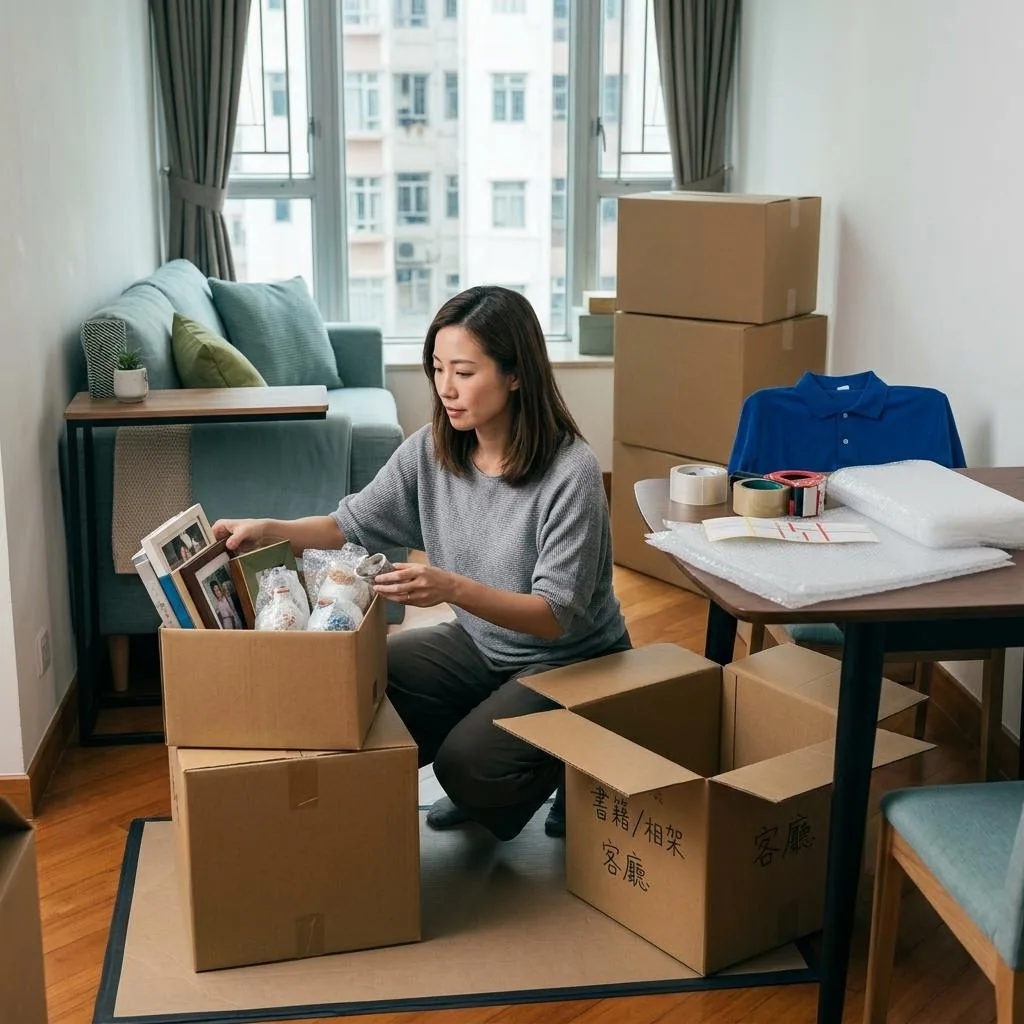
Prepare enough boxes, tape, labels, a thick marker, and cushioning material, then pack one room at a time. Keep similar items together, write the destination room on each box, and mark priority boxes as first-open or last-open so unpacking is much easier later.
Set aside a separate first-night box with water, towels, basic tableware, chargers, toiletries, and a change of clothes. If your move involves large appliances, gas-related work, built-in fixtures, medical devices, or other specialist tasks, use the appropriate qualified professionals instead of attempting risky DIY.
When to consider outside help
If you are working long hours, caring for family members, or facing a very tight moving schedule, packing everything yourself may not be practical. You can ask for help with selected rooms or packing tasks, but always confirm the scope, timing, and materials in writing.
To keep costs under control, you may handle personal items yourself and leave heavy boxes, fragile items, or full-home organisation to others. Whichever route you choose, start early, work in stages, and check the address, keys, flat number, and essentials again the day before the move.
Frequently Asked Questions
How much time should I allow for packing before moving?
A small flat usually needs 1 to 2 weeks, while a family home may need 3 to 4 weeks. Add extra time if you are very busy or have a lot of clutter.
Can I pack everything the night before moving?
That is not recommended. The final night should be for last checks and essentials only, otherwise you risk poor labelling, rushed packing, and missing items.
What should I pack first?
Start with the least-used items, such as storage areas, old books, seasonal clothes, and spare household items, then work toward daily necessities.
What packing mistakes happen most often?
The most common issues are overfilled boxes, poor labelling, fragile items without protection, and mixing daily essentials with long-term storage.
What should I ask if I hire packing help?
Ask what is included, how long it will take, whether materials are provided, and request written confirmation of the scope before you agree.


