MOVING TIPS & ADVICE
How to Organize Moving Boxes After a Move: A Room-by-Room Approach
Key answers
Start with essentials, then unpack by room and by use frequency. Clear labels, open pathways, and prompt box sorting help restore order quickly and reduce missed items.
Set the order before opening every box
After a move, the main problem is often not the number of items, but having every box piled together and turning the new home into a temporary storage area. A better approach is to set an unpacking order by daily need, room purpose, and how often each item is used, so you do not scatter things around in a rush.
It is fine if everything is not finished on the first day. Keeping the boxes in one place and unpacking them in stages is easier to manage than opening them all across the flat. If large furniture has not yet been positioned, keep a clear walkway and working space first, then sort the smaller items later.
Open the essentials you need right away
The first boxes to open should be the items you need that night and the next morning, such as sleepwear, towels, basic toiletries, a phone charger, simple tableware, regular medication, and important documents. If these were packed separately before the move, you can save time and avoid a stressful search when you arrive.
Place those essentials where they are easy to reach and let the household return to basic routine first. If children or older family members are moving in, prioritize daily essentials and necessary clothing so the new home feels usable and settled from the start.
Unpack by room for better control
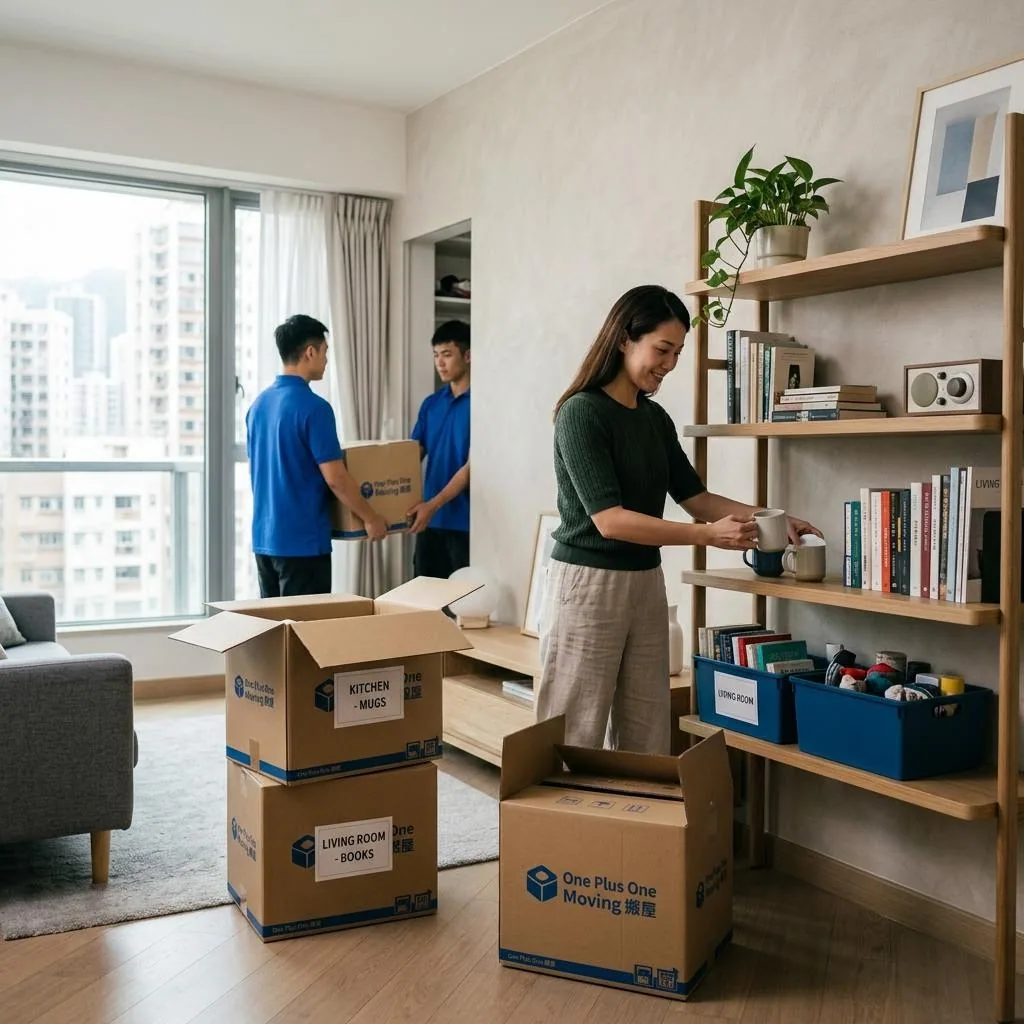
Boxes should not be opened at random. A more practical method is to work by room, such as the bedroom first, then the bathroom, followed by the kitchen and living room. Focusing on one area at a time makes it easier to decide where items belong and reduces unnecessary back-and-forth carrying.
If the box labels are unclear, start with a simple sort by category, such as clothing, kitchenware, documents, and cleaning supplies. Avoid moving around the flat while opening boxes, because it becomes easy to lose track of what has already been unpacked and what still needs a place.
Put everyday items back first, leave low-use items for later
You do not need to finish every item at once. A more realistic method is to put away the things you use every day first, such as regular clothing, basic kitchen tools, cleaning supplies, work papers, and children's items. That helps restore normal living functions before you deal with decorations, collections, spare bedding, and old files.
Use the unpacking stage to check whether everything still deserves a place in the new home. If a box still has no clear destination after moving in, the issue may not be storage space but item volume. Re-sorting now is usually better than forcing everything into a cupboard later.
Check for damage, keep pathways clear, and handle empty boxes promptly
While unpacking, check for dampness, dents, missing pieces, or other damage, especially for fragile items, glassware, picture frames, and small appliances. If packing materials are still in good condition, such as boxes, fillers, or protective padding, keep only what you may genuinely reuse; do not keep damp or broken materials indoors for long.
Do not leave empty boxes or unsorted items in hallways, by the door, beside the bed, or at the kitchen entrance. Early in a move, the traffic flow of the home is still new, and blocked paths make cleaning harder and increase the chance of trips and bumps. Once you are done, fold and group recyclable boxes as soon as possible.
Use box sorting as a chance to reset storage
Unpacking is not only about putting things back where they were; it is also a good time to rethink how the household is organized. Look at the new layout, cupboards, corners, and traffic flow first, then decide whether frequently used items should go in easy-reach spots and low-use items in higher or storage areas. If some things still have no clear place, they may need to be reclassified.
If you have many boxes, limited space, or you need to handle disposal and storage arrangements at the same time, make a list and work through it in order. The goal is not to finish everything at once, but to restore normal living first and then refine the storage plan step by step.
Frequently Asked Questions
Which boxes should I open first after moving in?
Start with essentials you need that day or night, such as sleepwear, towels, toiletries, chargers, basic tableware, regular medication, and important documents, then unpack by room and by use frequency.
What is the best order for unpacking moving boxes?
A practical order is bedroom first, then bathroom, kitchen, and living room. Working one area at a time makes it easier to put items away and reduces repeated carrying.
What should I do if the boxes are not labeled?
Sort them first by category, such as clothing, kitchenware, documents, and cleaning supplies, then unpack box by box. For the next move, write the room name and contents on each box before moving day.
Can empty boxes stay in the home for a long time?
It is better not to leave them around. Empty boxes take up space, block walkways, and make cleaning harder. Fold and group them for recycling or disposal once they are no longer needed.
When should I ask a moving team for help?
If you have many boxes, blocked access, large furniture that still needs repositioning, or you need help coordinating disposal and storage, ask for help and request written confirmation of the service scope.


