MOVING TIPS & ADVICE
How to Move a Fridge and Large TV Without Damage: Protection Guide for Big Appliances
Key answers
Fridges and large TVs are most vulnerable to tilting, pressure, and impact. This guide explains preparation, packing, stair handling, settling time, and post-move checks to reduce the risk of damage.
Why fridges and large TVs are the most damage-prone items
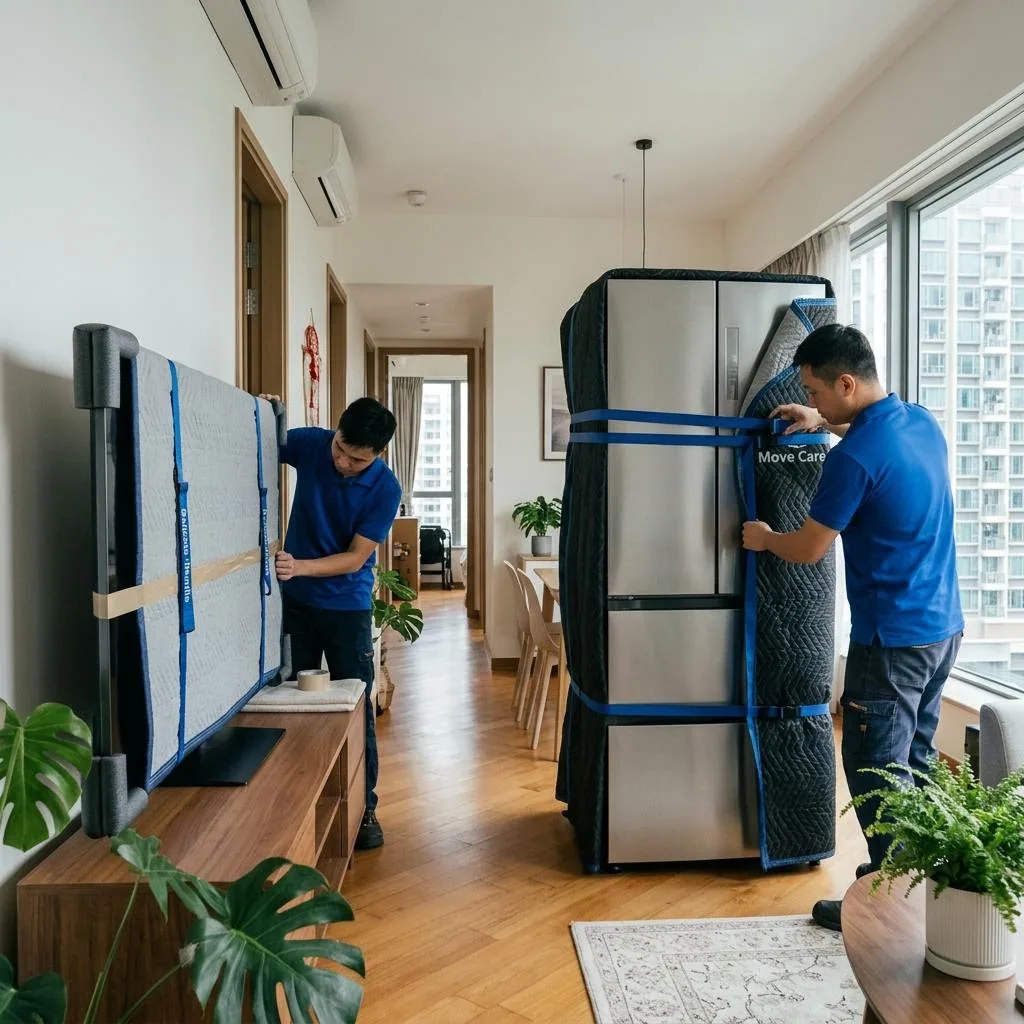
A double-door fridge is top-heavy and bulky, so it is vulnerable to corner impacts, sudden stops, and long periods of tilting. A large TV is the opposite: it may look slim, but the panel and frame are highly fragile, and even moderate pressure can cause cracks, leaks, or dark spots. In Hong Kong, lift cabins, tenement stairs, and narrow corridors often leave very little turning space, so manual lifting without a plan can easily go wrong at door frames, steps, and floor edges.
Before moving day, measure the route, including door openings, lift depth, turns, and the loading point of the vehicle, to make sure the appliance can pass upright. If there are glass doors, removable feet, or loose accessories, sort them out in advance so they do not come loose or get scratched in transit. Do not focus only on the weight; also check for slopes, rough ground, or slippery areas along the route.
What to prepare before moving a double-door fridge
Before moving, empty the fridge, freezer trays, and any removable items, unplug it, let the frost melt naturally, and wipe away internal moisture. Check the door gasket and the base for trapped water as well. If the fridge has an ice maker, water line, or filter parts, remove or secure them according to the manufacturer instructions; do not tug on hoses yourself. Any electrical or plumbing connection work should be handled by a qualified technician.
During transport, the fridge should stay upright as much as possible, wrapped at the corners and door edges, then secured with straps inside the vehicle to prevent shifting. If the route forces a brief tilt, keep it as short as possible. After arrival, place it level and let it settle for a suitable period before powering on; the exact waiting time should follow the manual, the travel conditions, and the amount of tilting. If you are unsure, confirm with the supplier or a qualified repair professional.
How to pack a large TV safely
Screen protection is the priority. If you still have the original box and foam inserts, use them first. If not, wrap the front and back with thick bubble wrap, foam sheets, and rigid boards, then add corner protectors so the panel is not directly pressed. Do not tape directly onto the screen surface, and do not leave the remote, stand screws, or cables loose in the box. Keep small parts in labelled bags so they are easy to reinstall later.
A large TV should never be laid flat on the floor of the van or buried under other items, because bending and concentrated pressure can damage the panel. The safest position is upright, with anti-slip and securing measures inside the vehicle. When passing through tight doors or stairs, one person should watch the clearances and protect the edges from wall contact. If the TV is too large, the staircase is too tight, or the frame is too thin, tell the mover first and ask for a feasibility check instead of forcing it.
Details that are easy to miss on stairs and at the vehicle
Large appliances are most often damaged when they are loaded, unloaded, carried through door frames, or turned on stairs. Before moving, clear away clutter, thresholds, and slippery items, and leave enough room to turn. If the job involves tenement stairs, measure the width, handrail area, and turning height first so the item does not get stuck halfway. The team should have clear roles, and the people at the front and back should move in step. When turning, stop first, then turn, then continue; do not pull while walking.
If a lift is used, confirm the internal dimensions, door width, and load capacity first, and protect the lift walls and door edges with padding to reduce scratches. If the appliance is too large or too heavy, do not force it into the lift. If door frames, doors, or fixed parts would need to be removed, do not do it yourself; confirm with property management and a qualified tradesperson first. It is also wise to have someone accompany the vehicle to watch for loose straps, shifting, or impact sounds.
Settling, powering on, and first checks at the new home
After delivery, place the fridge upright, level it, and clean the exterior before powering on. Then allow enough settling time according to the manual. If it was tilted during transport, the journey was long, or the weather was hot, a more cautious waiting period is better. After plugging in, listen for normal compressor operation and check whether the door seals properly before putting food back inside. If you notice odour, unusual vibration, or poor cooling, stop using it and ask a qualified repair professional to inspect it.
For the TV, check the screen for pressure marks, dead pixels, dark patches, or frame deformation before you test picture and sound. If the stand, wall mount, or cable routing needs to be reinstalled, let a qualified installer handle it; do not drill, rewire, or modify power points yourself. Keep the packaging, screws, and accessories for a while until you are sure everything is working normally.
Questions to ask before booking a mover
Ask whether the mover has handled similar large appliances before, whether enough workers will be assigned, how the items will be secured, how they deal with tenement stairs or lift-free buildings, and whether packing materials must be prepared by the customer. If the TV is unusually large or the fridge is a double-door or multi-door model, provide exact dimensions and the route in advance so they can assess the job first. Most importantly, ask for any limits, responsibilities, and special arrangements to be confirmed in writing when needed.
If you want to compare options, check Moving house price list and Service terms first so you understand the charges and conditions before deciding whether you need extra packing, a specific time slot, or a split move. If the job involves appliance repair, plumbing or electrical work, wall mounting, or other specialist tasks, the mover can only handle transport; technical work should be assigned to qualified professionals.
Frequently Asked Questions
Does a double-door fridge have to stay upright during a move?
Yes, it should stay upright whenever possible. Long periods of tilting can affect the compressor and oil flow. If a short tilt is unavoidable, keep it brief and let the fridge settle after delivery before powering it on.
What if my large TV no longer has the original box?
Use thick bubble wrap, foam sheets, rigid boards, and corner protectors, and keep it upright during transport. Do not lay it flat or place heavy items on top. For very large sets, ask the mover to assess the packing plan first.
How long should I wait before plugging in a fridge after moving?
It depends on the route, whether it was tilted, and the manufacturer guidance. The cautious approach is to let it settle first and then power it on. If you are unsure, check the manual or ask a qualified repair professional.
Can the TV stand or wall mount be removed during moving?
Removable parts can be taken off according to the manufacturer instructions. But if the job involves wall mounts, drilling, electrical work, or cable changes, a qualified installer should handle it. Do not attempt it yourself.
How can I tell whether a mover can handle these large appliances?
Ask about staffing, securing methods, tight-space handling, packing materials, and whether any limits will be confirmed in writing. It also helps to provide actual dimensions and photos so the mover can assess the route in advance.


