MOVING TIPS & ADVICE
Practical Guide to Dry and Safe Moving in Heavy Rain
Key answers
In Hong Kong’s heavy rain, the key is not rushing the move but planning packing, access routes, loading, and arrival checks so belongings stay dry and people stay safe.
Check weather and moving feasibility first
Before moving day, review the latest weather warnings, road flooding updates, and building access conditions, then decide whether to continue, delay part of the work, or move only the most moisture-sensitive items. If there is severe rain, a black rain warning, or major transport disruption, do not force a full-day completion; ask the mover whether a split schedule or a change of time is possible, and request written confirmation of the plan.
The first priority in heavy rain is protecting people and belongings, not finishing fast. Items such as electronics, documents, cameras, books, and fabric furniture should be sorted in advance so the most vulnerable pieces are handled first, while non-urgent items can stay behind temporarily or be stored elsewhere to reduce mistakes caused by rushing.
Indoor packing: keep out moisture before you leave
When packing, start with a simple rule: separate from moisture first, then box up. Cardboard boxes should not be placed on wet floors or in damp corridors; use inner liners, thick bags, or sealed wrapping for items that absorb moisture easily. Label boxes by contents and fragility so movers do not stack them under heavier loads.
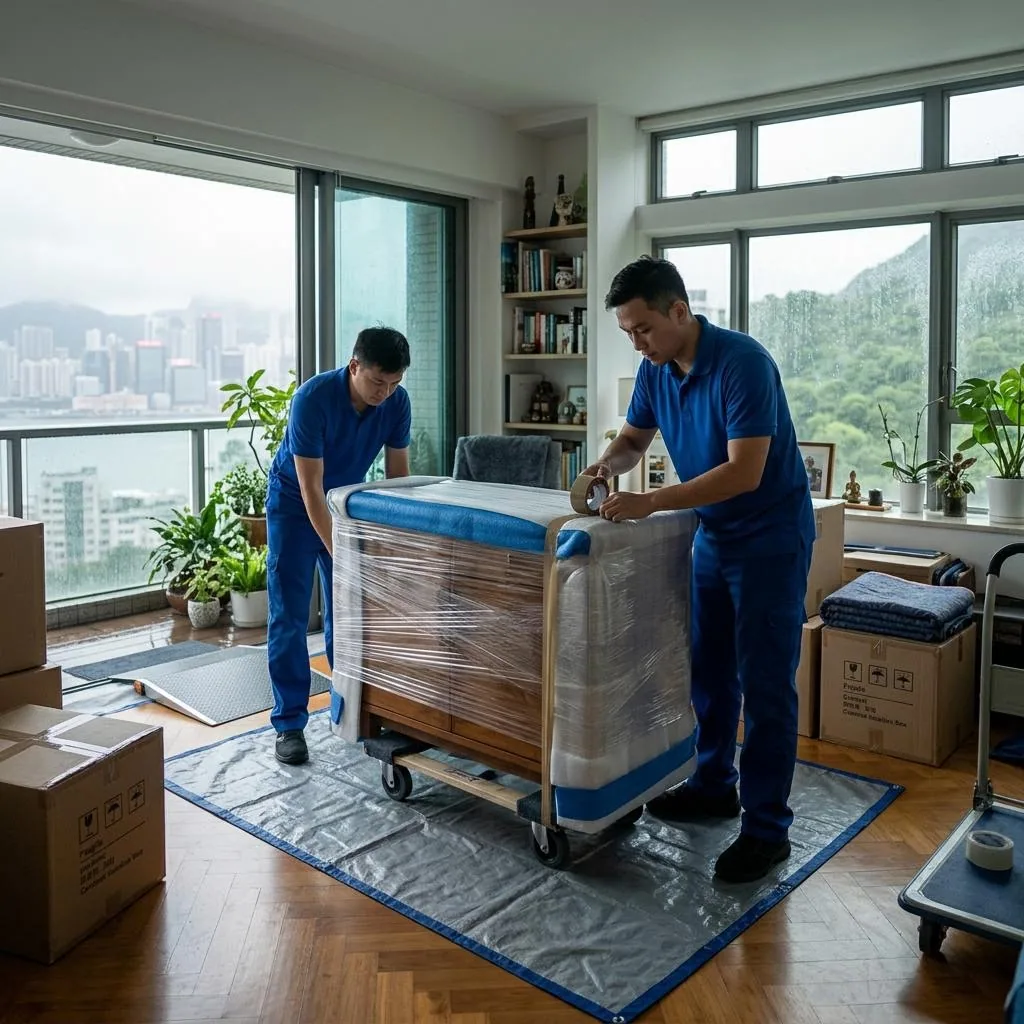
Mattresses, sofas, wooden furniture, and other absorbent items should be cleaned first, then covered with suitable protective wrapping or fabric covers, with extra attention to edges and corners. After packing, check for any gaps, loose ends, or tears, because rainwater usually enters through small openings rather than soaking the whole item at once.
Route planning: reduce time in wet areas
Inside the flat, plan the shortest and driest route from room to door, then to the lift or stairwell. Use absorbent mats, anti-slip mats, or dry cloths near the entrance and hallway, and set aside one temporary holding area so items can wait under cover instead of blocking the passage.
If the building has a loading bay, back entrance, or covered drop-off point, check with management in advance whether it can be used and for how long. On moving day, assign enough helpers to coordinate at the door, handoff point, corners, and vehicle entrance; if one person is trying to handle too many items, packaging is more likely to get wet or damaged.
Loading, unloading, and vehicle moisture control
Whenever possible, complete the handoff under cover and move items quickly into the vehicle instead of sorting them in the open air. Keep a clean dry space in the vehicle for the items most sensitive to moisture, and separate them from umbrellas, raincoats, moving tools, and any damp boxes. If the cargo area is already damp, wipe it dry before loading the next batch.
Load large and heavy items first, then smaller boxes, and place documents, electronics, and valuables in the most stable positions where they can be secured against movement. After arrival, check for water marks before unloading by room, and do not pile everything at the doorway, or the entrance floor can become wet and the path can become blocked.
What to check and do after arrival
Once items are inside, inspect the outer packaging for seepage, soft box bottoms, swelling wood, or damp paper. If only light moisture is present, open the wrapping to let air circulate and separate wet outer layers from dry contents. If any electrical item, plug, or extension lead may have been exposed to water, do not power it on immediately; have it checked by a qualified professional first.
Use dehumidifying or ventilation in the new home, but do not rely on cold air alone, because moisture can remain in corners, cabinet bases, and floor gaps. The practical approach is to position major furniture first, then unpack and dry items in batches while also clearing water from the entrance and hallway so no one slips again during the move-in process.
Questions to ask a mover before booking
Ask directly whether rain-day moving is allowed, what happens if the weather worsens, whether the job can be split into stages, how loading access will be handled, who provides packing materials, and what the plan is if the building restricts loading at the last minute. These questions are more useful than asking whether the mover is simply 'waterproof', because the real issue is site coordination, not slogans.
If a mover says there is nothing to worry about and every item will stay perfectly dry, ask for written confirmation of the service scope and limits, and check Service terms for the conditions. If you want to compare service scope or make a booking, you can also review Online Quote, Box packing service, or Moving checklist before deciding whether to schedule the move during heavy rain.
Frequently Asked Questions
Do I have to cancel a move if it rains heavily?
Not always. It depends on the warning level, road conditions, item sensitivity, and building access. If there is severe flooding or transport disruption, it is usually better to delay the high-risk parts and confirm whether the move can be split into stages.
Which items need priority moisture protection?
Documents, books, clothing, cameras, electronics, mattresses, and fabric furniture should be protected first. Anything that absorbs water easily or can deform under pressure should be wrapped separately before moving.
Can I still use cardboard boxes in the rain?
Yes, but they need extra internal moisture protection and sealed edges, and they should never sit directly on wet ground. For items that are highly moisture-sensitive, a more secure packing method may be better.
What should I do first after arriving at the new home?
Check the outer packaging and items for water marks, separate anything damp, clear water from the entrance, and only then start placing items and unpacking in stages.
What if an electrical item may have been exposed to water?
Do not power it on or try to dismantle it yourself. Keep it unplugged, let it dry separately, and have it checked by a qualified electrical repair professional.


