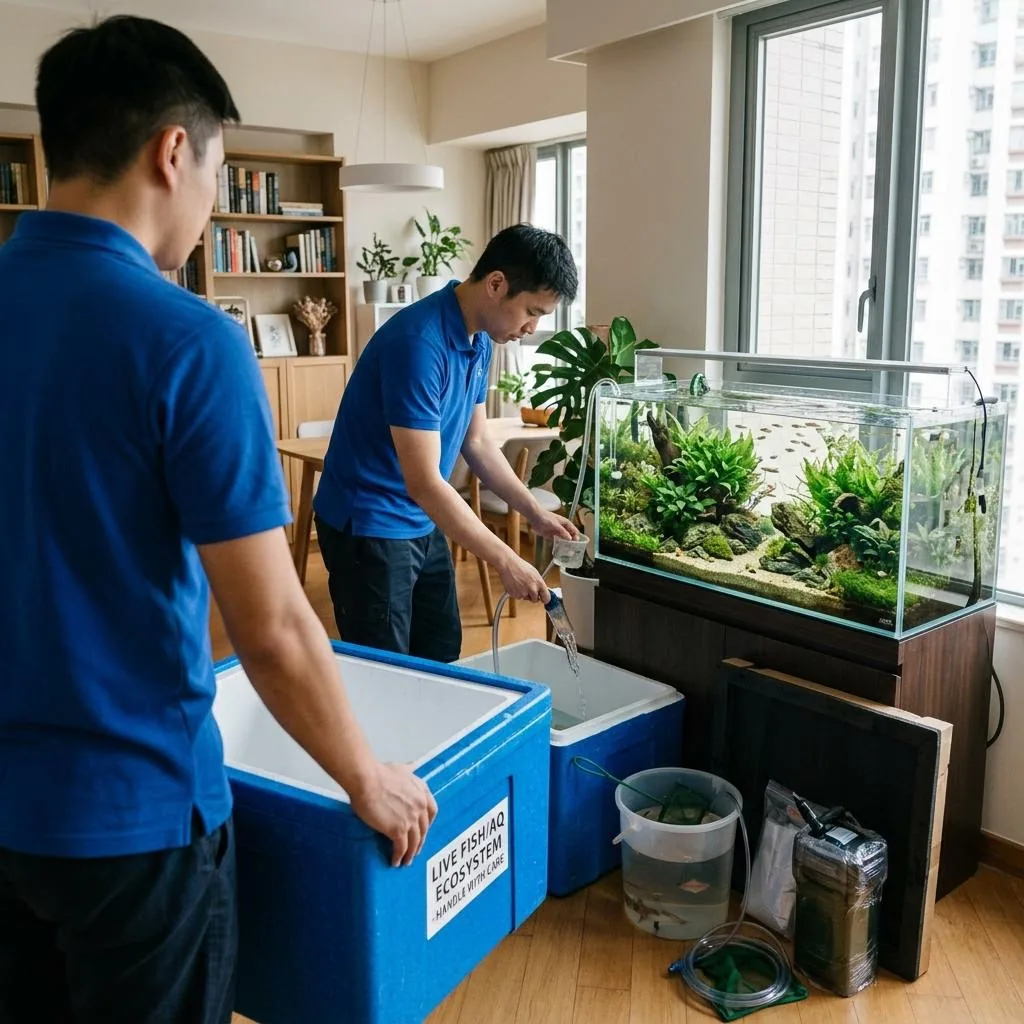
MOVING TIPS & ADVICE
Moving an Aquarium Across Districts: Live Fish, Filter Media, and Resetting
Key answers
Aquarium moving is more than lifting a glass tank. You need to manage live fish, original tank water, filter media, and the reset at the new home. Careful fasting, moisture control, and gradual acclimation help reduce stress and water quality problems.
Decide early whether the move is suitable for self-handling, and plan the route and timing
The main challenge in an aquarium move is not lifting the tank onto a vehicle, but keeping the fish, temperature, and water conditions stable during transit. If you have many fish, a large tank, complex aquascaping, or heavy items such as a sump, external filter, rockwork, or coral, plan time, helpers, and packing space early so the fish are not left exposed while you dismantle everything at the last minute.
Check lift access, stairs, parking, and the path into the new home in advance, and try to avoid peak traffic times. If you are unsure whether the tank can be dismantled, whether the glass thickness can handle movement, or whether other heavy items need to be moved at the same time, describe the details clearly and request written confirmation of what the mover will and will not handle.
Prepare feeding, water changes, and equipment a few days before moving
In the days before the move, reduce feeding gradually and stop feeding about a day before departure to limit waste during transport. Avoid doing a major water change, deep cleaning the filter media, or disturbing the substrate on moving day, because that can destabilise the tank before the fish are even packed.
Set aside nets, a cooler box, clean buckets, bags, rubber bands, towels, labels, and basic tools in advance. If you have plants, driftwood, stones, or electrical accessories, label them one by one so you are not searching for parts after arrival. Any electrical work should be handled by a qualified professional if needed; do not try to disconnect wiring or repair damaged plugs yourself.
Keep some original water and protect the filter media by keeping it moist
You do not always need to keep all the original tank water, but keeping part of it can shorten the adjustment period after reset. More importantly, the filter media must stay moist and should never be rinsed directly with tap water or left to dry out at room temperature; if the move takes longer, place the media in a clean container and cover it to reduce damage to the bacteria colony.
When draining and dismantling the tank, work in order: move the live fish out first, then remove decorations and equipment, and only then deal with the substrate and remaining water. If the system is saltwater, uses a special filtration setup, or contains valuable live stock, take photos of the original layout, waterline, and hose connections before packing so the tank can be rebuilt more accurately at the new home.
Packing, temperature control, and vehicle placement for the fish
When packing fish, the bag should contain enough water for the fish to turn around, but it should not be overfilled, and enough air must be left above the water. If needed, suitable oxygen support may be used, but that should be handled by someone who understands aquarium transport. Tie the bag securely, then place it inside a cooler box or a stable outer box to prevent impacts, tipping, and direct sunlight.
Hong Kong summers are hot, while winter can bring noticeable indoor-outdoor temperature differences. Inside the vehicle, avoid long periods of direct sun or cold air blowing straight onto the bags. Do not keep opening the box to check too often, and do not mix the fish bags with heavy or sharp objects. If the journey is long, ask in advance whether the mover can keep items level, reduce jolting, and make planned stops, and request written confirmation of how the live bags will be placed.
Reset order at the new home and the acclimation process
When you arrive, place the tank on a stable, load-bearing surface first, then check that the stand is level and there is no risk of dripping water nearby. Do not rush to return the fish to the tank. Complete the base, substrate, decorations, piping, and filtration setup first, then add the preserved original water and treated new water, and allow the temperature to stabilise.
After that, acclimate the fish by floating the bag at the water surface for a period, letting the temperature match first, then adding small amounts of tank water in stages and watching for gasping, loss of balance, or frantic swimming. If the fish looks unwell, extend the adjustment time instead of forcing an early release. For saltwater parameters, medication residue, or complex water corrections, seek help from a qualified aquarium specialist rather than improvising.
What to watch after the move, and what to ask the mover
In the first few days after the move, focus on water temperature, appetite, breathing rate, and filtration performance rather than adding new fish. If the water turns cloudy, develops an odour, or fish stay near the glass bottom or sink, stop feeding for a while and check whether any equipment has been placed incorrectly. If you notice a leak, crack, unusual vibration, or filter failure, do not force the equipment apart yourself; contact a qualified technician promptly.
When choosing a mover, ask whether live fish can be handled, whether they will move according to the packing method you provide, whether they can work around split loading and unloading, and whether they only transport items without resetting the tank at the destination. Ask for the scope of service, stair fees, waiting time, and excluded items in writing, and confirm the route, timing, and arrival arrangement before departure. For more details, see Moving house price list and Service terms, and use Online Quote if you need written pricing confirmation.
Frequently Asked Questions
Do I need to stop feeding before moving an aquarium?
Usually yes, about a day before departure, so the fish produce less waste during transport. The exact timing depends on the species, number of fish, and travel distance, so confirm in advance if you keep sensitive species.
Do I need to keep all the original tank water?
Not necessarily, but keeping part of it helps stabilise the tank after reset. The filter media also needs to stay moist and should not be rinsed with tap water or allowed to dry out.
How much water should go into the fish bag?
The bag should give the fish enough room to move, but it should not be overfilled, and enough air should remain above the water. If oxygen support is needed, it should be handled by someone who understands aquarium transport.
Can I put the fish back into the tank immediately after arrival?
No. Float the bag to equalise temperature first, then add tank water gradually and watch the fish before release, so temperature shock and water mismatch are less likely to cause stress.
What should I ask the mover before booking an aquarium move?
Ask whether live fish are accepted, what packing and loading responsibilities they will take, whether they can work with stairs or waiting time, and whether you must dismantle the tank first. Get unclear points confirmed in writing.


