MOVING TIPS & ADVICE
Packing Glass Cups and Dishes: Is Upright Placement Safer Than Stacking Flat?
Key answers
For glass cups and dishes, upright packing is usually safer than flat stacking because it spreads pressure and reduces crushing, but only when each item is wrapped separately and the box is fully filled with cushioning.
Bottom line: upright packing is usually the better choice
For glass bowls, plates, and other thin-walled tableware, upright packing is generally better than stacking them flat like a pile of dishes. The point is not that upright packing makes breakage impossible; rather, it reduces direct pressure from the whole stack and helps distribute movement more evenly during transit.
That said, upright placement is only one part of safe packing. If there are gaps inside the box, or if the box is too large or too heavy, glass items can still crack when the van hits bumps, stairs, or sudden stops.
Why flat stacking is riskier
A common mistake is to place several similar bowls or plates flat on top of one another and load the stack straight into a carton. It may look neat, but once the box is under vertical pressure, the weight concentrates on the bottom items, making them more likely to chip, rub, or crack at the edges.
Another issue is that cartons do not stay perfectly still. Flat stacks can shift as the box moves, and if there is not enough cushioning, rims and contact points will strike each other. That is why a box that looks full can still arrive with broken pieces inside.
Better method: wrap each piece first, then pack upright
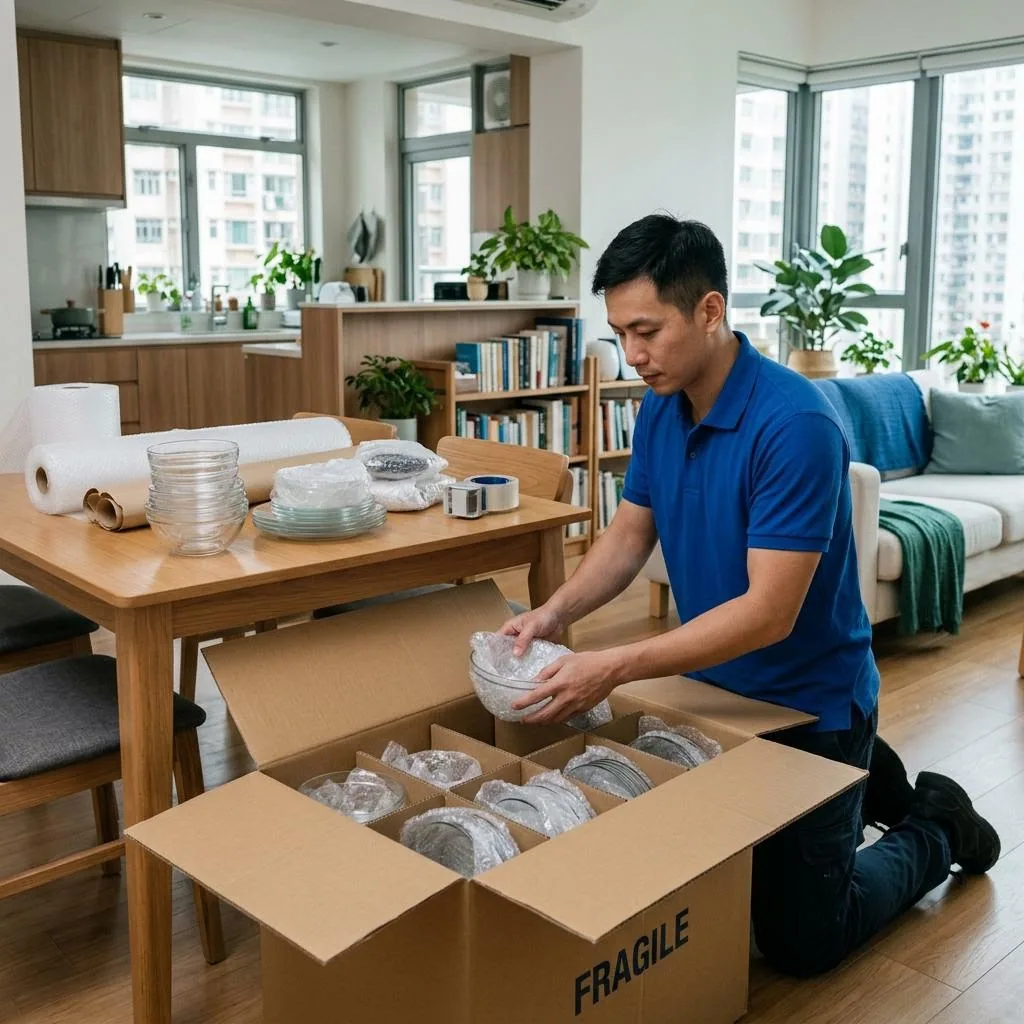
Each glass item should be wrapped on its own before it goes into the box. Bubble wrap, packing paper, or another soft cushioning material can be used, with extra protection around rims, edges, handles, or any protruding parts. Thin, tall, or decorated pieces should not touch hard objects directly.
After wrapping, stand the items upright in the carton, like books on a shelf, instead of pressing them flat into layers. Start with a cushioned base, then keep the sides and gaps from shifting. If you hear obvious movement when gently shaking the box, it usually means more filling is needed.
Filling the gaps matters as much as the packing style
Even upright packing will not help much if the box is loose and empty inside. A safer approach is to fill the voids with crumpled paper, packing paper, or soft cushioning so each piece stays in place without being forced into a tight crush.
Do not overpack one box just to save cartons. A heavy box is harder to carry safely, while an overfilled box leaves too little cushioning. It is better to split fragile items into more than one box, group similar sizes together, and keep heavy objects away from breakables.
Seal, label, and check again after arrival
Before sealing the carton, make sure the bottom tape is secure and the box is not bulging from excess weight. Then mark the outside clearly with words like Fragile, This Side Up, and Glass Dishes so everyone handling it knows to keep it upright and move it carefully. Clear labels reduce avoidable mistakes.
After arrival, inspect the top layer and the corners first for cracks, chips, or signs that items shifted against each other. If anything is broken, gather the fragments carefully to avoid cuts. For households with many fragile items or mixed tableware, preparing a simple inventory before packing makes checking far easier.
What to ask the mover before moving day
If you plan to let movers handle your glass dishes, ask in advance whether they accept fragile kitchenware in separate boxes, whether you should finish basic wrapping first, and whether they can follow room labels or box markings on moving day. Aligning these details early helps prevent mixed loading or heavy items being placed on top.
Also note that electrical work, gas work, medical equipment, structural dismantling, or other specialist tasks should be handled by the proper qualified professionals, not bundled together with ordinary kitchen packing. If you need to confirm the moving plan, tools, or packing sequence, request written confirmation where appropriate.
Frequently Asked Questions
Do glass dishes have to be packed upright?
Not absolutely, but upright packing is usually safer than flat stacking because it reduces stacked pressure. The key is to wrap each item separately and fill all empty spaces in the box.
Can I just wrap them in newspaper and lay them flat?
That is not ideal. Newspaper alone, without separation and gap filling, leaves flat stacks more likely to knock into each other. If you have several fragile pieces, wrap them individually and pack them upright.
How much empty space should there be in the box?
There should be no loose movement inside the box, but also no crushing fit. If you hear items shifting or knocking when you gently shake it, more cushioning is usually needed.
Can glass dishes be packed together with other kitchen items?
Yes, but only with lightweight items that will not scratch or crush them, and with proper separation. Heavy objects, knives, and metal utensils should not be mixed in the same box.
What should I check first after moving into the new place?
Check the top layer and the rims first for cracks or chips, then count each item. If anything is broken, clear the fragments carefully before handling the rest.


