MOVING TIPS & ADVICE
Moving Collectible Wine and Wine Cabinets: Upright Transport and Settling Tips
Key answers
When moving collectible wine and a temperature-controlled wine cabinet, separate the bottles first, keep the cabinet upright, reduce vibration in transit, and let everything settle before restarting.
Start with an inventory and a calm schedule
Before moving day, make a list of every bottle in the cabinet, including name, vintage, quantity and storage position. Mark high-value, fragile or opened bottles clearly, and set aside any original boxes, sleeves or certificates so they do not rub against the glass.
Try not to move the bottles again in the days before the move so sediment can settle. If the cabinet needs defrosting, drainage or temperature adjustment, check the manual first; if anything is unclear, confirm it with the manufacturer or a qualified technician rather than trying to open the unit yourself.
Move the bottles first, then the empty cabinet
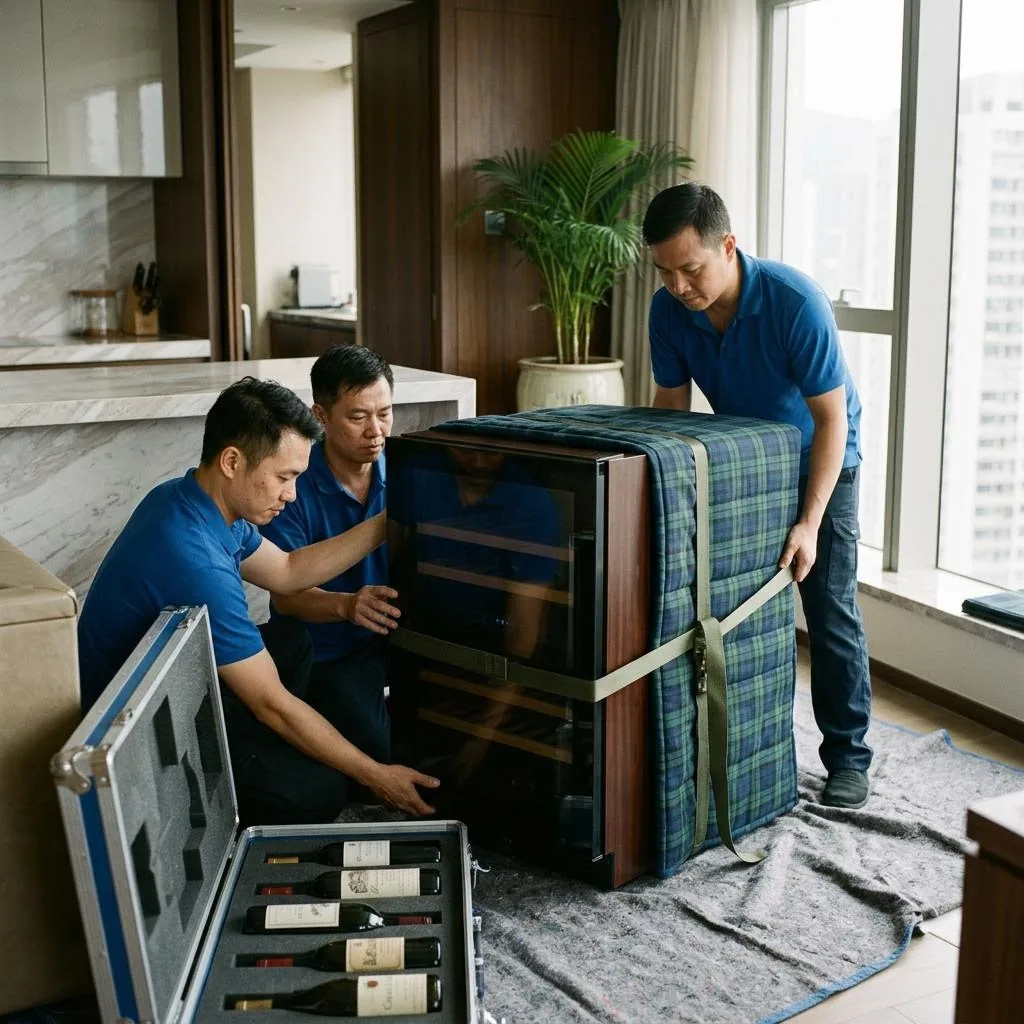
Do not move a fully loaded wine cabinet as one piece. A safer approach is to remove each bottle first, wrap the body and neck with soft packing material, and place them in partitioned boxes with filler to stop the bottles from striking one another.
Keep each bottle upright rather than on its side or upside down. Avoid over-tight packing around labels and corks, and mark the carton clearly as fragile, this side up, and load first so it is easier to handle correctly on moving day.
Keep the cabinet upright at all times
When the cabinet is empty, the most important rule is to keep it upright. A temperature-controlled wine cabinet contains a cooling system and compressor, and long tilting or laying it flat may affect later performance. Before moving, secure the door, shelves and any loose fittings so nothing swings open or shifts inside.
If stairs, corners or lift access are tight, measure the route in advance to confirm the cabinet can pass through while upright. If the path is limited, adjust the moving plan instead of forcing the unit onto its side. Any wiring, drainage or installation issue should be handled by a qualified electrician or the original technician, not as a DIY task.
Reduce vibration and avoid heat in the vehicle
After loading, place the cabinet and wine cartons in the most stable part of the vehicle and pack soft blankets or cushioning materials tightly around them to reduce shaking during turns, braking and uneven roads. Do not stack heavy items on top of the wine cartons or let sharp edges press against the boxes.
Hong Kong’s heat and humidity make loading time important. Keep the time on the truck as short as possible and avoid leaving the wine in direct sun for long periods. If the journey is longer, load the wine last and unload it first; if temporary storage is needed, keep it in a cool, dry place away from heat and moisture.
Check everything on arrival before restarting
Once the items arrive, inspect the cabinet exterior, door seal, shelves, feet and glass for signs of impact, and check whether the bottles are still upright and the packing has stayed in place. If you see leakage, broken glass or unusual shifting, stop and deal with the issue before putting anything back.
After positioning the cabinet, do not switch it on immediately. Let it settle for a period recommended by the manual or technician so the internal parts can stabilise. Do not rush to open the bottles either, especially vintage wines that were exposed to vibration; give them time to rest first.
Questions to ask before you book movers
Ask in advance whether the mover can provide upright handling, partitioned packing for bottles, a plan for stairs or narrow access, and route measurements for lifts and door frames. If the answers are vague, request written confirmation so the plan is clear before moving day.
Common mistakes include putting bottles in ordinary cartons without partitions, laying the cabinet flat as if it were a normal appliance, forgetting fragile labels, ignoring Hong Kong heat, and powering up immediately on arrival. If electrical connection, structural modification, chemical cleaning or other specialist work is needed, arrange a qualified professional separately.
Frequently Asked Questions
Can collectible wine bottles be laid on their side during a move?
It is not recommended. Keep the bottles upright, use partitioned packaging, and reduce movement so the liquid and cork stay stable.
Should the wine cabinet be moved with the bottles inside?
Usually no. Remove the bottles first and move the empty cabinet to reduce collision, leakage and damage to the cooling system.
Can a temperature-controlled wine cabinet be plugged in right after delivery?
No. Let it settle for a period recommended by the manual or technician first. If unsure, confirm with the manufacturer or a qualified professional.
What is the biggest risk during transport?
Strong vibration, long tilting, direct sun and cartons knocking into each other, so the load should be secured, cushioned and kept on the truck for as short a time as possible.
How do I choose a mover for wine and a wine cabinet?
Ask about upright handling, fragile packing, access planning for stairs or lifts, and written confirmation of the arrangement; any electrical or installation issue should be handled by a qualified professional separately.


