MOVING TIPS & ADVICE
Moving in Hong Kong Summer Heat: Practical Tips for Heat Protection and Moisture Control
Key answers
Summer moves in Hong Kong bring heat, humidity and sudden rain. Plan hydration, sun protection, moisture-safe packing, appliance resting time and ventilation early to reduce discomfort and protect your belongings.
Start by understanding the main summer moving risks
A summer move is not only about high temperature. In Hong Kong, humidity, sudden downpours, slippery floors and weakened cardboard are also common problems. If your route includes open courtyards, staircases or outdoor loading areas, belongings can be exposed to heat and moisture very quickly.
Try to avoid the hottest part of the day and leave extra time for weather, traffic and building access. Before moving day, confirm lift booking, loading access and parking arrangements at both ends so you do not end up waiting outside for too long.
How to protect yourself from heat on moving day
Prepare enough drinking water and sip regularly instead of waiting until you feel thirsty. If the move will take a long time, you can also prepare an electrolyte drink, but do not drink too much at once. Light, easy-to-digest food helps reduce dizziness and fatigue during heavy lifting.
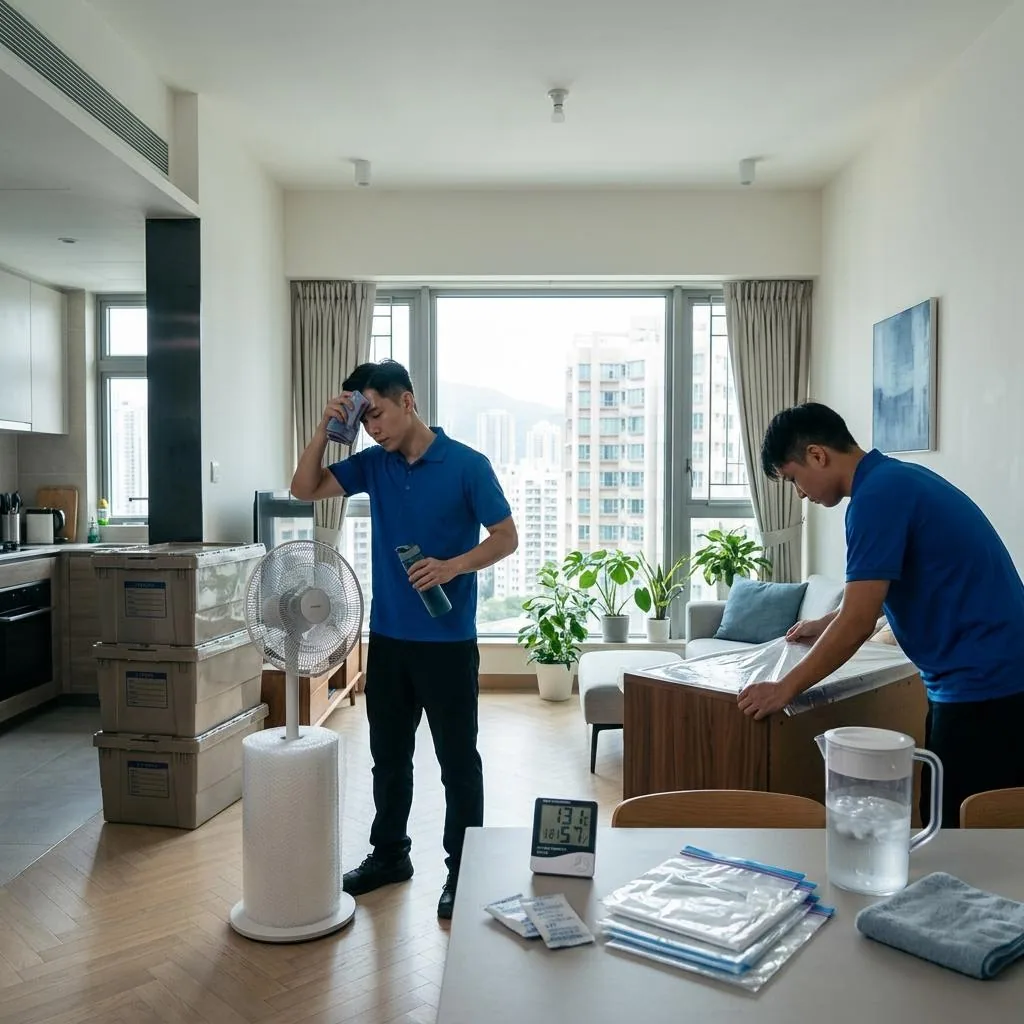
Wear loose, breathable clothing and add a cap, towel and sun protection. Take breaks in shaded or air-conditioned spots whenever possible. If anyone develops headache, rapid heartbeat, nausea, weakness or cold sweat, stop immediately and rest instead of pushing through.
How to protect boxes, clothes and soft furnishings from moisture
Use clean, dry boxes and seal the bottom and seams properly. If rain is likely, line the box with a waterproof bag before packing clothes, books and documents, then close the bag securely. Important papers, ID documents and photos should be packed separately in waterproof protection.
Mattresses, sofas, rugs and other fabric items should be cleaned and fully dry before being covered with dustproof or waterproof covers. Do not pack half-dry clothes, damp towels or anything still wet, or the trapped moisture may cause odour and spread to other items.
Key points for electronics and delicate items
Computers, cameras, audio equipment and small appliances should be packed with proper cushioning, ideally in their original boxes if available. Avoid leaving them in high heat for a long time. If the surface or plug has been exposed to water, wipe it dry and let it air-dry completely before moving it.
When appliances arrive at the new home after rain or a large temperature change, let them rest at room temperature first so surface moisture can dissipate. Large appliances, power connections, gas-related work or any dismantling should be handled by qualified professionals, not as a DIY task.
What to check first after arriving at the new home
Check whether any box is damp, softened or showing signs of water ingress before you start unpacking. If the home still feels hot and muggy, open windows for ventilation and use a dehumidifier or air conditioner as appropriate so the space becomes dry enough for unpacking.
You do not need to unpack everything on day one. Start with essentials such as bedding, toiletries and daily clothing. If any item smells musty, looks damp or shows signs of mould, separate it first. For water seepage, wall damage or structural concerns, arrange the right specialist to inspect them.
Questions to ask a mover before confirming the job
For a summer move, ask not only about manpower and travel time, but also rain-day arrangements, waiting time, stair carries, rescheduling and packing method. Before confirming, request written confirmation of the service scope, arrival time, what you need to prepare, and how delays or heavy rain will be handled.
If you have any heavy, oversized or delicate items such as a piano, safe, glass table or large artwork, describe the size, weight and building conditions in advance so the mover can assess the job properly. For fees, terms, coverage and limits, refer to the official quotation and terms rather than relying on verbal promises.
Frequently Asked Questions
What should I prepare first for a summer move?
Prepare drinking water, sun protection, dry boxes, waterproof bags, tape and labels, and confirm the move time, lift booking and parking arrangements so you do not wait too long in the heat.
What should I do if it starts raining during the move?
Keep boxes and fabric items protected with waterproof packing, then move them indoors or into the vehicle as soon as possible. If the outside of a box is wet, dry it first and then check whether the contents are damp.
Can I plug in appliances immediately after they arrive?
If an appliance has been exposed to rain, high humidity or a strong temperature change, do not plug it in right away. Let it rest at room temperature first and inspect it; if in doubt, ask a qualified professional.
How can I avoid heat exhaustion during a summer move?
Drink small amounts regularly, wear breathable clothing, avoid the hottest hours if possible and rest in shaded areas. If anyone feels dizzy, nauseous, unusually weak or sweaty, stop moving immediately.
Which special items should I tell the mover about in advance?
Any oversized, heavy, fragile, valuable or specially handled item should be disclosed in advance, such as pianos, safes, glass furniture and large artwork, so the mover can plan the right manpower and route.


