MOVING TIPS & ADVICE
How to Choose Moving Boxes: Where to Find Free or Second-hand Boxes Without Compromising Safety
Key answers
Free or second-hand moving boxes can save money, but only if they are dry, strong, clean, and the right size. Learn where to look, what to avoid, and when it is better to buy new boxes instead.
Why moving boxes should not be picked at random
Moving boxes seem simple, but size, thickness, cleanliness, and structural strength all affect how smoothly you can pack and how safely your items travel. If a box is too thin, damp, or uneven in size, it may collapse after packing and create extra work or damage risk.
Free or second-hand boxes can work well, but only if you know what is suitable and what is not. Use them first for clothes, towels, toys, and light miscellaneous items. For books, crockery, glassware, or other heavy items, choose a sturdier box, and if needed, buy the proper size from a moving supplier or packing store.
Where to find free boxes
Common local sources include pharmacies, supermarkets, convenience stores, stationery shops, appliance shops, and small businesses near residential estates. Boxes from light, clean goods such as tissues or diapers are often in better condition and may be suitable for reuse. It is best to ask politely during quieter hours and confirm when the boxes can be collected so you do not disrupt the store.
Local online groups, resale platforms, and estate chat groups are also useful. These boxes often come from households that have just moved and may be more uniform in size. Before arranging pickup, check photos carefully and ask whether the boxes are damp, dirty, damaged, or stored outdoors. If possible, collect them promptly so they do not absorb moisture.
How to inspect a second-hand box properly
First check the box structure. Press the base, corners, and folds lightly by hand. If the box feels soft, delaminated, deeply creased, or torn, its load-bearing strength has already dropped and it should not be reused. A box that has been heavily compressed or repeatedly retaped may look fine on the outside but still fail during stacking or transport.
Next check hygiene. Look closely at corners, fluted layers, and sealed edges for mould, odour, insect eggs, cockroach droppings, or stains. If the box once held food, frozen items, cleaning products, or damp goods, the risk is higher and it is safer to discard it. The main concern is not saving a few dollars but avoiding pests, stains, and bad smells in the new home.
Match the box to the item
Bigger is not always better. Large boxes are best for light items such as bedding, duvets, toys, clothes, and general household bits. Medium and small boxes suit books, documents, dishes, and compact kitchenware. If heavy items are packed into one oversized box, it becomes too hard to lift and the base is more likely to split.
For fragile items, choose a stronger box and leave enough space for paper, bubble wrap, or towels as cushioning. Mark the outside clearly with labels such as fragile or this side up. For electronics, valuables, sharp tools, medical items, or other specialist contents, check whether qualified handling is needed and do not improvise.
Practical preparation before and after packing
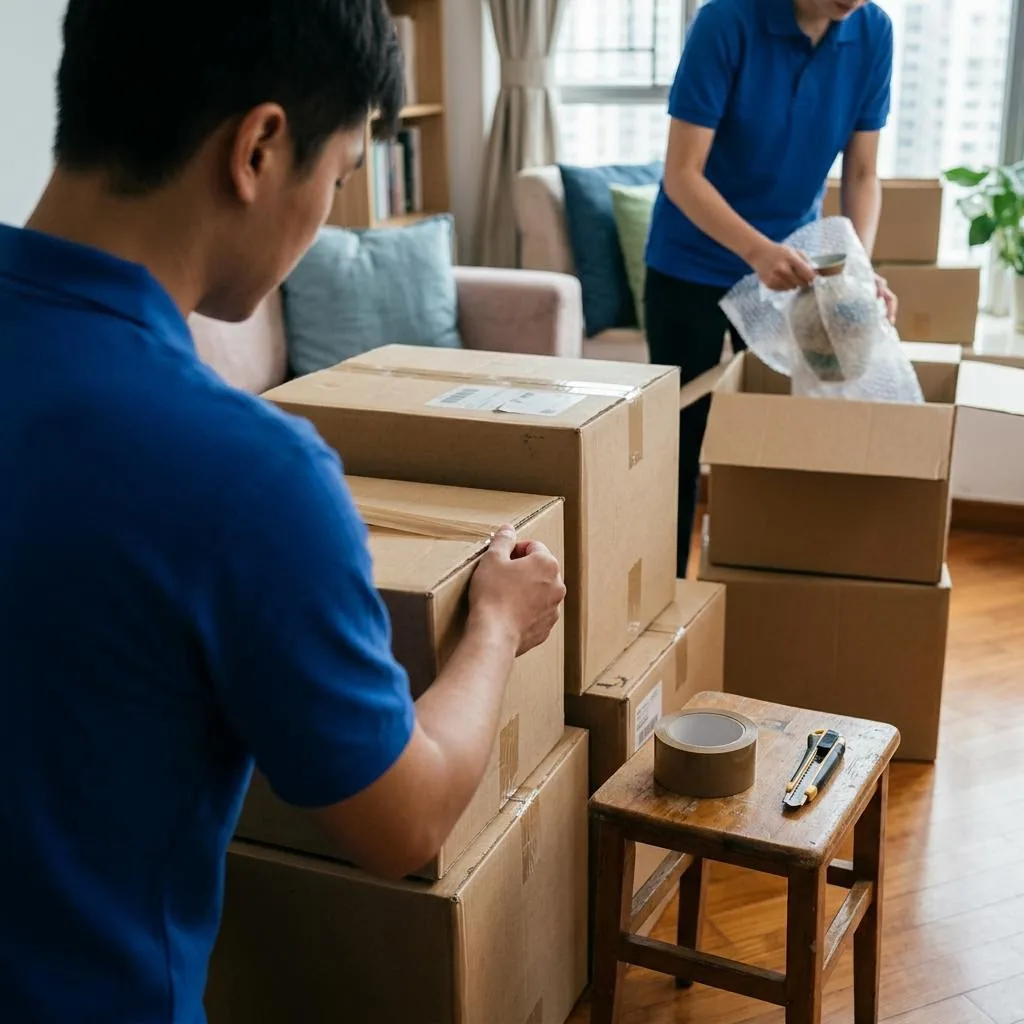
Before you start collecting boxes, estimate how many you need for each room and for each type of item. Prepare tape, a tape dispenser, marker pens, labels, scissors, and some moisture protection. Write the room name, contents, and whether the box should be opened first at the new home. This saves a lot of time on moving day.
Before sealing, reinforce the base. Heavy-item boxes should be taped across the bottom and then given an extra layer of support. Do not overfill the box, but do not leave too much empty space either, or the contents may shift in transit. If a second-hand box is damp or soft when you bring it home, do not keep it. Dry storage is essential.
When to ask a mover instead of hunting for boxes
If your moving date is close, your box count is large, your items are heavy, or your home has stairs, narrow corridors, or a long carrying distance, free-box hunting may no longer be the best use of your time. In that case, ask the mover what box types and packing plan make sense, and request written confirmation of quantities, sizes, and delivery arrangements so there is no last-minute mismatch.
If you are moving large furniture, a piano, a safe, a walk-up village house load, or other special cases, boxes alone will not solve the job. Confirm the scope, preparation steps, and limits first, then match the packing plan to the actual move. For planning help, see Moving checklist, Moving house price list, and Service terms.
Frequently Asked Questions
Are free boxes always worse than new ones?
No. If a box is dry, clean, strong enough, and the right size, it can be reused safely. Boxes with damage, dampness, mould, or insect traces should not be reused.
What should I ask a shop before taking their boxes?
Ask whether boxes are available, when they can be collected, whether same-day pickup is allowed, and whether the boxes have held wet, frozen, or food items.
What kind of box should I use for books or dishes?
Use a smaller, stronger box so the load stays manageable. For dishes, add cushioning and make sure the bottom is well taped.
Can I reuse a box that has a slight smell?
A mild paper smell is usually less concerning, but damp, sour, oily, or food-like odours are a warning sign. In that case, do not use the box.
When should I stop looking for free boxes and buy new ones?
If your move is soon, you need many boxes of the same size, or you are packing heavier and more fragile items, buying new boxes is often faster and more practical.


