MOVING TIPS & ADVICE
Moving Valuable Items: Protection Tips for Pianos, Antiques and Fine Art
Key answers
Before moving pianos, antiques or artwork, confirm dimensions, fragile points, route clearance, packing layers and handover records. For electrical, structural or specialist repair work, use qualified professionals.
Assess the item type, weight and weak points first
Valuable-item moves go wrong when people start before they understand the object. Separate the item by category first: piano, painting, porcelain, sculpture, or a collectible with glass or mirror surfaces. Record the size, weight, protruding parts, fragile areas and any pre-existing damage. If the item is loose, cracked or damp, photograph it before the move and consider getting a conservator or other relevant specialist to assess it first.
Also check whether the old and new premises can actually take the item through the door, corridor, lift, turns, staircase landing and loading area. Many older Hong Kong buildings have narrow stairs and tight corners, while walk-ups and village houses can be especially awkward. If the job needs door removal, structural changes, electrical work, lifting equipment or other technical work, do not attempt it yourself; ask a qualified professional to handle it.
Piano moving: protect the mechanism, not just the finish
A piano is not just a heavy piece of furniture. Inside are strings, hammers, pedals and a wooden structure that can be damaged if the instrument is pushed roughly or carried at the wrong angle. Before moving, close and secure the lid, remove loose accessories and label any detachable parts. Upright pianos and grand pianos also have different weight distribution, so the route and support method should be planned by people familiar with piano moves.
After arrival, inspect the legs, wheels, pedals, outer case and keyboard edges for scratches or looseness before placing the piano in its final position. Temperature and humidity changes can affect tuning, so let the piano settle in the new environment before arranging a tuning visit. Any internal adjustment, servicing or tuning should be handled by a specialist, not by trying to alter the mechanism yourself.
Paintings and frames: focus on surface protection and upright transport
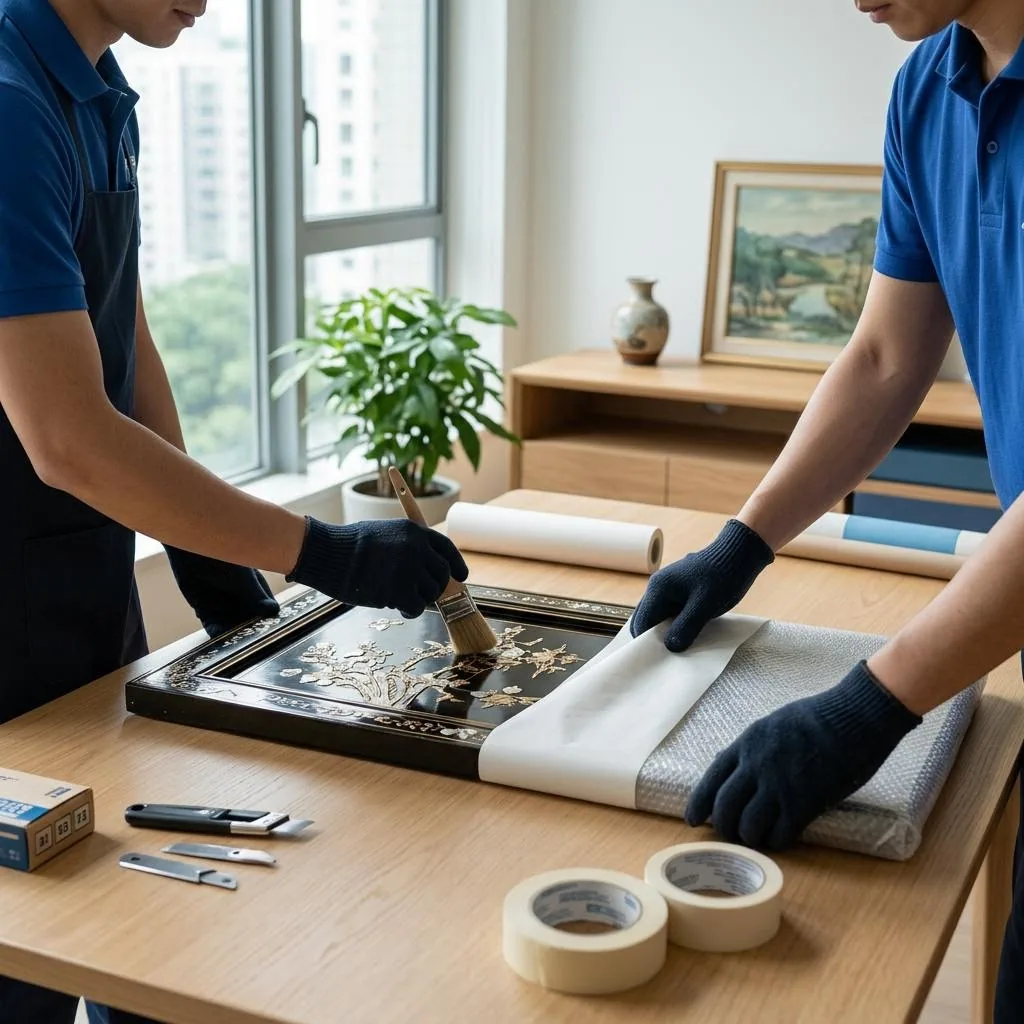
Paintings are most vulnerable to abrasion, moisture, sticking and corner impact. Use an acid-free sheet, protective layer or other smooth interleaving material as the first layer, then add corner guards and an outer cushion so the packing does not rub directly on the artwork. Oil paintings, prints and mixed-media works may need different wrapping methods, so avoid sealing every piece in thick plastic film by default.
During transport, keep the artwork upright whenever possible and do not stack heavy items on top of it. If the piece is large or valuable, confirm in advance whether the mover can provide a correctly sized crate, rigid board protection or independent fixation for a single item. Ask for written confirmation of the handling method, handover point and arrival inspection process.
Antiques, porcelain and fragile collectibles: layered packing is safer
Antique vases, porcelain, ornaments and sculptures often fail because of empty space, vibration or small knocks. A more stable method is to wrap the item individually, place it in an inner box that is only slightly larger than the object, then place that into an outer box filled so the item cannot move around. This reduces shifting and absorbs impact better than using one loose carton alone.
If the object is unusually shaped, very fragile, or has thin feet, handles, cracks or protrusions, a normal carton may not be enough. Ask the mover whether a wooden crate or stronger protection can be arranged for the actual item size, but also confirm whether the piece can be stacked, whether it needs to be dismantled, and whether unpacking and inspection will be done piece by piece at destination before any packaging is discarded.
Practical preparation before arrival and checks at handover
The day before moving, set the valuable items aside, make a list and take photos, especially of scratches, chips, cracks, old repairs and serial markings. If you have certificates, purchase records, valuation papers or maintenance notes, keep them separate and ready for verification if needed. Clear floor clutter in advance so the route is open and no one trips or bumps the item while carrying boxes.
Do not rush to sign off at arrival. Inspect each outer box, corner and surface carefully, and compare what you see with the pre-move record. If you find dents, loosening, cracks or missing parts, photograph them immediately and note the issue clearly on the handover form. If the move involves long distance transport, split deliveries or temporary storage, ask in advance who is responsible at each handover point and what the storage conditions will be, and keep everything in writing.
When to hire a specialist mover, and what to ask first
Valuable items are not suitable for improvised help or general household moving methods. If the item is too heavy, too large, difficult to access, very fragile, or requires a crate, lift assistance, special fixing or longer transport, hire a mover with relevant experience and ask for an assessment in advance, ideally on site or from photos and measurements, so the plan does not change only on moving day.
Before confirming, ask whether they will measure the route and item size first, who will handle packing, whether single-item handling is available, how lifting or dismantling will be arranged if needed, how inspection will be done on arrival, and whether any insurance, liability or claims terms will be confirmed in writing. For pricing, terms and coverage details, please refer to Moving house price list and Service terms instead of relying only on verbal explanations.
Frequently Asked Questions
What is the most important preparation before moving a piano?
Measure the route first, secure loose parts, clear the path, and record the condition of the case and legs. Any dismantling or tuning should be handled by the relevant professional.
Can a painting be wrapped directly in bubble wrap?
Not directly against the painted surface. Use an appropriate acid-free protective layer first, then add corner protection and outer cushioning, and keep the work upright where possible.
What is the safest way to pack an antique vase?
Use layered packing and fix the item inside the box so it cannot move. For very fragile or unusual pieces, ask whether a custom crate or stronger protection can be arranged.
Should I open and sign for valuable items immediately after delivery?
No. Inspect the outer packaging, corners and surfaces first, compare them with your pre-move photos, and note any issue on the handover form before signing off.
What should I ask a mover before booking valuable-item transport?
Ask about route assessment, packing method, single-item handling, access limits, arrival inspection, and whether insurance, liability and terms will be confirmed in writing.


