MOVING TIPS & ADVICE
How To Organise A Large Wardrobe When Moving During Seasonal Change
Key answers
Seasonal moves often get messy because of clothing. Sort by season and use, remove what you no longer need, then pack with the right method, moisture control, and clear labels so unpacking is much faster.
Sort by season first, then decide what to keep
When you start packing clothes, spread everything out and separate it into current-season, off-season, repair-needed, donation, and discard piles. Do not pack while deciding at the same time, because that usually creates extra handling and more confusion. If an item has not been worn for over a year, no longer fits, or is clearly worn out, deal with it early so it does not take up space in the new home.
It also helps to sort by use, such as workwear, sportswear, outerwear, sleepwear, and formal clothing. That way, you can find what you need quickly after moving instead of reopening every box. If more than one person is moving, keep each person's clothes separate and label each box with the name and room to avoid mix-ups later.
Wash and dry delicate items before packing
Before sealing away seasonal clothing, wash and fully dry the pieces you plan to store, especially underwear, sweaters, coat linings, and bedding. If clothes still carry sweat, stains, or moisture, odour and dampness can build up during transport or storage, which makes later sorting much harder.
For silk, wool, leather, down, or decorated garments, check the care label before deciding whether folding is suitable. If the fabric is fragile, wrinkles easily, or needs specialist cleaning, use a qualified laundry service first. Do not improvise with unsuitable heat or handling methods, because that may damage the item further.
Choose the right packing method for each fabric
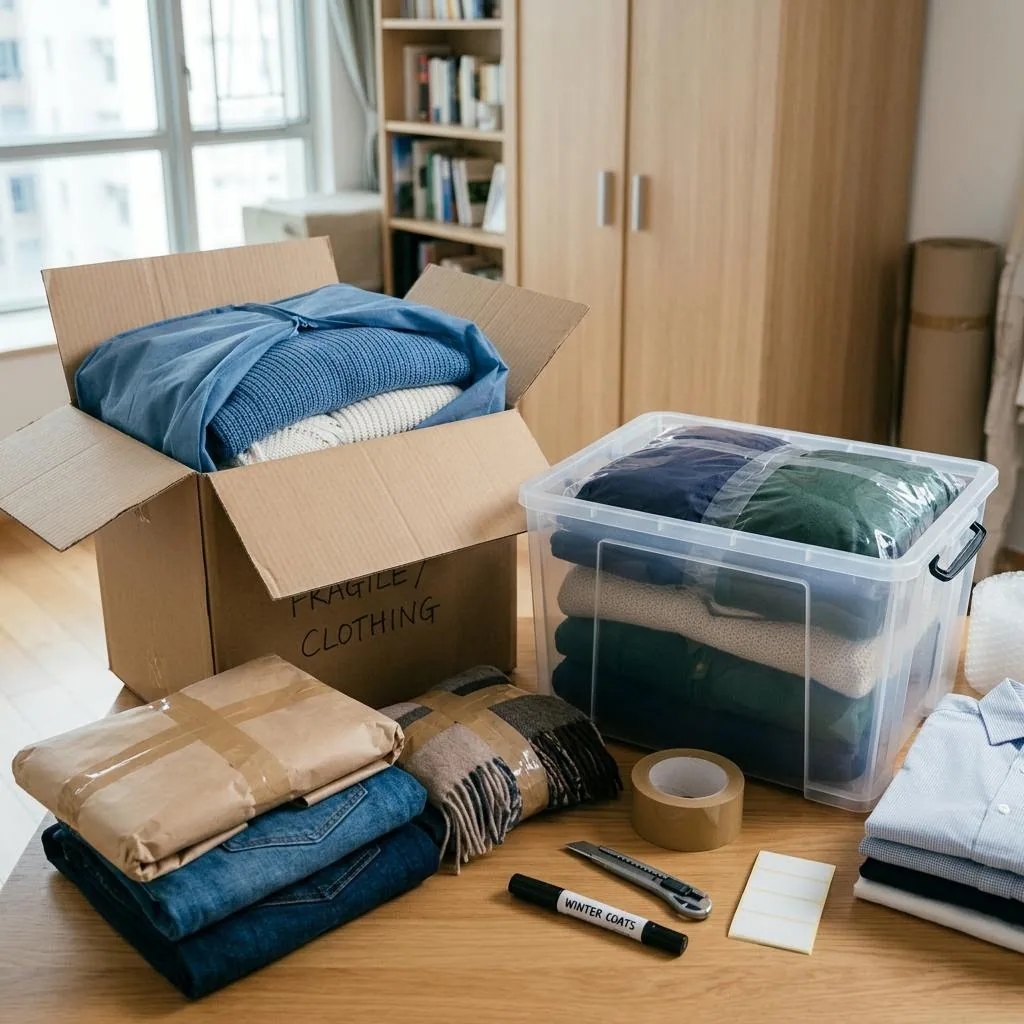
Regular T-shirts, jeans, homewear, and other clean everyday clothes can go into medium boxes or storage bags. When folding, place heavier items at the bottom and lighter ones on top so the box keeps its shape. Avoid overfilling, because that can cause the box to burst and makes unpacking much harder.
For suits, dresses, long coats, and garments that should not be creased, hanging storage or wardrobe boxes are usually more suitable. Before hanging them, tidy the hangers and keep similar items together by person or by type. Leave a little room inside the box so clothes are not crushed. If shoes or accessories are placed in the same box, separate them clearly so they do not soil the clothing.
Use moisture control and clear labels
Hong Kong's humid weather means off-season clothes should be packed with suitable desiccant or moisture-control products, but these should not touch the fabric directly, especially on dark colours, leather, or delicate materials. If the move includes outdoor waiting time or exposed loading areas, add an extra dust cover or plastic layer to reduce dirt and moisture.
Every box or garment bag should be clearly marked with its contents, season, room, and whether it needs to be opened first. Clear labels save time on the first night in the new home. If you are moving and storing at the same time, also keep a simple record of box numbers and storage order so you can retrieve a specific group of clothes without reopening everything.
Plan what you need before and after the move
Keep a separate set of clothes for moving day and the next day, including underwear, outerwear, sleepwear, and slippers. Do not mix them into the main packed pile. If children or older family members are moving, keep their spare clothes in an easy-to-reach place so no one has to search for essentials after arrival.
After you arrive, organise the daily essentials first, then work through the less-used items. Do not rush to stuff everything into the wardrobe at once. It is usually better to fit the layout to the available space and your daily routine. If a box arrives damp, damaged, or with unclear labels, empty it first and re-sort the contents before putting anything away.
What to confirm with the mover
If you have a very large wardrobe, multiple garment boxes, or a big amount of seasonal clothing to sort, ask the mover before booking whether they can handle the packing style, access route, and stair or lift arrangements you need. If the job involves electrical appliances, ironing equipment, dehumidifiers, or any technical work, ask a qualified specialist separately rather than combining unrelated tasks.
Before you confirm the booking, ask whether wardrobe boxes, cartons, and packing materials need to be prepared in advance; whether items can be labelled by room or family member; how storage items should be tagged and grouped; and what should be packed away before the crew arrives. Keep fragile, valuable, and high-use clothing separate, and ask for written confirmation where details matter.
Frequently Asked Questions
What is the best order for sorting clothes before a seasonal move?
Start with current-season and off-season clothing, then separate items by use such as workwear, daily wear, outerwear, and sleepwear. After that, decide what to keep, donate, or discard so the process stays clear.
Can every item be packed in a vacuum bag?
No. Thick coats and bedding are usually suitable, but silk, wool, leather, or shape-sensitive items may not be. Always check the care label before choosing the packing method.
Do hanging clothes always need wardrobe boxes?
Not always, but wardrobe boxes are often better for suits, dresses, and long coats that should not be folded. They also reduce the need to re-iron after arrival.
How can I reduce dampness risk during a move?
Make sure clothes are clean and fully dry, use suitable moisture-control products, and add outer protection if the route is exposed. Clear labels also help prevent boxes from being left unopened for too long.
What should I ask the mover if I have too many clothes?
Ask whether they can provide wardrobe boxes or cartons, how they prefer items to be labelled, and what you should prepare before arrival. For specialty fabrics or technical handling, use a qualified professional separately.


