MOVING TIPS & ADVICE
Fridge Moving Tips: Power Off, Defrost, and the Right Restart Time
Key answers
A fridge should be defrosted, emptied, and drained before moving, kept as upright as possible in transit, then left to settle before power is restored and tested empty.
Leave enough time to clear and defrost
A fridge is not something you simply unplug and take away. Allow enough time to defrost, empty the contents, and wipe everything dry. Before moving day, finish the food, store it elsewhere if needed, and let all frost melt naturally so that loose ice does not break off or leak during transit.
Remove shelves, drawers, egg trays, and any detachable parts one by one and pack them separately. If the door seal, handle, or casing is loose, check it in advance. If the fridge has an ice maker, water line, or other connected parts, ask a qualified technician to disconnect them properly instead of pulling them by force.
Drain water and secure the inside
After switching off the fridge, check the drain tray, drainage point, and any melted water in the freezer area. Dry everything thoroughly, otherwise water may spill when the appliance is tilted, moved into a lift, or turned around a corner. Wet floors can damage property and create a slipping risk.
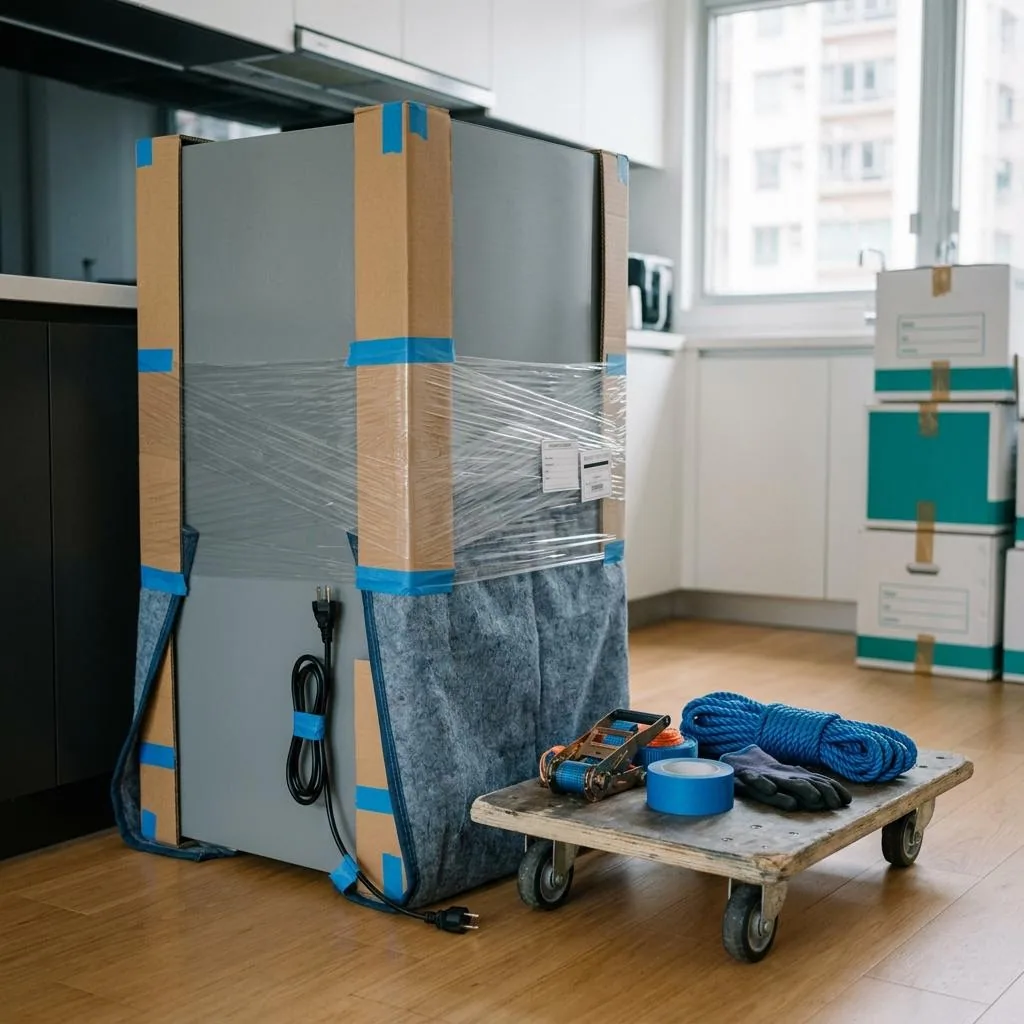
Wrap glass shelves, drawers, and removable panels separately so they do not knock against each other. If the door needs to be held shut, use a loose strap rather than over-tightening it, so the magnetic seal and hinges are not damaged. If the mover does not explain the packing method, ask in advance how the body, edges, and door surface will be protected.
Keep the appliance upright whenever possible
A fridge should ideally be moved upright, with as little tilting as possible. If it is carried on an angle for too long, lubricant in the compressor system may move into places where it should not be, and the unit may not cool properly even after power is restored.
If the route includes narrow stairs, sharp turns, or a tight doorway, the team should first assess the path before deciding whether extra hands, a trolley board, or a different loading plan is needed. If the fridge must be tilted briefly, avoid laying it flat for any length of time and keep a note of how much it was inclined.
Do not plug it in immediately after arrival
Once the fridge reaches the new home, the most common mistake is to power it on at once. A safer approach is to place it in position first, leave the door open for a while to air out any smell, and inspect the body for dents, leaks, or damaged wiring before turning it on.
If it was moved fully upright, a shorter settling time may be enough; if it was heavily tilted or briefly laid down, the waiting time should be longer. Because different models vary, the safest option is to follow the manual or request written confirmation from the mover on the recommended settling time.
Test it empty before loading food
After powering on, do not fill the fridge at once. Let it run empty for a while and listen for normal operation, cooling response, and a proper door seal. If you notice unusual noise, tripping, excessive vibration, or a strange smell, stop using it and call a qualified repair professional.
Once the temperature has stabilised, put food back gradually, starting with items that are less sensitive. For larger models such as side-by-side or double-door fridges, allow even more recovery time, because the weight, hinges, and internal layout are more complex than in a standard unit.
What to ask the moving company first
When arranging fridge moving, ask whether the team will handle stairs, remove doors if needed, use protective blankets, and secure the appliance properly. Most importantly, confirm how they handle tilt limits, settling-time advice, and door protection so that a verbal promise does not differ from what actually happens.
If the old or new home has a narrow corridor, tight corner, slope, or no lift, send photos and measurements in advance so the mover can judge the route. If the job involves electrical reconnection, refrigeration work, water-line work, or hinge adjustment, leave it to the relevant qualified professional and do not try to dismantle it yourself.
Frequently Asked Questions
How long before moving should a fridge be switched off?
It is usually best to allow enough time for defrosting and draining, often from the night before or earlier depending on the model and how much frost has built up. Follow the manual and confirm the moving schedule in advance.
Can a fridge be laid flat during a move?
It is best moved upright whenever possible. If a short tilt is unavoidable because of stairs or door width, keep it brief and extend the settling time afterwards according to the actual handling conditions.
Can I plug the fridge in right away after delivery?
No. Let it settle first so the compressor oil and cooling system stabilise. Plugging it in too early may affect cooling performance and, in serious cases, damage the appliance.
What should I do with the glass shelves inside the fridge?
Remove them and pack them separately if possible, so they do not knock together or scratch the inner walls. If they are not easy to remove, secure them well and ask the mover how they will be protected.
How do I know if the fridge has a problem after moving?
Check for dents, leaks, strange smells, or damaged wiring first. Then run it empty and watch for abnormal noise, vibration, or poor cooling. If anything seems wrong, stop using it and call a qualified repair professional.


