MOVING TIPS & ADVICE
Moving Prep Guide for Young Adults Living on Their Own for the First Time
Key answers
The key to a first solo move is planning early, reducing clutter, labeling clearly, and preparing basic essentials for the new home. A simple step-by-step plan helps prevent last-minute chaos and makes move-in day smoother.
Set the timeline first, then plan each step
Once the new home is confirmed, work backwards from the move date: notify the current landlord or management, confirm handover or move-in day, leave time for packing and cleaning, and then book the moving day. If you also need to balance work or study, spread the big tasks across several days instead of leaving everything until the last night.
It helps to write down everyone and everything you need to contact, such as the management office, landlord, moving company, family, or roommates. If the new building requires elevator booking, parking arrangements, or access approval, confirm these early so the move is not delayed by timing or entry restrictions on the day.
Sort items early and cut unnecessary load
For a first solo move, do not bring everything from the old place by default. Sort items into three groups: essential, not needed for now, and items to dispose of or give away. Start with clothes, books, cable accessories, miscellaneous items, and keepsakes, and keep only what you actually use or truly need.
Reducing clutter is not just about saving moving space; it also helps you build order in the new home faster. If you fill the room from day one, cleaning and storage become harder later. Keeping only a small core of essentials and buying the rest gradually is often the more realistic way to settle into independent living.
Pack in a practical way that is easy to identify
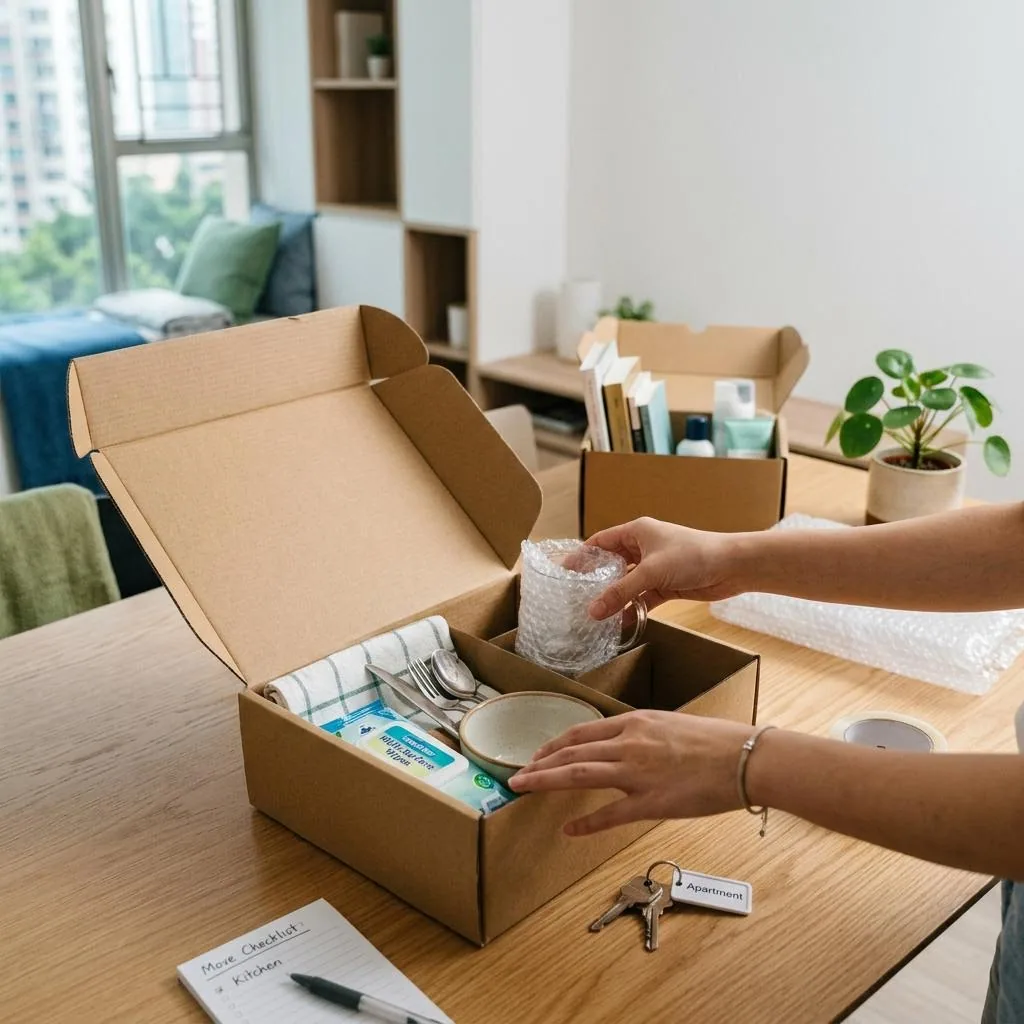
Pack by room or purpose, such as bedroom, desk, bathroom, and kitchen items in separate boxes. Write the room name, main contents, and whether the box is fragile on the outside so you can unpack in priority order, starting with what you need on the first night and then the rest later.
Fragile items should be wrapped separately and placed in the middle of the box, with clothes, towels, or paper used to fill gaps and reduce movement. Avoid mixing too many heavy items into one box, because it is harder to lift and may become unstable. If you are unsure about weight, split it into two boxes instead.
Prepare the basic setup before move-in day
Before moving in, check the layout of the new place, socket positions, window openings, and storage space so you can plan furniture placement and storage properly. If any large furniture needs measuring, record the dimensions in advance so you do not discover too late that the doorway, corridor, or room entrance is too narrow.
The first wave of essentials should focus on daily needs: bedding, basic cleaning supplies, simple tableware, towels, slippers, and personal care items. If there are any electrical, gas, structural, or installation issues, leave them to qualified professionals and do not rush into risky DIY just to meet the move-in schedule.
On moving day, keep coordination clear and simple
On moving day, gather the boxes and items to be moved in one place and keep the route clear so movers can work efficiently. Valuables, ID documents, cash, keys, and important papers should be carried with you and kept separate from the general moving load, not left in places where they can be misplaced.
At the site, you or a trusted person can give simple instructions such as which boxes should be unloaded first and which items need extra attention, but avoid changing instructions repeatedly during the process. After arrival, check whether the main items have arrived and inspect for obvious damage or loose packing; if anything is unclear, note it on the spot and report it immediately.
What to ask before choosing a moving service
When contacting a mover, explain clearly that this is your first solo move and provide the unit size, floor level, lift availability, route details, and whether you have large furniture. That helps the mover suggest an arrangement based on the actual situation. If you need disassembly, a specific unloading order, or there are time restrictions at move-in, raise them early so there are no surprises later.
Before deciding, confirm the quotation details, scope of service, whether packing assistance is included, how stairs or special access are handled, and how extra situations are addressed, and ask for written confirmation of the key points. If you want to compare options, see Online Quote or Moving house price list; if you want a practical checklist and timeline, also review Moving checklist, /guides/moving-timeline, and Service terms.
Frequently Asked Questions
What should I do first for my first solo move?
Set the move date first, then work backwards to notify the old place, arrange move-in access, and schedule packing time before you start sorting and boxing things up.
How can I reduce the amount I need to move?
Sort everything into essential, not needed for now, and items to dispose of or give away, then keep only what you truly use in daily life.
What is the most common packing mistake?
Common mistakes include not labeling boxes, overloading one box with heavy items, failing to protect fragile items, and mixing documents with everyday belongings.
What basic items should I prepare before move-in?
Prepare bedding, cleaning supplies, towels, slippers, basic tableware, and personal care items so you can handle daily living as soon as you arrive.
What should I ask a mover before booking?
Ask about the service scope, what the quotation includes, stair or access arrangements, whether they can fit your move-in timing, and whether the key details can be confirmed in writing.


