MOVING TIPS & ADVICE
How to Pack Small Appliances Without the Original Box: Practical Anti-Shock Protection
Key answers
No original box for your air fryer, coffee machine, or microwave? Use the right cushioning, separate removable parts, fill gaps properly, and check everything again after delivery to reduce scratches, shocks, and breakage.
Why small appliances are more vulnerable without the original box
When moving, the main issue is usually not that the appliance is fragile, but that once the original carton and foam inserts are gone, the casing, knobs, glass parts, and loose accessories can knock against each other during transit. In Hong Kong, where storage space is tight, throwing away the box is common, but that often means the first proper packing happens only when moving day is already close. At that point, rushed packing can easily lead to poor protection and extra damage risk.
Air fryers, coffee machines, toaster ovens, blenders, and small projectors are especially troublesome because they are compact but full of removable parts. The biggest concern is not only surface scratches; glass jugs, trays, baskets, filters, and doors can also loosen under repeated vibration. If the move involves stairs, narrow corridors, or a village-house path, you should plan the packing order first instead of scrambling at the last minute.
Choose the right materials from what you already have at home
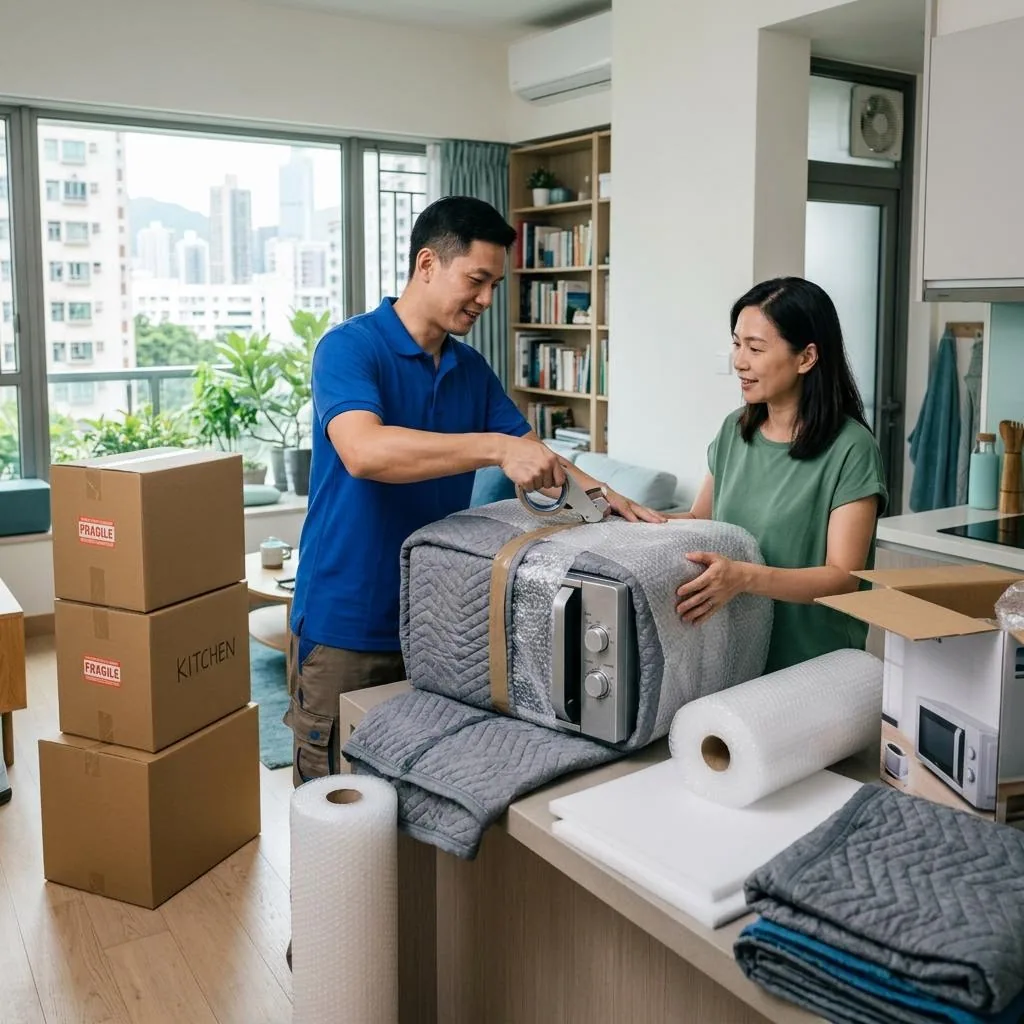
Lacking the original box does not mean you must buy a special package immediately. Common household items such as bubble wrap, thick towels, old T-shirts, bed sheets, clean paper bags, newspapers, and sturdy storage boxes can all work as temporary protection. The key is to use clean, dry materials that are thick enough to absorb impact. Thin plastic bags or a single layer of newspaper usually do not provide enough shock resistance.
If the appliance has a glass door, transparent jug, or delicate control panel, start with a soft fabric layer and add bubble wrap on the outside. Do not tape directly onto painted or coated surfaces, because removal later may damage the finish. Before wrapping, empty water, coffee grounds, food residue, and detachable power cords, and make sure the unit has fully cooled down and dried out.
The safest packing order: detach, wrap, then fill gaps
A practical way to pack small appliances is to deal with removable parts first, then the main body. Turntables, inner pots, glass jugs, blades, trays, and filters should be packed separately, ideally with labels showing which appliance they belong to. The main unit can first be covered with a thin cloth or cling film for dust protection, then wrapped in at least two layers of bubble wrap or thick towels, with extra padding at corners and edges.
When placing items into a box, choose a rigid carton or storage box of a suitable size. Put cushioning material on the bottom, place the appliance upright, and fill all empty spaces with crumpled paper, fabric, or soft padding so the item cannot move. Mark the box with notes such as fragile and this side up. If there are several accessories in the same box, layer them carefully so heavy items do not press onto lighter ones. Check that knobs, lids, hinges, and protruding buttons are secure before closing the box.
What to check before departure and after arrival
Packing is not finished once the box is closed. Before loading, confirm that the lid is secure but not sealed so tightly that inspection becomes difficult at the destination. If some accessories belong to the same appliance, it helps to list them on the outside, for example main unit, glass jug, power cord, and filter, so nothing is misplaced after the move. If moving day is rainy or humid, add a water-resistant outer layer only after making sure the appliance is fully dry inside.
Do not plug in the appliance immediately after arrival. First remove the outer wrapping and check for dents, cracks, loose screws, or shifted parts, and verify that all accessories are present. Only then place the item in its final position. If the appliance requires electrical connection, gas work, fixed installation, or water connection, it should be handled by a qualified professional. If you notice odd smells, unusual noise, or visible damage, stop using it and arrange a proper inspection first.
Common mistakes that often cause damage
Many people think that packing thicker is always better, but relying on just one material can be a mistake. Newspaper alone has limited shock absorption, while towels are soft but can shift during transit. Another common error is mixing several appliances in one box, or throwing cords, accessories, and the main unit together, which leaves too much empty space and allows items to bang into each other.
People also forget to clean the inside of the appliance before packing. Residual water in a coffee machine, food residue in a microwave, or grease in an air fryer can cause stains, odours, or leakage after wrapping. If the appliance has brittle plastic parts, a thin door panel, or existing hairline cracks, take photos before moving. Tell the movers clearly which items are fragile or must stay upright, and ask them to confirm receipt and condition when loading.
When to consider asking movers for help
If you have many appliances of different sizes and need to pack cookware, books, and household items at the same time, doing everything yourself can take a lot of time. For flats with narrow staircases, tight turns, no lift, or village-house access, the route itself already carries risk. In that case, the key is not to force it, but to decide in advance which items you will pack yourself and which should be handled together with the move.
For larger or structurally more complex appliances, provide the mover with the model, size, number of accessories, and moving conditions in advance, and ask for written confirmation of the packing method, loading plan, and responsibility scope. If the job involves electrical work, gas work, medical equipment, structural changes, or other specialised installation tasks, use the appropriate qualified professional. To review service arrangements, pricing details, or terms, check Online Quote, Moving house price list, and Service terms before booking.
Frequently Asked Questions
Can I just wrap a small appliance in a plastic bag if I do not have the original box?
Not recommended. A plastic bag helps with dust only and offers almost no shock protection. Wrap the item with fabric or bubble wrap first, then place it in a rigid container and fill all gaps.
Should removable parts be packed with the main unit or separately?
Pack them separately whenever possible, and label which appliance they belong to. Glass parts, blades, trays, and cords should never be left loose against the main body.
Can newspaper replace bubble wrap?
It can be used as filler, but not as the main protective layer. Newspaper is useful for filling voids, while bubble wrap, thick cloth, or soft padding should provide the actual cushioning.
Can I plug the appliance in immediately after moving in?
Do not rush. Check the casing, accessories, and any signs of smell or leakage first. If the item needs electrical connection, gas work, or installation, use a qualified professional.
What should I ask a mover about packing and handling?
Ask about the packing method, fragile-item handling, route constraints, stair or lift access, how damage will be checked on arrival, and any relevant terms. Request written confirmation where needed.


