MOVING TIPS & ADVICE
How to Prevent Leaks When Moving Seasoning Bottles with Cling Film
Key answers
Seasoning bottles are among the easiest items to leak during a move. Wrapping the cap area with cling film, securing it with a rubber band, and separating liquids into zip bags can reduce mess and cleanup.
Why bottled condiments are the first items to leak
Bottled condiments may sit safely in the kitchen every day, but moving changes everything. Road vibration, stair movement, and pressure inside packed boxes can loosen caps and let liquids seep out. Soy sauce, oyster sauce, fish sauce, and cooking oil only need a tiny gap to create a big mess.
Hong Kong kitchens are often compact, so several bottles are usually packed into one box. Without leak protection, one bottle can contaminate towels, tableware, and packing paper. It is usually far easier to seal liquids properly before packing than to clean up after a leak at the destination.
The correct way to seal the bottle opening
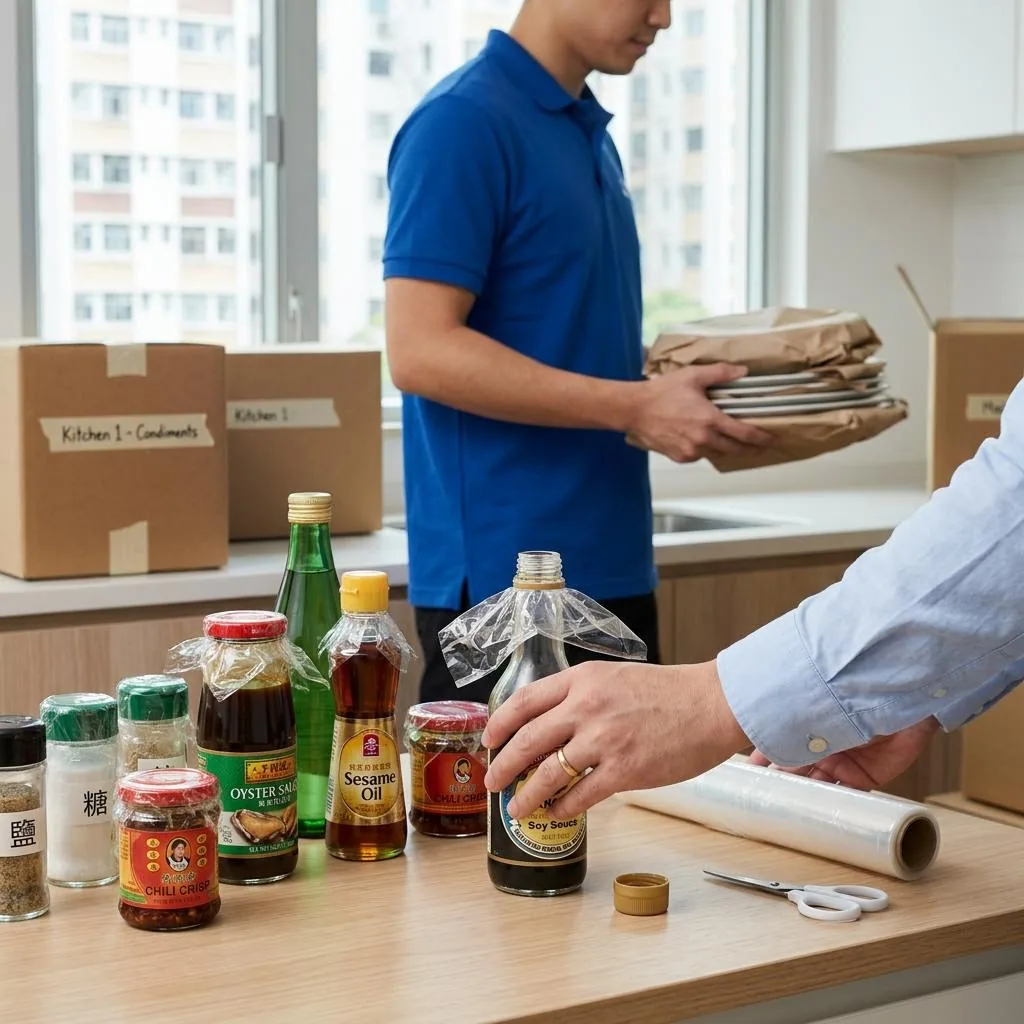
The method is simple, but the steps matter. First, unscrew the cap and place a small piece of cling film over the bottle opening. Fold it once or twice if needed so the entire mouth is covered, then screw the cap back on tightly over the film. Finally, wrap a rubber band around the neck to hold everything in place.
This adds a physical barrier at the mouth of the bottle and helps reduce seepage through the threads. Cling film does not replace the original cap, though. If the cap is cracked, misshapen, or the bottle has pressure buildup, do not rely on this method alone. Use a better container or repack the contents first.
Use zip bags and separate boxes for better protection
Cling film works better when combined with a second layer of protection. Put each sealed bottle into a zip bag and group liquids by type, such as sauces, oils, and vinegar. If one bottle leaks slightly, the spill is more likely to stay inside the bag instead of spreading through the whole box.
Liquids should also be packed in a separate box rather than mixed with bowls, documents, or bedding. Line the bottom with an old towel or paper to absorb small leaks, then fill any empty spaces with soft items to reduce movement. Label the box clearly as liquid and leak-prone so it can be placed upright and handled carefully.
When cling film alone is not enough
Large cooking oil bottles, glass bottles with cracks, or caps with dried residue around the threads are not good candidates for cling-film-only packing. In these cases, the seal is already compromised, and a tilt or squeeze during transport may trigger leakage. A safer option is to transfer the contents to a container in better condition before packing.
Some people tape the cap directly with packing tape, hoping to seal it completely. That often leaves sticky residue and still does not stop liquid from escaping if the bottle leaks from the mouth or threads. Packing tape is better used on the outside of the carton, not on the bottle opening itself. If you are unsure, check the container carefully before packing.
Pre-packing checks and common mistakes to avoid
Before packing, inspect each bottle for cracks, bent caps, or residue around the mouth. If the outside is already sticky, wipe it clean first; otherwise the cling film and rubber band may slip. After sealing, turn the bottle upside down for a few seconds to check whether anything escapes, then decide whether a zip bag is also needed.
Common mistakes include stacking heavy bottles, packing liquids beside sharp objects, or leaving too much empty space in the box. At the destination, open the liquids first in an easy-to-clean spot. If a leak has already happened, deal with the source first and avoid dragging contaminated items around the home.
How to reduce trouble before and after moving, and when to get help
If you only have a few kitchen bottles, careful DIY packing is usually enough. But if you are moving a full household, dealing with narrow stairs, or covering a long carrying distance, the packing itself becomes a bigger risk. Plan your packing order early and handle liquids, cleaners, and fragile items before the rest.
If you need to move large furniture, heavy appliances, or access that is awkward to carry through, consider arranging suitable moving help. Electrical reconnection, gas work, structural changes, medical items, or other specialist tasks should be handled by qualified professionals. For service scope and arrangements, please refer to Online Quote, Moving house price list, and Service terms.
Frequently Asked Questions
Should I clean the bottle mouth before using cling film?
Yes. Any oil or sauce on the mouth can make the film slip and reduce the seal. Wiping it clean first gives a much more stable result.
Is one layer of cling film enough for a condiment bottle?
For many small to medium bottles, one or two layers may work, but a zip bag is still a good second layer if the cap is not in perfect condition.
Can I use this method for large oil bottles or glass bottles?
Not if the container is heavy, cracked, or otherwise weak. Check the condition first and use a more secure packing method if needed.
Can liquids and tableware go in the same box?
It is not recommended. Liquids should be packed separately from tableware, documents, and bedding so any leak is easier to control.
What should I do if I find a leak after arriving?
Move the leaking bottle away first so it does not spread to other items. Then clean the spill with paper or cloth and inspect nearby items for contamination.


