MOVING TIPS & ADVICE
How to Label Moving Boxes So You Can Find Things Fast in Hong Kong
Key answers
Poor labeling is why people cannot find daily essentials after moving. Use labels on three sides, color coding, box numbers, and a separate must-use list to cut down post-move confusion.
Why good labeling makes moving day easier
The biggest problem after a move is not having too few boxes. It is having every box marked in a vague way. If everything is written as “miscellaneous,” or only a rough room name is listed, you will waste time opening the wrong box when you need shampoo, chargers, documents, or bedding.
Good labeling is not about decoration. It helps you, your family, and the movers identify what is inside, where it should go, and what should be opened first. Spending a few extra minutes before sealing the box can save a lot of rehandling and re-sorting later.
Write on three sides so stacked boxes stay readable
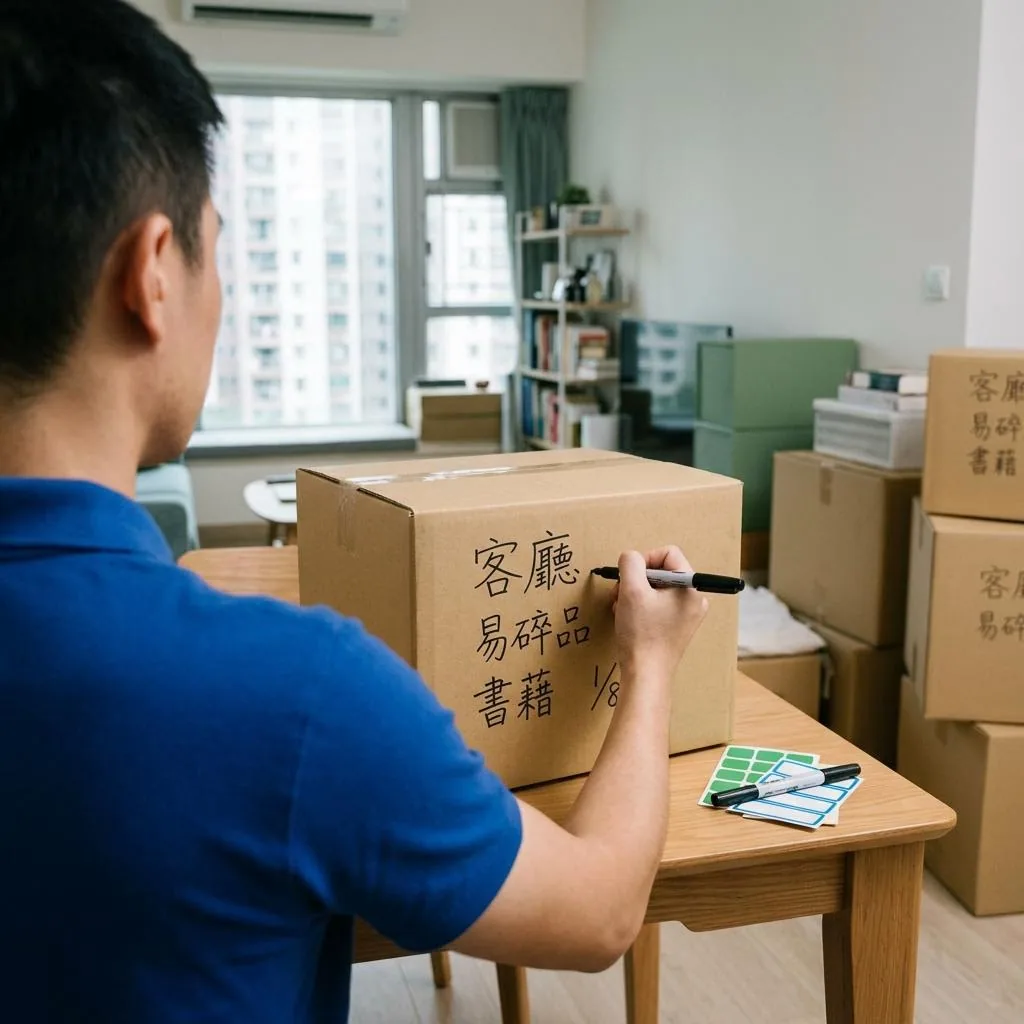
The most practical method is to write on the top and on two adjacent sides, with a clear room name and a short content note, such as “master bedroom - winter clothes” or “kitchen - fragile dishes.” During the move, boxes are often stacked high, and a label only on the top can disappear from view.
Use a thick marker and large lettering so the label stays readable from a distance. Avoid tiny handwriting or abbreviations that only you understand. If a box needs special handling, add a simple note such as “open first,” “keep upright,” or “fragile,” but keep it brief and easy to read.
Color coding plus box numbers makes placement much easier
If you want unpacking to be more organized, assign a color to each zone of the new home. For example, use one color for the living room, another for the bedroom, and another for the kitchen. Put the color sticker or tape near the written label so the mover can see the destination at a glance.
Add a unique box number as well, such as “BR-01” or “KT-03,” and keep a simple note on your phone listing what is in each box. When you need something later, you can search by box number instead of opening every box. This saves time and reduces the chance of missing items.
Separate urgent items from things that can wait
Besides sorting by room, separate the things you need on day one from the things that can stay packed a little longer. Identification documents, medicine, charging cables, cleaning supplies, simple cutlery, towels, and a change of clothes should go into a dedicated essentials box, not into mixed clutter.
Some items are similar in type but very different in timing, such as winter clothes, books, collectibles, and everyday supplies. Mixing everything together may save space, but it makes unpacking much harder. Before sealing each box, think about what you will need on the first night and keep those items easy to reach.
Common mistakes: vague labels, overfilled boxes, and no list
Many people rush and mix items from different rooms into one box, then write only “other” or “not urgent” on the outside. That may feel efficient at first, but it leaves you with no direction when you actually need something and end up searching box by box.
Another common problem is overpacking. When a box is too full, labels may get covered by tape, the box can lose shape, and the seal may weaken. Before closing the box, check whether the weight is manageable. Fragile items should be wrapped separately, and heavy items should not all go into one box. If you are unsure about packing methods, ask the moving company what can be arranged and request written confirmation.
What to check before moving and after arrival
The day before the move, review each box and make sure the label is clear: box number, room, short contents, and any special note. If there are building rules, lift restrictions, parking details, or loading arrangements, keep them in one short note so you can follow up easily on moving day.
After arriving, place the boxes by room first and open the essentials box before anything else. Do not start by opening random boxes just because they are nearby. If a box is damaged, a label is missing, or the contents do not match the note, check it on the spot with the movers and keep a record. For broader planning, see /guides/moving-timeline and Moving boxes and labelling guide.
Frequently Asked Questions
Is writing only the room name on a moving box enough?
Usually not. A room name only gives a rough idea. It is better to add a short contents note, a box number, and a color marker so you can find things faster after moving in.
Should labels go only on the top of the box?
No. Put labels on the top and on two adjacent sides, because stacked boxes can hide a top-only label completely.
What should I write on the box label?
Use the room name, contents category, box number, and any special note, such as “master bedroom-02 / bedding / open first.” Keep it large and clear.
Do I need a separate essentials box for moving day?
Yes. Put documents, cables, towels, basic cleaning items, simple cutlery, and anything you need that night into one easy-to-reach box.
What should I do if I am unsure how to split items into boxes?
Sort by use and frequency first, then label each box clearly. If fragile items, heavy items, or special packing needs are involved, ask the mover for an arrangement and request written confirmation.


