MOVING TIPS & ADVICE
How to Move Large LEGO Models Without Scattering
Key answers
Before moving a large LEGO build, check weak points, remove protruding parts, pack the base firmly, and keep the box from shifting in transit. For complex or valuable models, confirm packing requirements and handling details in writing before booking.
Check the parts most likely to come loose
The main risk with a large LEGO model is not only a full collapse, but small parts loosening during handling. Before moving day, inspect antennas, flags, wings, stairs, transparent pieces, and hanging details, since these are usually the first points to fail. If the base already has gaps or damage, strengthen it first before any transport.
You do not need to dismantle the whole model immediately. Sort the build by risk: remove parts that can come off cleanly, and keep the main body intact where possible. Place removed pieces in small bags and label them by position, direction, and section so they can be restored later without guesswork.
Partial dismantling is usually safer than full teardown
For very large models, it is better to remove only the external fragile parts rather than breaking the entire build into many loose pieces. If you fully disassemble too much, the chance of missing parts or mixing sections during reassembly increases. Take photos before packing, ideally from the front, back, and top, and note which pieces are decorative and which are load-bearing.
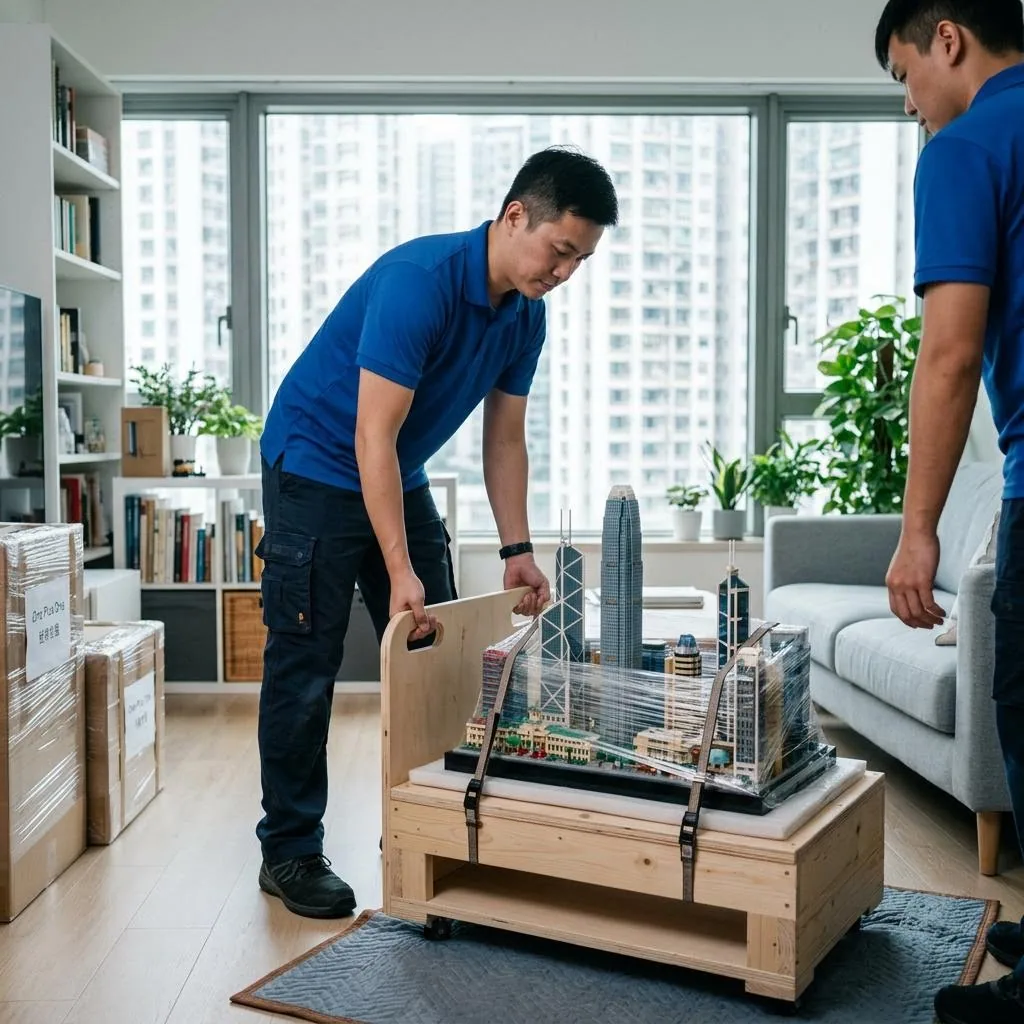
For the main structure, use soft wrapping on the outside and secure the wrapping at the edges, but do not tape directly onto the bricks. If the model is already loose inside, do not try to reinforce it with glue, metal pins, or unknown adhesives. That can damage the build, so ask an experienced model handler for advice first.
The box should support the base and remove all gaps
When packing, keep the box bottom flat and add a cushioning layer first. Set the model down securely, and if the base is uneven, use cardboard or soft padding to balance the contact surface so no single point takes too much pressure. Fill all side gaps with soft, clean, non-sharp material so the model cannot shift inside the box.
Do not use hard newspapers, books, or irregular junk to fill spaces. Under pressure, those items can scratch the surface, push small parts out of line, or loosen sections that were previously stable. If the build is tall, choose a box close to its size and reinforce the outer carton rather than leaving extra room for movement.
During transport, prevent vibration, pressure, and stacking
Label the box clearly with up arrows and fragile warnings, and tell the movers that the contents need slower handling on stairs, corners, and loading points. In the vehicle, place the box in a stable area away from sliding furniture and heavy items, and do not trap it under mattresses, wardrobes, or other stacked loads.
For Hong Kong conditions such as narrow staircases, tight turns, and older buildings without lifts, leave enough clearance so the box does not scrape against walls. When going up or down stairs, one person should support the base while another clears the route and watches the front. Do not carry a tall box quickly with one hand, because a sudden tilt can make parts separate.
On arrival, inspect first and reassemble later
After reaching the new home, check the box for compression marks, tilting, or moisture before opening it. Remove the packing materials layer by layer instead of pulling everything out at once, because small parts may fall together. Compare the build with the pre-move photos and check for loose connection points and base movement before restoring anything.
If some parts are missing or detached, keep the pieces in one area and sort them first rather than rushing to rebuild. For very large or complex models, or if you are unsure which section carries the weight, ask someone familiar with model structure to help. If you want a formal moving arrangement, you can start at Online Quote and include the model size, floor levels, and whether it can be partially dismantled.
What to ask a mover before you book
When choosing a moving team, do not only ask whether they have moved toys or models before. Ask whether they will handle highly fragile items, whether they can follow your packing method, whether you need to remove any parts in advance, and what you should prepare before arrival. Request written confirmation of packing requirements, responsibility boundaries, and arrival timing so there is no last-minute change on moving day.
Also confirm whether large LEGO boxes will be mixed with general cartons and whether they will ask you to add tape or carry the box to the vehicle yourself. If you want to organise the build first, see Moving boxes and labelling guide for labelling ideas. If you want to plan access routes and building entry points in advance, check Moving access size tool.
Frequently Asked Questions
Do large LEGO models always need to be taken apart before moving?
No. Usually only the most fragile protruding parts need to be removed, while the main body can stay intact if the structure is stable.
Can I tape directly onto LEGO bricks?
It is not recommended. Tape may leave residue or pull parts loose. Secure the wrapping material instead of sticking tape onto the surface.
Should the box be packed tightly or left with some space?
It should be packed snugly, but with soft padding only. The goal is to stop movement, not to squeeze the model with hard objects.
Should I move a large model myself or use a mover?
If the build is tall, highly detailed, or structurally complex, a mover with experience in fragile items is usually safer. Explain the size and difficulty before booking.
What should I do if pieces are missing after arrival?
Keep the loose pieces and packing materials, compare them with your photos and packing notes, and rebuild slowly. If the structure has shifted, stabilise it before reassembly.


