MOVING TIPS & ADVICE
Practical Guide to Packing and Moving Fragile Items
Key answers
Fragile-item moving starts with sorting, then packing, then loading. Use the right materials, fill every gap, label clearly, and check the items on arrival, especially in Hong Kong homes with narrow corridors, stairs, and tight turning points.
Sort first, then choose the packing method
Before moving fragile items, sort them by material and how easily they break, such as glassware, ceramics, frames, lamps, ornaments, and small electronics. Different items need different levels of protection, and sorting first helps avoid using the same method for everything or missing a weak item.
For screens, mirrors, lampshades, or items with loose parts, remove detachable pieces first and pack them separately. If an item is bulky, irregularly shaped, or already cracked, take photos of its condition first, then decide whether extra reinforcement is needed and tell the mover which parts are most vulnerable.
Use stable packing materials and fill every gap
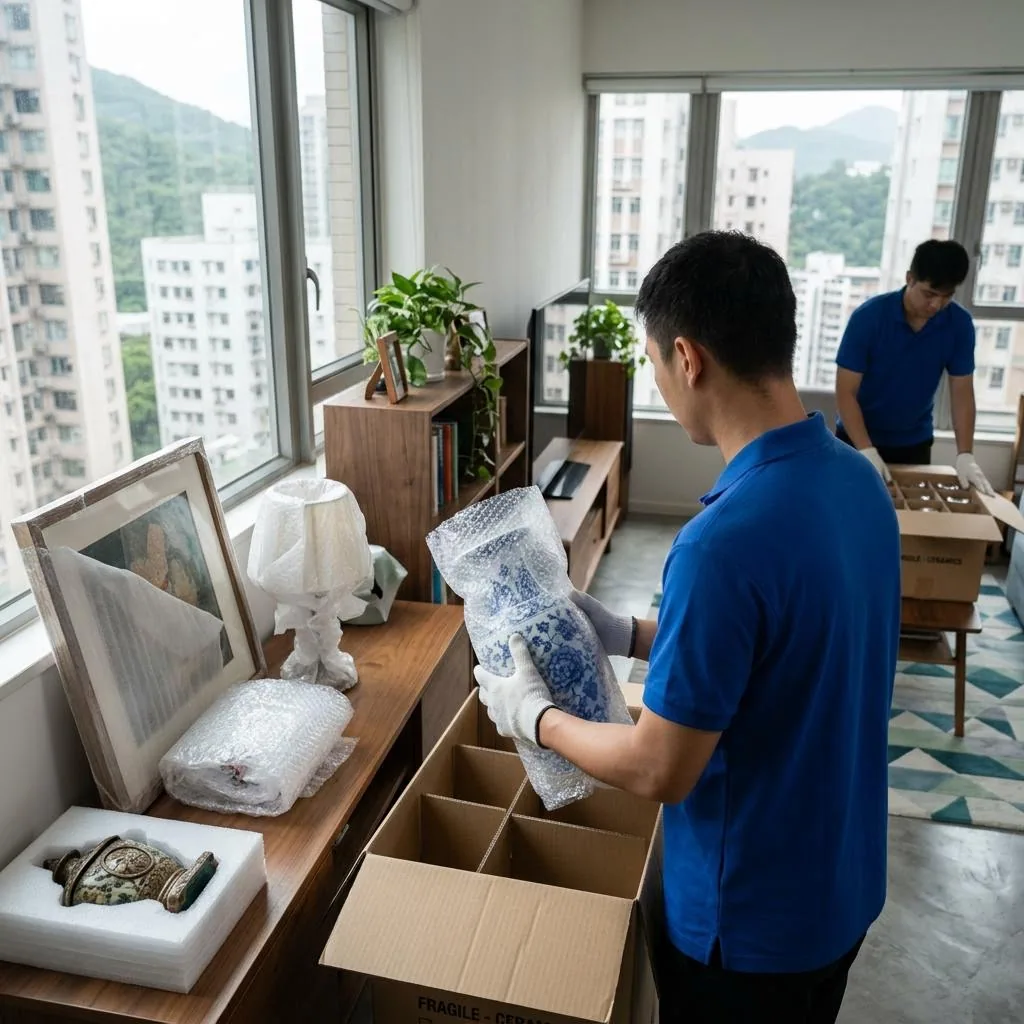
Fragile items are damaged most often when they move inside the box, so packing is not only about wrapping the surface but also about holding the shape in place. Common materials include bubble wrap, thick cardboard, packing paper, clean towels, and a sturdy box; heavier items should have a reinforced base layer before they are placed inside.
Wrap each item separately, especially glass and ceramic pieces, so they do not touch each other directly. After placing items in the box, fill all empty spaces firmly so nothing can shift. If the item scratches easily or breaks into pieces, add a cardboard divider, but do not overpack or press heavy items against the surface.
Seal and label clearly so movers can handle the box correctly
Before sealing, check whether anything inside is loose, then strengthen both the bottom and top seams with tape. Do not rely on one strip across the middle only; corners and joints also need support, otherwise the box may open when carried on stairs or loaded into a vehicle.
Write the contents, room destination, and orientation clearly on the outside, such as Fragile, This Side Up, or Load Last, but keep the wording readable and practical. If the box contains especially delicate pieces, prepare a simple contents list and tell the movers at handover so these boxes are not stacked like ordinary cartons.
Plan the route, balance the weight, and coordinate on site
Check the building entrance, lift, stair turns, and corridor width before moving day. Many older Hong Kong buildings have tight spaces, so a box may need to be repacked into smaller cartons if it is too large for the route. Clear door thresholds, slopes, and corners in advance to avoid sudden stops or wall impacts.
Do not place the heaviest items on top of lighter ones, and do not leave glass boxes in positions where they will be pushed or squeezed. For large or heavy fragile items, have at least two people carry them together and plan the loading order in advance. If you are unsure whether one item should be loaded with other boxes, separate it.
Inspect on arrival before deciding what to open first
After arriving, count the boxes by number and check whether any outer cartons are crushed, torn, or damp before opening them. If the box is deformed, open it slowly instead of pulling the tape quickly, so the contents do not fall out suddenly.
When unpacking, check the top layer and all four sides first, then remove each item one by one and look for cracks, chips, or loose parts. If you find damage, keep the outer box, filling materials, and photos. For any electrical item that no longer works properly, ask a qualified technician to inspect it rather than trying to repair it yourself.
Common mistakes and when to ask for professional help
The most common mistakes are loose packing, too much empty space in the box, mixing heavy and light items together, or writing only Fragile without any real sorting plan. Another issue is leaving packing until the last minute, which leads to rushed stacking and insufficient protection.
If you have many items, different sizes, large mirrors, a piano, a safe, antiques, or expensive decorative pieces, explain the details to the mover in advance and ask for written confirmation of the handling arrangement and scope of responsibility. For dismantling, electrical work, gas work, medical items, or structural tasks, use a qualified specialist instead.
Frequently Asked Questions
What is the first thing to prepare for fragile items?
Prepare sturdy boxes, bubble wrap, tape, and filler materials first. Then pack by item type and fragility, keeping each piece individually protected and filling all internal gaps so nothing shifts during the move.
Can glass and ceramic items go in the same box?
It is better not to mix them directly. If they must share a box, wrap each item separately, add cardboard dividers, and make sure the pieces do not touch each other. Heavier or thinner pieces should be boxed separately when possible.
Is writing Fragile on the box enough?
No. It is better to write the contents, room destination, and upright direction as well, so movers know how to place and handle the box and avoid stacking pressure or upside-down loading.
What should I do if the outer box looks fine but the item inside is broken?
Keep the outer box, packing materials, and photos. Do not throw anything away too quickly. You can then ask the mover for clarification, and refer to Service terms and Online Quote for written confirmation details.
Which fragile items should not be carried casually by yourself?
Large mirrors, floor lamps, glass cabinets, antiques, heavy ornaments, and awkward high-value items are not suitable for casual carrying. These should be discussed with the mover first, and specialist help may be needed depending on the item.


