MOVING TIPS & ADVICE
How to Classify and Pack Fragile Items for a Move
Key answers
Sort fragile items by material and use, then pack them with the right padding, box size, and labeling. Careful packing reduces bumps, pressure damage, and scratches during a Hong Kong move.
Sort items before you choose how to pack them
Do not treat every fragile item the same. A practical first step is to sort them into glassware, ceramics, ornaments, framed art, and small electronics or accessories. Then look at the material, shape, and weight: thin glass needs cushioning, plates need pressure protection, frames need support against bending, and electronics need space to avoid rubbing against cables or casings.
Place each group in its own working area and inspect items for chips, loose parts, or existing cracks before packing. If you still have the original box, keep it, because the inner insert is often the best fit. If not, choose a box by size and stability, not just by convenience or how many items you want to fit inside.
Choose packing materials that match the item
The goal is not to use as much material as possible, but to match the protection to the object. Common options include bubble wrap, clean packing paper, rigid cardboard, dividers, and void fill. For framed prints or artwork, keep the surface flat and avoid creasing; for delicate ornaments, protect protruding edges first, then add a second layer around the whole item.
Old newspapers can be used as filler, but ink may stain light-colored items, so use a clean paper layer first. For heavier fragile pieces, avoid soft bags or weak cartons that may sag at the base. If an item is unusually shaped, make sure the box gives it support on all sides rather than letting it move loosely in the middle.
Wrap each item separately so nothing touches directly
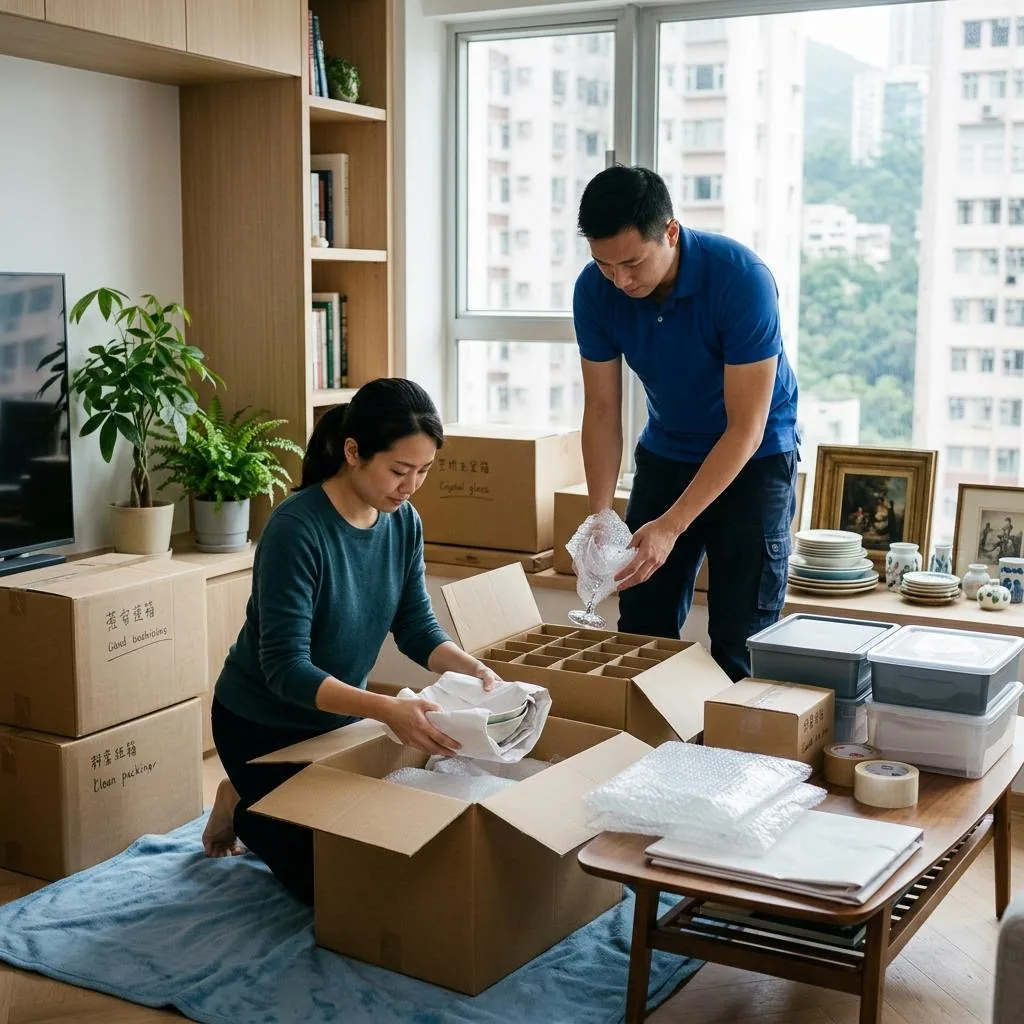
Pack one item at a time instead of bundling several pieces in one sheet. Start with packing paper, then add bubble wrap as needed. For hollow pieces such as cups or vases, add a small amount of soft paper inside, but do not force it in so tightly that the shape is stressed. Plates and saucers are usually safer when packed upright, with separators between each piece.
Use tape to secure the outer layer, but do not tape directly onto painted surfaces, labels that may peel, or delicate finishes. Lids should be wrapped separately from containers. Thin objects such as lamp shades or glass decorations should sit higher in the box and away from harder items so they are not crushed from above.
Pack the box so items cannot shift or press against each other
Too much empty space lets items knock together, while too little padding lets pressure transfer through the box. Line the bottom first, place heavier pieces lower and lighter ones above, then fill the sides so the contents stay still when the box is gently shaken. If the box still moves, add more padding before sealing it.
Seal the base with tape across the seam and reinforce weak points. Do not overfill the box, and do not mix heavy items with fragile ones in the same carton. If different item types must share a box, separate them with cardboard dividers. A hard stop, sudden turn, or corner impact can damage more than one item at once if they are packed too tightly together.
Label clearly and check before moving day
Every box should show what is inside, which room it belongs to, how fragile it is, and which side should stay up. A label like “living room - glassware - this side up” is more useful than a single word alone. Clear labeling helps with loading order, placement in the vehicle, and faster unpacking at the new home.
After packing, make a simple inventory with box numbers, main contents, and any special notes. Check the list again before moving day. If an item already has cracks, loose fittings, or a part that requires specialist removal, deal with that separately instead of forcing it into the move. Electrical, gas, medical, structural, and technical matters should be left to qualified professionals.
Unpack in the right order and avoid the usual mistakes
At the new place, open the most fragile and most frequently used boxes first, such as plates, cups, frames, and daily decorations. Unpack them on a stable surface and inspect for cracks, chips, or pressure marks. If damage is found, keep the packing materials and photos, then follow up in writing where needed; for policy or claim questions, refer to Service terms for written confirmation.
Common mistakes include skipping sorting, using too little padding, making the box too heavy, mixing different materials together, and forgetting orientation labels. If you have many items, odd sizes, or larger fragile pieces, ask the mover in advance how they want them prepared. You can also review Box packing service and Moving checklist before packing day.
Frequently Asked Questions
Should glass cups and plates be packed the same way?
No. Glass cups are usually packed one by one and kept upright, while plates should be separated and packed upright as well. They are safer in different boxes so they do not press against each other.
Can old newspapers be used directly around fragile items?
They can be used as filler, but not as the only wrap for light-colored or stain-sensitive items. A clean paper layer first is the safer choice.
What is the biggest risk for framed art?
Bending, surface scratches, and pressure points. Keep the item flat, protect the corners, and do not place heavy objects in the same box.
What should a useful fragile label say?
Include the room, the contents, and the upright direction, for example “bedroom - ceramic cups - this side up.”
Should I fill every empty gap in the box?
Yes, but only with enough padding to stop movement. Do not pack so tightly that items press into each other or the box bulges.


