MOVING TIPS & ADVICE
Practical Steps for Cleaning and Organizing After a Move
Key answers
After moving in, clean first and then organize by room and priority. This guide explains how to prep the space, unpack in stages, protect daily routines, and avoid common post-move mistakes in Hong Kong homes.
Clean the new home before moving items into place
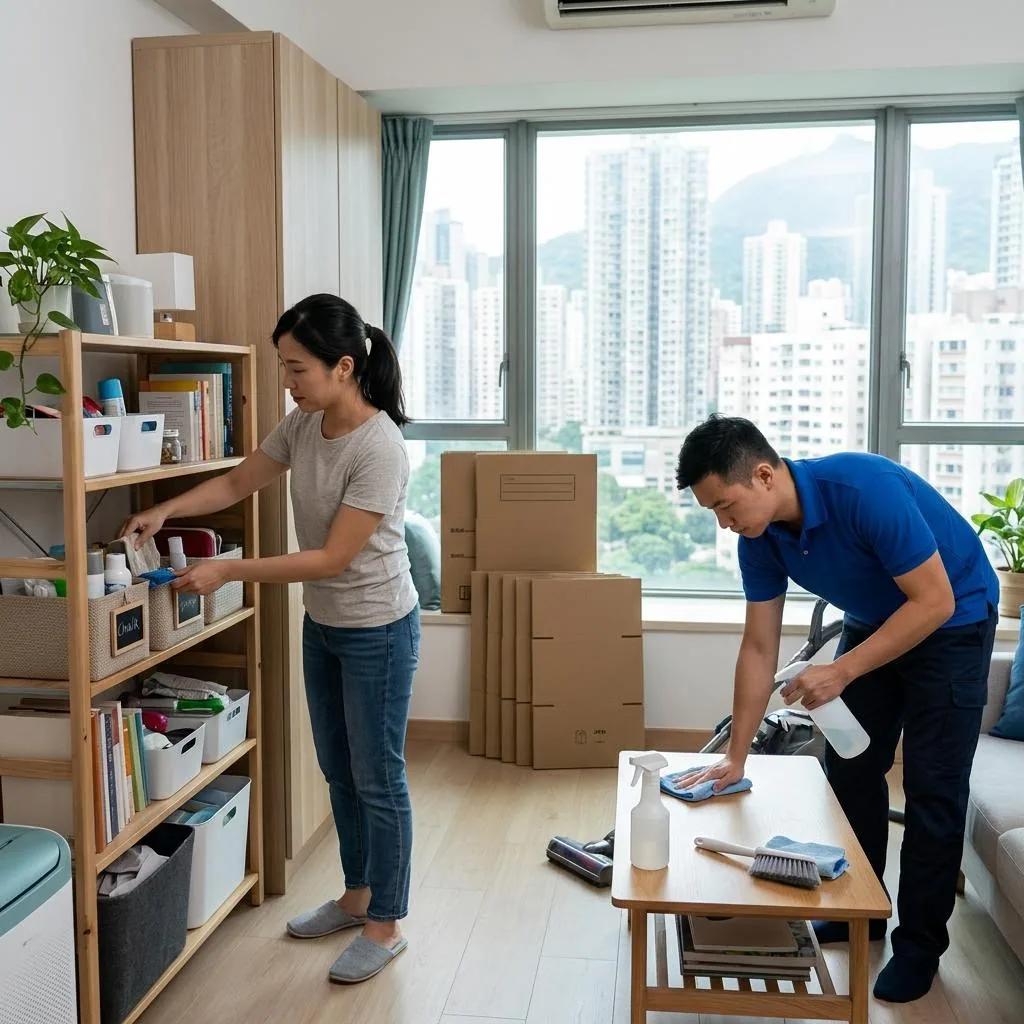
Once you arrive, do not rush to open every box at once. Start with a basic clean: sweep or vacuum the floor, remove dust from corners, windowsills, cabinet tops, and door frames, then wipe down touchable surfaces before placing boxes into their proper rooms. This saves you from cleaning around scattered items later and helps you understand the layout and usable space more clearly.
If the flat has just been handed over, renovated, or left empty for a while, there may be more debris in floor edges, window tracks, kitchen cabinets, and bathroom joints. Check for leaks, mould spots, loose fittings, or broken glass. If the issue involves electricity, gas, seepage, or structural defects, it should be handled by a qualified professional rather than attempted as a DIY fix.
Unpack in stages by room and priority
The easiest way to stay organized is to avoid opening every box together. Begin with high-use items such as bedding, spare clothes, toiletries, tableware, chargers, important documents, and cleaning supplies, then unpack room by room: bedroom, living room, kitchen, and bathroom. Finishing one area before moving to the next gives you visible progress and keeps the home from becoming cluttered all at once.
While unpacking, check items against your list to see whether any boxes are missing, damaged, or labelled incorrectly. If a box was marked too vaguely, such as just “miscellaneous,” it becomes harder to sort later. When you repack in the future, label boxes with the room, contents, and priority level so you can place them more efficiently on arrival.
Use a simple storage system that supports daily routines
In Hong Kong homes, space is limited, so organizing should focus not only on fitting everything in, but also on making it easy to use. Keep frequently used items in the most accessible spots, and move seasonal or rarely used items to upper cabinets, under-bed storage, or a designated storage area. Do not overfill drawers and shelves, or routine cleaning and retrieval will become difficult.
Clear bins, dividers, labels, and file folders are useful, but consistency matters more than the container itself. Choose one system, such as sorting by room, by function, or by family member, and keep to it. If there are elderly people, children, or anyone who needs extra support in the home, place medicines, documents, daily clothing, and emergency essentials within easy reach, and keep heavy items low.
Set up the kitchen, bathroom, and bedroom first
The first three areas to finish are usually the bedroom, bathroom, and kitchen. In the bedroom, set up the bed and the items you need at night so everyone has a proper place to rest. In the bathroom, place towels, toiletries, and cleaning products first so the space is usable on the first night. In the kitchen, organize basic cookware, tableware, drinking water, and simple ingredients to reduce the pressure of eating out every meal.
Kitchens and bathrooms are more sensitive to moisture and grease, so ventilation matters before and after unpacking. If the fridge, exhaust system, water heater, or drainage point needs connection or repair, it should be handled by a qualified technician. Do not try to dismantle or adjust such systems yourself. Keep sharp tools, cleaning chemicals, and fragile items separated to avoid accidents while searching for things.
Check for damage, missing items, and follow-up needs
It is wise to inspect items while you organize them, rather than discovering problems much later. Check furniture, appliances, mirrors, panels, glass, drawer runners, and small fittings for scratches, looseness, missing parts, or dampness. If anything is wrong, take photos right away and keep the relevant receipts, packing materials, and inventory notes so you can follow up clearly.
When you contact the mover, describe the issue factually instead of using a vague complaint. State which item is affected, where the problem is, and what you observed. If you need confirmation on responsibility, charges, or arrangements, ask for written confirmation. For prices and service terms, refer to Moving house price list and Service terms instead of relying on verbal understanding alone.
Common post-move mistakes and better ways to save time
A common mistake is emptying every box at once, which leaves the whole home in chaos and often creates more work later. Another is decorating before the essentials are ready, so practical items end up buried under ornaments. A better order is to secure daily function first, then improve the look of the home gradually.
If time is limited, set three simple goals: have a place to sleep that night, be able to cook the next day, and return to normal work or study within a few days. After that, finish storage in order of importance instead of trying to make everything perfect at once. For large or numerous items, or when moving has to be done in stages, you may also find /guides/moving-timeline and Moving boxes and labelling guide helpful, and you should confirm access and delivery arrangements with the mover in advance.
Frequently Asked Questions
Should I clean first or unpack first after moving in?
Clean first, then unpack the essentials by room. This reduces dust transfer and makes the layout easier to work with.
Which items should be organized first in a new home?
Start with bedding, toiletries, spare clothes, tableware, chargers, important documents, and basic cleaning supplies so the home can function right away.
What should I do if I find a problem with appliances or fittings?
Stop using anything risky, document the issue, and contact a qualified professional. Do not attempt DIY work for electrical, gas, seepage, or structural issues.
How can I avoid turning the whole flat into a mess while unpacking?
Unpack one room at a time and keep a simple checklist so boxes, labels, and priorities stay under control.
When should I follow up with the moving company?
As soon as you notice a missing item, damage, misplacement, or packing issue. Ask for written confirmation where needed, and check Service terms for the service framework.


