MOVING TIPS & ADVICE
How to Move Appliances Safely: Preparation, Packing, and Arrival Checks
Key answers
Before moving appliances, switch them off, empty or drain them, measure the route, and pack them by type. Check doorways, stairs, and the new room in advance so large or fragile items are less likely to be damaged or delayed.
Start With Basic Pre-move Preparation
Make a list of every appliance, noting size, weight, loose parts, glass panels, and power-cord positions. Refrigerators, washing machines, televisions, and microwaves all need different handling, so it is better to deal with them one by one instead of packing everything together at the last minute.
Measure doorways, corridors, lifts, stair turns, and the intended placement area at the new home before moving day. If any appliance is connected to gas, drainage, built-in cabinetry, or wall mounting, ask a qualified professional how to disconnect it; do not force it apart yourself.
Switch Off, Empty, and Drain Properly
Turn each appliance off and unplug it before moving, then allow it to cool or settle if needed. Empty the inside first: remove food and loose shelves from a fridge, and drain standing water from a washing machine before detaching the inlet and drain hoses and sealing the openings to prevent leaks.
Smaller appliances such as microwaves, rice cookers, fans, and air purifiers should also be cleaned first, with dust removed from the base and detachable parts packed separately. If the appliance has batteries, filters, ink, or fragile consumables, remove and label them separately to avoid leakage or loss.
Pack to Prevent Impact, Scratches, and Shifting
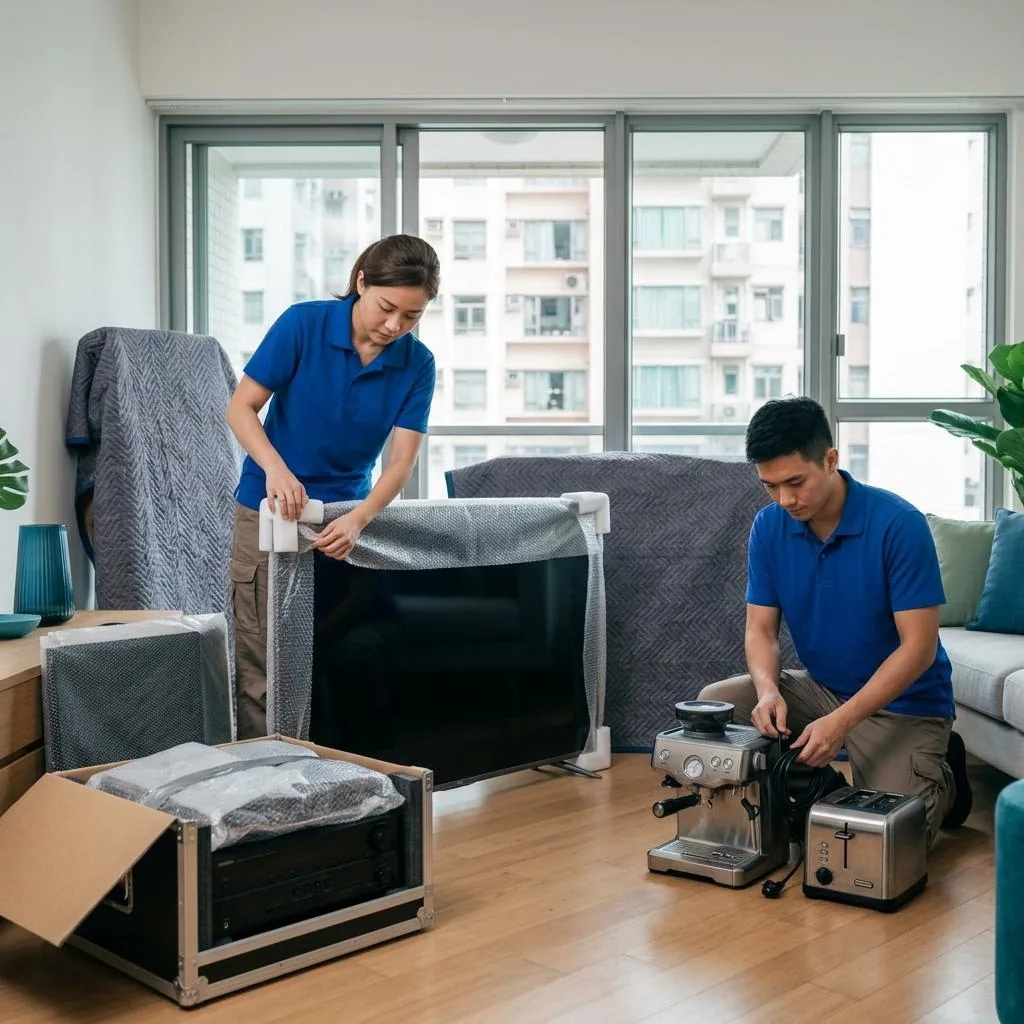
Wrap the outer casing with clean cloth, thick cardboard, or cushioning material, then secure it with stretch wrap, but do not fully cover vents, ports, or control panels. Televisions, monitors, and appliances with glass doors need extra corner and screen protection, and the box should be clearly marked this side up, fragile, and with the contents named.
Place screws, trays, manuals, and other small parts into labelled bags and keep them together in one box so they are easy to find later. After packing, gently shake the item to check for movement; if there is still empty space inside, add more padding, because vibration during transport can still cause damage.
Move With the Right Posture and Route
Large appliances should ideally be moved by two or more people, with one person watching the path and another stabilising the item. Keep the appliance upright as much as possible, especially compressor-based units. If a brief tilt is unavoidable, keep the angle and duration as small as possible and follow the appliance manual where applicable.
When going through stairs, door frames, or tight corners, clear the floor first and move slowly instead of forcing the item through. For old buildings, narrow hallways, uneven floors, or locations without direct lift access, tell the mover in advance and use a staged moving plan if needed to avoid tugging cords, scratching the casing, or damaging walls.
Check Again Before You Power It On
After arrival, do not rush to plug appliances in. Check the casing for cracks, verify that screws are tight, inspect cords for dents or bends, and make sure the item is standing level in its final position. Fridges and washing machines may need a settling period after transport, so follow the manual before starting them again.
If you notice unusual noise, poor door sealing, leaks, smells, or a control panel fault, stop using the appliance and keep photos and packing records for reference. Any electrical connection, built-in installation, gas connection, or other specialist work should be handled by a qualified professional rather than attempted as a DIY fix.
What to Ask the Mover Before Moving Day
If an appliance is bulky, heavy, valuable, or has to pass through a long staircase, a Tong Lau, a village-house slope, or a floor without lift access, explain the real conditions before quotation and request written confirmation of the scope, route limits, and whether dismantling is needed. Also mention glass panels, built-in water lines, fixed feet, or hard-to-access positions so the team can plan properly.
If you are unsure about the process, at least ask whether disconnection, draining, packing, loading, and placement at the new home are handled by the same team or whether you need to arrange a separate specialist. It helps to finish photos, labels, and clearing the day before moving, then cross-check items on moving day to reduce omissions and disputes.
Frequently Asked Questions
Do appliances need to be unplugged before moving?
Yes. All appliances should be switched off and unplugged first, and some larger units also need cooling, emptying, or draining before transport.
Can a washing machine or fridge be moved on its side?
Usually not for long periods. Compressor-based appliances should stay upright as much as possible. If a short tilt is unavoidable, follow the manual and keep it minimal.
How should a TV or monitor be packed?
Protect the screen and corners first, then secure it in a proper box or with strong padding. Mark the box fragile and this side up to reduce pressure and impact.
Can I turn the appliance on immediately after arrival?
Not always. Some appliances need a settling period before use, and any signs of leakage, noise, or damage should be checked by a qualified professional first.
When should I tell the mover about special conditions?
Before quotation and ideally before moving day, especially if the route is narrow, there are stairs, or the appliance needs dismantling or extra handling. Ask for written confirmation of the arrangement.


