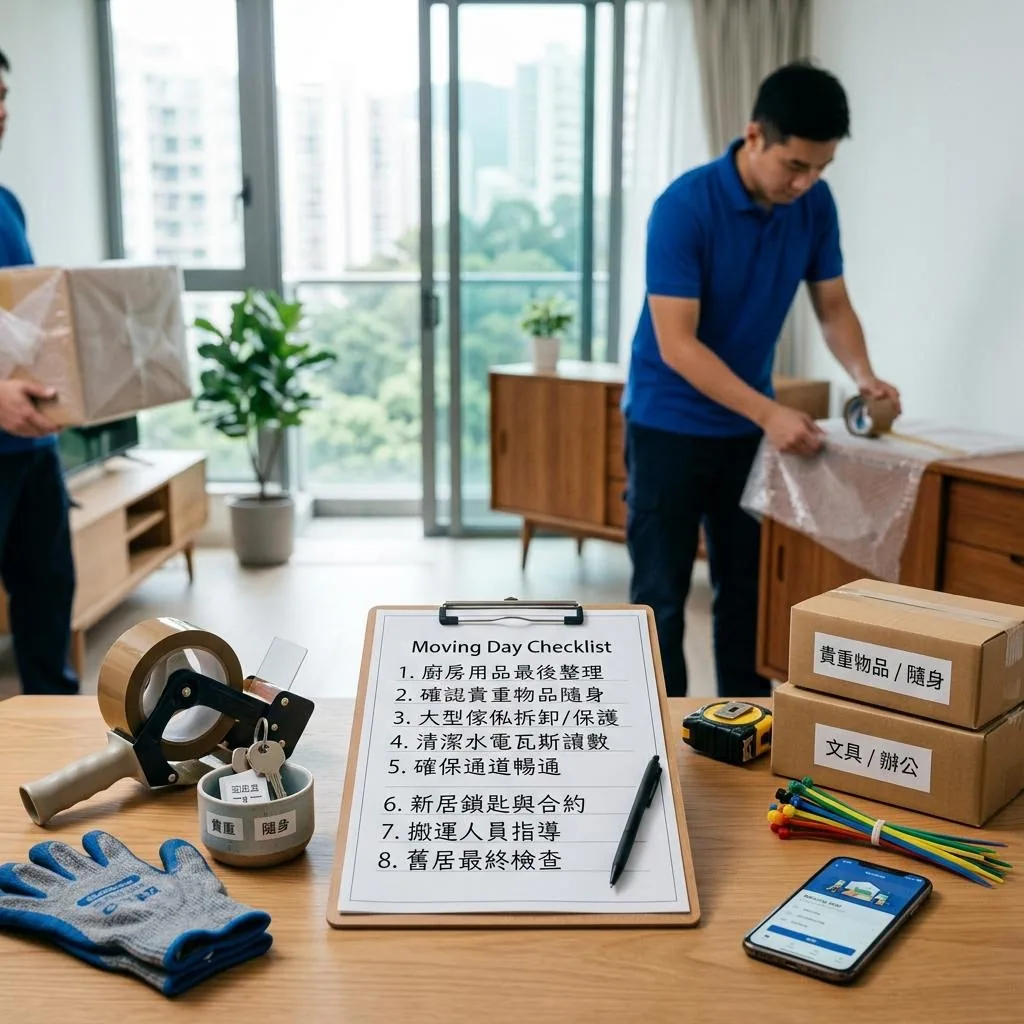
MOVING TIPS & ADVICE
Moving Day Checklist: How to Keep Your Hong Kong Move Organized from Start to Finish
Key answers
A clear moving-day timeline helps you avoid missed items, slowdowns, and repeated carrying. Use this checklist to handle packing, handover, unloading, and first-night setup with less stress.
The night before: sort the items you will need first
The biggest moving-day problem is often not the lifting itself, but not being able to find your ID, keys, phone charger, daily medication, a little cash, or the address for the new home when you need them. Keep these essentials in a carry bag, and prepare a separate “day-of bag” with tissues, a water bottle, scissors, a charger, trash bags, and basic cleaning items so they do not get mixed into the main cartons.
Do one last home check before bed. Make sure the fridge is emptied and defrosted if needed, and look inside drawers, under the bed, on windowsills, and around the washer, range hood, and balcony for small items. If your building needs booking for lifts, loading space, or security registration, confirm it with the management office in advance and save the contact number on your phone.
Before the crew arrives: clear pathways and confirm the key points
Before the movers arrive, clear the doorway, hall, and any narrow paths, and move away wet floors, loose items, or fragile decorations. If you live in a tong lau, village house, or a unit with tight corners, check the turning space and door frames for large furniture in advance, and tell the moving team if any item may need to be taken apart before moving.
When the crew arrives, explain which cartons should be handled first, which are fragile, and which need to go to a different room or floor. Keep your valuable belongings, important documents, and personal computer with you rather than mixing them into general moving boxes. If large furniture needs dismantling, confirm the scope, how the parts will be stored, and where you want the item reassembled at the new home.
Loading time: count items, separate them, and avoid misses
During loading, do not only watch the team work; use your own checklist to confirm the carton count, whether any box is left open, and whether anything needs to stay upright, such as mirrors, framed art, or appliance shells. If you have table lamps, seat cushions, footstools, or baby items packed separately, remind the crew where they should go so they are not squeezed under heavier items.
One of the most common moving-day mistakes is mixing fragile items into ordinary boxes or grouping everything from different rooms into one pile. Label each carton clearly with the room name, contents, and priority, such as “bedroom - bedding”, “kitchen - cups”, or “open first - chargers”. Before the truck leaves, walk through the balcony, bathroom, windowsill, closet tops, and behind large appliances one more time to make sure nothing is left behind.
Handover and departure: the spots people most often forget
Before leaving the old home, check the main door, and handle any meter reading, key return, handover, or tenancy return steps according to the owner, agent, or building management instructions. If shutting down, servicing, or removing air conditioners, water heaters, or gas appliances is involved, leave that to qualified professionals instead of trying to do it yourself.
Many people only notice late that rubbish, old clothes, cleaning products, and appliance packaging still need to be cleared, which forces a return trip. Make time for one final room-by-room sweep while the truck is nearly done loading, with special attention to the space under beds, bathroom cabinets, behind curtains, the bottom of shoe cabinets, and deep kitchen cupboards. If the building has strict management rules, leave time for parking, lift, or security procedures as well.
At the new home: set up the core living area first
When you arrive, do not rush to open every box at once. Start with the mattress, basic bathroom items, drinking water, simple cleaning supplies, and a change of clothes so you can rest and wash up properly that night. Large furniture such as bed frames, wardrobes, sofas, and dining tables should already have a planned placement so they do not need to be pushed around again after being brought inside.
Send each carton straight to the correct room wherever possible: kitchen items to the kitchen, books to the study, bedding to the bedroom. This reduces double handling and keeps the living room from becoming a giant storage area. After unloading, check for dents, scratches, corner damage, or missing parts, and take photos and written notes right away if you notice any problem.
What to ask when you hire help
If you are relying on a moving team on the day, do not only ask what time they will arrive. Ask how they handle site checks, whether dismantling is included, whether a carton list will be used, and how they deal with lift waits or parking restrictions. If your home is in a tong lau, village house, older building, or a walk-up, explain the entrance, stairs, turns, and parking point in advance so the plan fits the actual site.
Also ask which items should not be mixed with general cargo, which items you should keep with you, and how to adjust the plan if the site has limits. Any work involving electricity, gas, structural changes, medical devices, chemicals, or specialist technical handling should not be treated as normal moving work; arrange the proper qualified professional separately and confirm responsibilities in writing before moving day.
Frequently Asked Questions
What should I keep with me on moving day?
Keep your ID, keys, phone, charger, some cash, important documents, medication, and the new address with you at all times, not inside moving cartons.
Why should I label cartons by room and priority?
It lets the crew unload directly into the right rooms, reduces rehandling, and helps you set up the bedroom and kitchen first.
What should I do before the movers arrive?
Clear the entry path, confirm lift, parking, or management arrangements, and separate fragile, valuable, and priority items in advance.
What are the easiest places to forget during handover?
Under beds, inside bathroom cabinets, on windowsills, behind curtains, under shoe cabinets, deep kitchen cupboards, and behind the fridge are common missed spots.
What if my move involves appliances or gas equipment?
Do not handle those tasks yourself. Use qualified professionals for electrical, gas, or other specialist work, and confirm the division of responsibilities in writing beforehand.


