MOVING TIPS & ADVICE
Practical Tips for Packing Fragile Items When Moving
Key answers
Fragile items are most at risk from impact, pressure and loose space inside the box. Choose the right carton, wrap each piece separately, fill all gaps, and label directions clearly to reduce breakage during a Hong Kong move.
Sort fragile items by type first
Before packing, separate fragile items by material and shape, such as glassware, plates, photo frames, lamp parts and electronic casings. Do not leave them mixed together until the last minute, because different items fail under different kinds of pressure and rubbing.
Set aside the most delicate, most valuable and most frequently handled pieces first, then decide whether any of them need extra reinforcement or separate cartons. If you still have the original box, inserts or foam, keep and use them whenever possible, because factory packaging is usually more stable than a rushed substitute.
Use the right carton size and reinforce the base
Do not choose an oversized box for fragile items. If the box is too large, items can move around inside; if it is too deep, the lower layer may be crushed by weight. A medium or small sturdy carton in good condition is usually more suitable, and the box should stay firm and level when packed.
Before sealing, tape the bottom with crossed strips of packing tape, then add a cushioning layer such as bubble wrap, crumpled paper or paper pads. For heavier items, add extra tape around the base after packing so the box does not loosen when lifted.
Wrap each piece separately and remove empty space
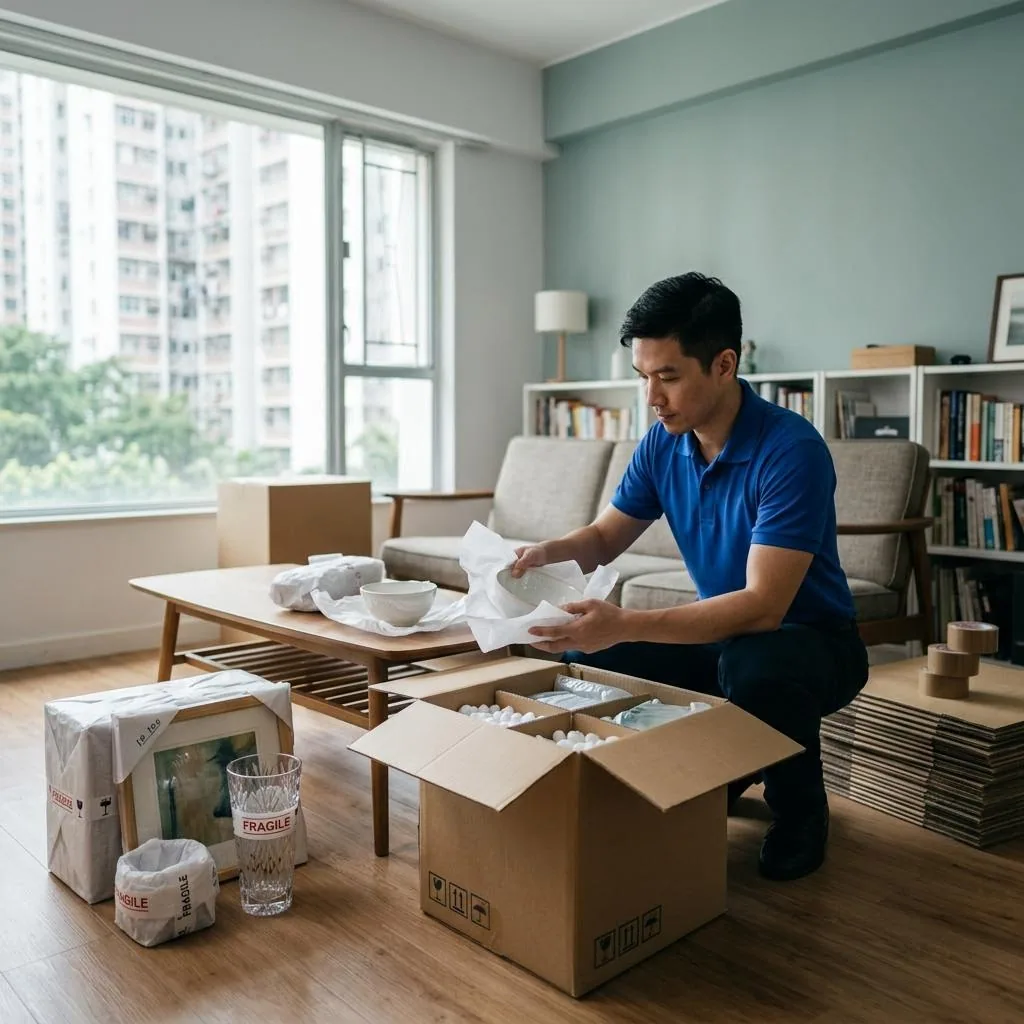
Fragile items should never be left touching each other. Plates, cups and decorative pieces should each be wrapped on their own. Start with soft paper, then add one or two layers of bubble wrap, and pay special attention to handles, corners and protruding parts because these are the first points to take a hit.
Once the items are inside the box, fill every gap between pieces and between the items and the carton wall. The goal is that nothing shifts or rattles when the box is gently shaken. Avoid very hard or sharp filler, which can scratch the surface; if the items are different heights, arrange them so the load sits evenly and does not press directly onto the top layer.
Pack according to the shape of each item
Tableware and glassware need the right positioning. Plates are usually safer standing on edge rather than stacked flat, because the pressure is spread more evenly. Glasses and small cups should have their interiors filled first, then be wrapped on the outside and grouped by size so the rims do not strike each other.
Heavier items should go at the bottom and lighter or smaller items above. Leave a small amount of space at the top, then fill it so the contents do not bump into the lid after sealing. For frames, mirrors or thin panels, protect the corners with firmer material and store them upright to reduce the pressure surface.
Label clearly for handling and placement
After packing, write fragile, this side up and do not stack on all four sides and on the top of the carton. The writing should be large enough to catch attention immediately during handling. If the cartons belong to different rooms in the new home, note the destination room as well, such as living room, bedroom or study.
Good labels can also include a simple contents note for easier checking later. If the box contains especially delicate items such as a small glass-front cabinet piece, an antique decoration or a heavier collectible, add a note that it should be carried with both hands and not placed under heavier cartons.
Ask in advance about high-value or complex items
For antiques, artworks, precision instruments or complex equipment, ordinary carton packing may not be enough. Such items may need stronger outer protection, disassembly work or a professional assessment before moving; anything involving electricity, gas, medical parts or specialist technical components should be handled by the appropriate qualified professional, not by DIY.
If you want a moving company to help, share the dimensions, weight, material, original packaging details and site conditions such as stairs, narrow access or platform transfers, and ask for written confirmation of the packing method, scope and limits. Before the move, check the box count, labels and fragile-item list again to avoid omissions or wrong handling.
Frequently Asked Questions
Do fragile items need large cartons?
Not necessarily. Large cartons may seem convenient, but extra space allows movement and increases impact. A medium or small sturdy box that fits the contents is usually safer.
Can glasses and plates go in the same box?
It is better to separate them. Different shapes fail under pressure in different ways, and mixed packing increases rubbing and impact. If they must share a box, separate them fully with thick paper and cushioning.
How do I know if the box is padded enough?
When you gently shake the box, the contents should not move or knock against each other. If you hear rattling, feel loose space or see the lid sinking, you need more filler.
What labels are most useful on a fragile box?
At minimum, write fragile, this side up and do not stack. Adding the room name or main contents makes unloading and checking easier. For especially delicate items, add a handling note as well.
Which items should not be packed and moved casually on your own?
Antiques, artworks, precision equipment, heavy glass pieces and anything involving electricity, gas, medical or structural components should not be handled as a normal DIY packing job. Get the right specialist to assess them first.


