MOVING TIPS & ADVICE
Packing Fragile Items for a Move: How to Protect Glassware and Dishes in Hong Kong
Key answers
Fragile moving boxes need more than wrapping paper. The key is separate wrapping, upright packing, tight void filling, and careful checks before sealing. This guide explains practical ways to pack dishes, glasses, bottles, and ornaments, plus when to ask a mover for written confirmation.
Start with the right materials
Fragile items are most likely to break when people rush to use random bags, old newspapers, or oversized boxes. A safer approach is to prepare properly sized boxes, packing tape, packing paper or clean paper, bubble wrap, and soft items such as towels or clothes for void filling. The goal is not to cram the box full, but to keep each item fixed in place so it cannot shift or knock against another item.
In Hong Kong, storage space is often limited, so large boxes are tempting. In practice, bigger boxes are harder to control, can become too heavy, and are more likely to lose shape under pressure. For dishes, glassware, and small ornaments, use smaller boxes and label them clearly with contents and orientation. That makes handling easier and helps you prioritize the most fragile boxes on arrival.
Do not stack dishes flat; pack them upright
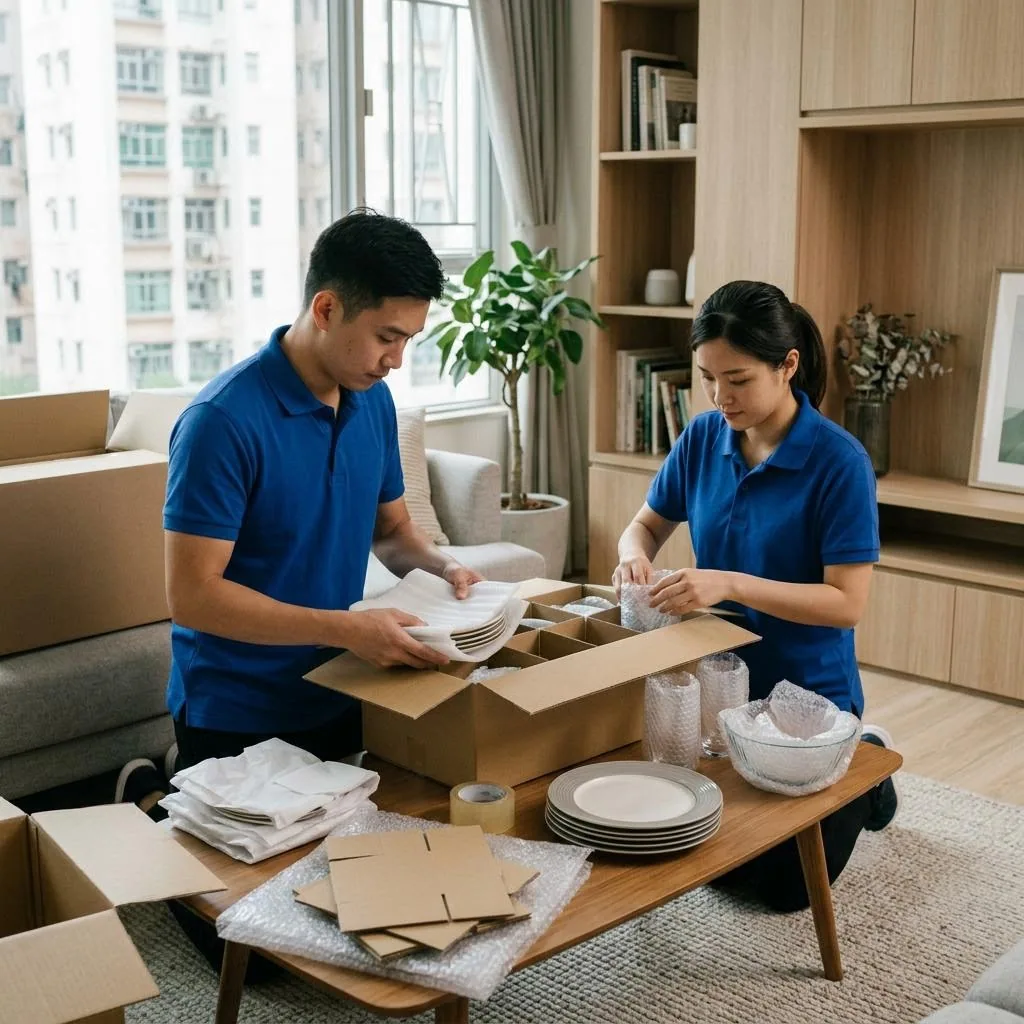
One of the most common mistakes is packing plates the same way they sit in a cabinet, stacked flat on top of each other. During transport, sudden braking or vibration can put pressure on the lower plates, making chips and cracks much more likely. A safer method is to wrap each plate or bowl separately and place them upright in the box so the stronger edges help absorb movement.
Inside the box, keep a cushioning layer at the bottom and along the sides, and separate dishes with padding where needed. If there is still empty space, fill it tightly with crumpled paper, towels, or clothing so nothing can move around. After sealing, give the box a gentle shake. If you hear items knocking together, reopen it and add more padding before closing it again.
Glassware, wine glasses, and bottles need extra care
The most fragile points in glassware are often the rim, stem, and corners. Wrapping should protect the outside, but the inside space should also be lightly filled so the item keeps its shape under pressure. For bottles and jars, make sure the lids are tightened first, then add an extra leak-resistant layer around the top if needed to reduce the chance of spills damaging other packed items.
Avoid mixing too many different shapes in one box, especially heavy bottles with thin glassware. Keep items as upright as possible, and mark the box clearly with fragile, this side up, and the room name. Labels do not replace proper packing, but they do remind everyone to avoid stacking, turning the box over, or rushing the load and unload process.
Check before sealing so problems are found early
Packing is not finished once the lid is closed. Before sealing, check that each item is wrapped separately, the box bottom is firm, the weight is manageable, and no sharp edge is pressing directly against the side of the box. If the bottom already shows signs of sagging, replace the box rather than patching it with more tape, because the pressure during moving will continue to build.
When you arrive at the new place, place the fragile boxes somewhere stable first, then open them one by one. Do not rush to pull everything out at once. Open the top, check for obvious shifting or cracking, and only then remove the items carefully. If something is damaged, keep the packing materials and take photos. Any claim or responsibility issue should follow the written agreement and confirmation you have in place.
When it makes sense to ask movers for help
If you have a large number of fragile dishes, a full tableware set, glass collectibles, or decorative pieces, packing everything yourself can take a long time and may lead to inconsistent packing. In that case, ask the mover whether they can assist with packing, how fragile items should be grouped, and what needs to be labelled separately. Request written confirmation of the scope so expectations are clear.
For unusually shaped, heavy, or valuable items such as large glass panels, antique ornaments, fish tanks, or other pieces that need special handling, explain the size and condition in advance and ask for written confirmation of the arrangement. Electrical work, structural fixing, glass installation, and other specialist tasks should be left to qualified professionals, not handled as a DIY moving job.
Mind Hong Kong building and access limits
Many Hong Kong buildings have narrow corridors, lifts, and staircases, so oversized fragile boxes are more likely to hit door frames or walls. Before packing, think about weight as well as box size. It is usually better to choose boxes that are easy to carry and turn, rather than trying to fit too much into one container and increasing the risk of damage.
If the move involves stair-only access, slopes, village-house paths, or a parking point that is far from the entrance, confirm the route, waiting area, and loading plan in advance. These details affect how stable fragile items remain during the move. If anything is uncertain, ask the mover early and get the plan confirmed in writing before moving day.
Frequently Asked Questions
Should dishes be packed flat or upright?
Upright is safer because it reduces pressure on the lower pieces. Every item should be wrapped separately, and any empty space in the box should be filled so nothing shifts during transport.
Can I use old newspapers for fragile items?
They can be used as filler, but they should not be the only protection. Packing paper, clean paper, or bubble wrap is better for the main layer, with newspapers used mainly to fill gaps.
Can glasses and wine glasses go in the same box?
Yes, if they are similar in size, individually wrapped, and the box is not overfilled. If the shapes differ a lot, separate boxes are safer because they reduce pressure and contact.
How should a fragile box be labelled?
Mark the contents, room name, upright direction, and fragile warning. Clear labels help movers handle the box more carefully and make unpacking easier at the destination.
When should I ask for written confirmation from the mover?
Ask for written confirmation when the items are high value, unusually shaped, oversized, involve stairs or tight access, or need any extra handling. That reduces the chance of misunderstandings later on.


