MOVING TIPS & ADVICE
Decluttering Before a Move: 5 Types of Items Worth Removing First
Key answers
Decluttering before a move cuts volume, saves sorting time, and keeps your new home from filling up with unused things. Sort items by use, condition, and fit for the new space before arranging disposal or transfer.
Set up three clear piles: keep, pass on, discard
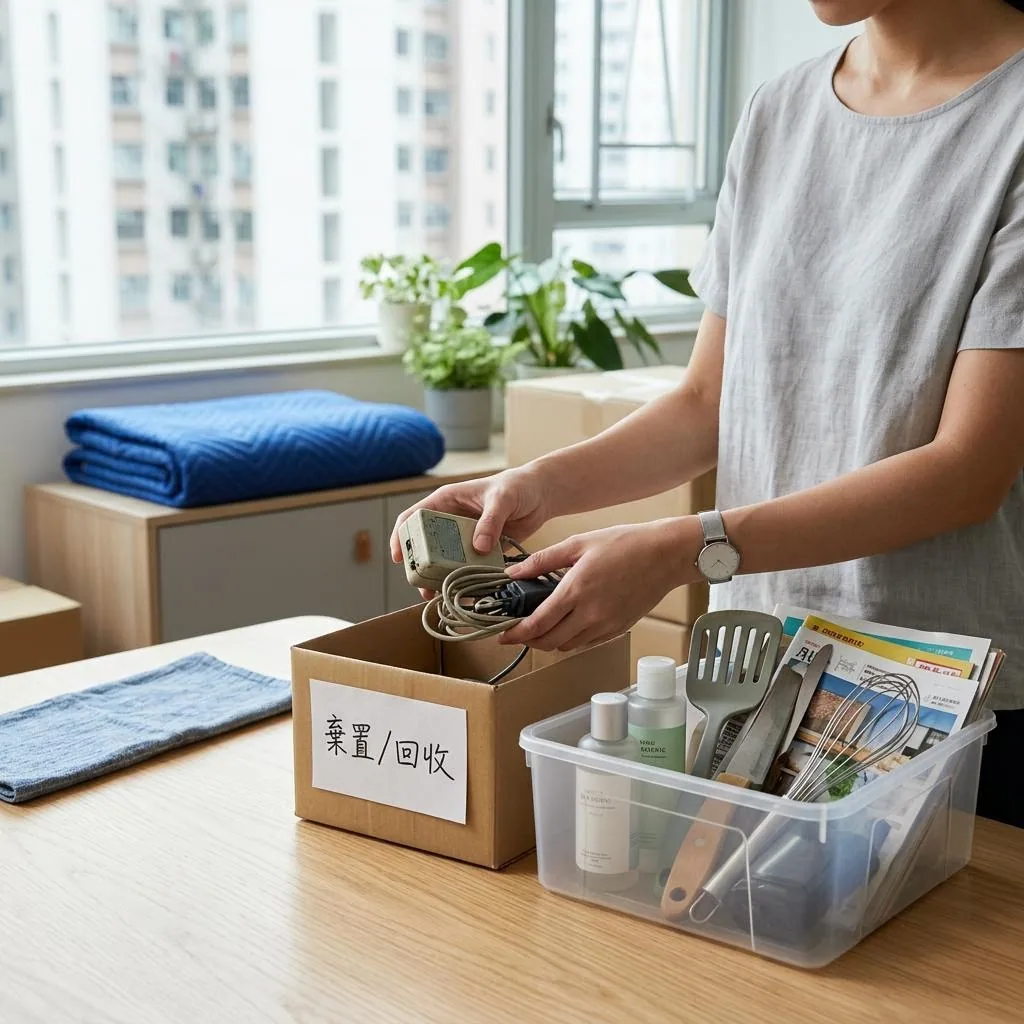
Before packing, prepare three clearly labelled boxes or bags: keep, pass on, and discard. Judge each item by usefulness, condition, and whether it will really be used in the next year. Do not let price paid decide the move, or you will end up repacking things you do not need.
If you are unsure about an item, use a simple rule: if it has not been used for a year, is broken and unrepaired, or has no clear place in the new home, put it in the review pile first. This reduces last-minute hesitation and makes the final check much easier.
Start with clothes, bedding, and personal items
Wardrobes often hide the most clutter. Clothing that has not been worn for years, no longer fits, is pilled, misshapen, or stained beyond easy cleaning usually does not deserve space in the new home. If storage will be tighter after the move, keep only the pieces you actually wear across the seasons.
Bedding and personal items should be checked too. Pillows, sheets, blankets, slippers, and towels that are thin, yellowed, mouldy, or no longer supportive are usually better replaced than moved. For items close to the body, hygiene and comfort matter more than keeping them just in case.
Clear out expired food and duplicate kitchenware
A move is a good time to empty the fridge, dry goods cabinet, and kitchen drawers. Check expiry dates first, then ask whether the item will really be used in the new home. Anything opened for a long time, damp, odorous, or with an unclear condition should be dealt with first.
Bowls, cups, lunch boxes, and cooking tools with cracks, chips, heavy scratches, or warping should also be considered for removal. These items are more likely to break again during transport and only add to the unpacking burden. If you are unsure, keep the complete and practical pieces, not the damaged ones.
Separate papers, cables, and e-waste
Not every paper needs to move with you. Expired receipts, duplicate manuals, old statements, school notices, and textbooks no longer used can be sorted into keep and destroy groups. Personal documents should be covered or shredded before disposal, rather than thrown out as-is.
Electronic waste should be kept separate, such as broken phones, old charging cables, batteries, earphones, and failed small accessories. Do not carry every mystery cable into the new home, or you will simply build the same clutter again. Batteries and larger electronics should follow local recycling rules, and you should never dismantle them yourself.
Be strict with cosmetics, samples, and ill-fitting furniture
Cosmetics, skin-care products, and sample packs can pile up quickly. If a product is expired, separated, discoloured, smells off, or has sat unopened for too long, it usually should not be brought to the new home. Dried nail polish, old toothbrushes, and duplicate travel-size items can also go.
For furniture, the question is not sentiment but fit. Sofas, tables, cabinets, or shelves that are too large, do not match the layout, are loose, or have peeling surfaces may become a bigger problem once moved. Measure the new space, doors, and lift access first, then decide whether the item is worth transporting.
Do a final walk-through and confirm the handling plan
After sorting, do one last check of every room, drawer, and shelf corner to see whether anything has been missed. If large furniture or a lot of unwanted items remain, arrange the moving and disposal schedule early so you are not rushing close to handover or move-in day.
If you need to move out a large amount of old items, confirm what the mover can handle, what the lift and stair conditions are, whether dismantling is needed, and whether disposal is a separate charge. Items involving electrical, gas, structural, medical, or other specialist work should be handled by qualified professionals. When anything is unclear, ask for written confirmation and check Moving house price list and Service terms before you agree.
Frequently Asked Questions
What should I throw out first before moving?
Start with items not used for over a year, anything broken and unrepaired, expired goods, and things that clearly do not suit the new home.
Which items are usually not worth bringing to a new home?
Oversized furniture, damaged items, expired products, duplicates, and anything without a clear place or purpose in the new home are usually not worth moving.
How should I deal with papers and old statements?
Sort them into keep and destroy groups. Documents with personal data should be covered or shredded before disposal, not thrown away directly.
Can e-waste be packed together with other clutter?
It is better to keep it separate. Batteries, broken phones, old cables, and small electronic accessories should be sorted and handled according to recycling rules.
How do I know if furniture should be moved or discarded?
Measure the new space and access first, then check whether the item is stable, usable, and in good condition. If it is too large, loose, or damaged, it is usually better to let it go.


