MOVING TIPS & ADVICE
How to Pack Fragile Items for Moving: Plates, Glasses, and Decor Protection Tips
Key answers
For fragile moving boxes, the key is not to stuff them full, but to separate, cushion, secure, and label clearly. With the right packing order and enough soft filler, you can reduce breakage a lot.
Separate items first, then sort by fragility
Before packing fragile items, separate plates, cups, glassware, vases, and decor instead of stacking everything together. Group items of similar shape, keep heavier pieces in one set, and handle the most fragile or valuable items on their own so you can control where the pressure goes.
If you have collectible decor, antiques, or thin glass pieces, take photos first and check for cracks, chips, or loose parts. If an item is already delicate, reduce stacking and tell the mover its size and features in advance so the right box size and handling plan can be arranged.
Use the right packing materials, not just old newspapers
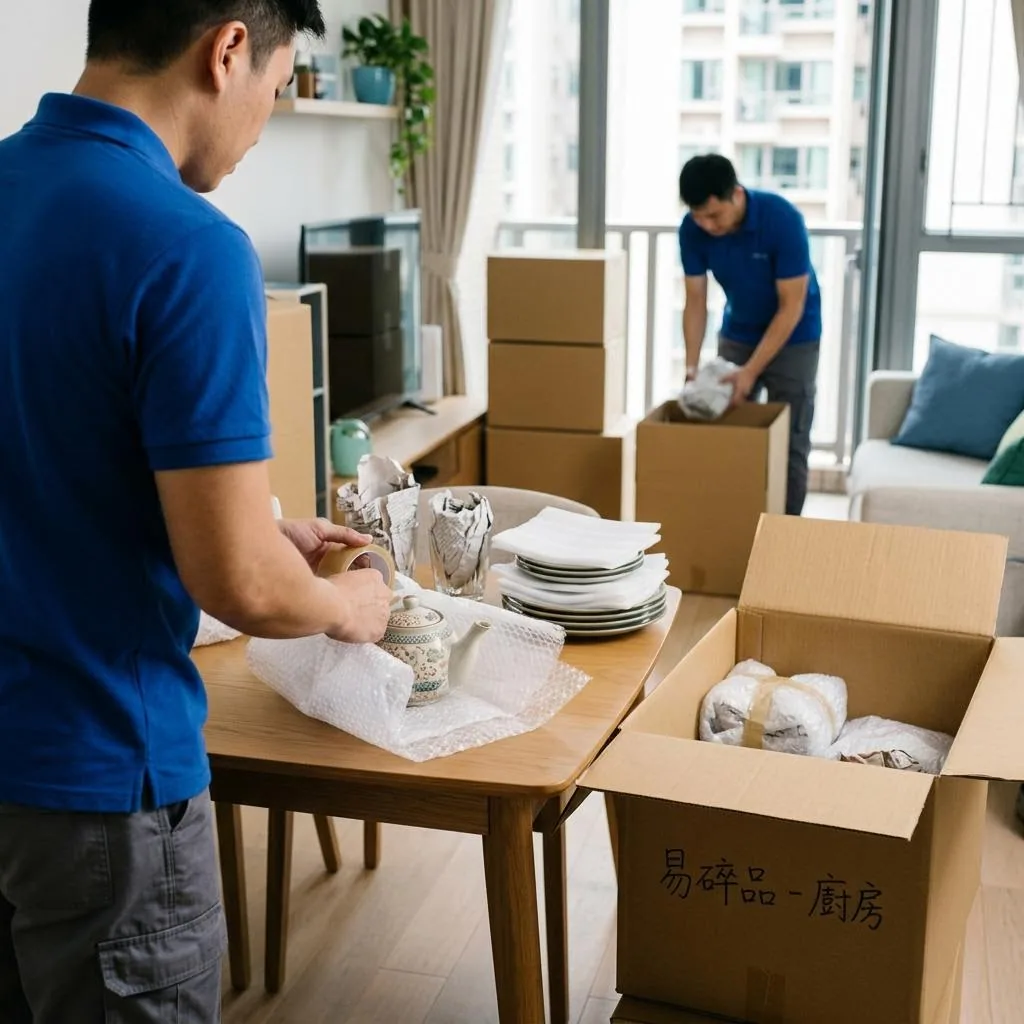
Newspapers can be used as filler, but they should not be the main protective layer because they cushion poorly and may stain light-coloured plates and ceramics. A safer approach is to wrap each piece with plain paper, white paper, a thin towel, or bubble wrap, then add cardboard separators or soft padding as needed.
Bubble wrap should fit snugly around the item, especially at corners and edges. For cups and wine glasses, stuff the inside with paper first so the shape stays stable, then wrap the outside. For frames or photo frames, add edge protection with cardboard so they are less likely to bend or press into other hard objects.
Packing method: stand upright, avoid overstacking, and leave cushioning
Plates should not be packed flat like they are in a cupboard. A safer method is to stand them upright, like files, with cardboard or cushioning between each piece. Bowls can be nested only if they are properly padded, while glass cups are best packed one by one so stems and rims do not touch hard surfaces.
Line the bottom of the box with a soft layer first, then place heavier items below and lighter ones above. Finish by filling the gaps around the items with crumpled white paper, towels, or clothing. After packing, shake the box gently. If you still hear movement, the box has too much empty space; too loose or too tight can both increase breakage risk.
Seal and label the box clearly so handling is safer
Use stronger packing tape to seal the box, and reinforce the bottom and top seams carefully, especially along the central joint. After closing the lid, add another crosswise layer of tape to reduce the chance of the box opening under vibration.
Mark the box clearly with Fragile, This Side Up, and the room name in large lettering. If the contents need to stay upright or are especially delicate, note that separately instead of relying only on verbal reminders. Even with labels, do not place the heaviest box on top; basic stacking judgment still matters.
What to prepare before moving, and common mistakes to avoid
Prepare enough boxes, tape, scissors, labels, and a marker before moving day, and leave time to pack carefully instead of rushing at the last minute. If your home has cookware, tableware, and decor together, pack the less-used items first so daily life is not disrupted and the final day can be reserved for the most fragile pieces.
Common mistakes include mixing hard items of different materials, leaving too much empty space, sealing a box without checking whether it has become too heavy, and forgetting to empty any liquid left in cups or containers. In Hong Kong, many moves involve stairs, lift corners, or narrow corridors, so oversized or overly heavy boxes are more likely to hit something when turning. Small boxes are often safer than forcing one box to do too much.
When to ask for packing help, and what to check at arrival
If you have a large number of fragile items, expensive tableware, or simply no time to wrap each piece yourself, you can consider asking a mover for packing service. Before agreeing, ask what is included, what materials will be used, whether items will be packed by room, and how boxes will be labelled and handed over. If the move involves electrical hookup, gas, medical equipment, structural work, or other specialist tasks, use a qualified professional instead.
At the new home, open boxes according to the labels and check for cracks, chips, or leaks before putting anything back in cabinets. If a box shows signs of compression, crushed corners, or loose tape, take photos and deal with it immediately so the item is not damaged again during unpacking. If needed, request written confirmation of the follow-up arrangement from the mover.
Frequently Asked Questions
Do fragile items have to be wrapped in bubble wrap?
Not always, but bubble wrap is usually better than newspaper as the main cushioning layer. For plates, cups, or thin decor, use plain paper or a soft cloth first, then add bubble wrap around the outside and corners.
Should plates be packed flat or upright?
Upright is generally safer. Stand plates vertically with cardboard or cushioning between each one so the lower layers are not under constant pressure. Flat stacking can increase the risk of cracking under vibration.
Can I leave empty space inside the box?
No, not too much. Too much empty space lets items move and collide, but overfilling can deform the box. The goal is to fill the gaps so nothing shifts when the box is gently shaken.
Should fragile tableware be washed before packing?
Yes, it is best to remove residue, liquids, and grease, then dry everything fully. This helps prevent leaks and mildew. If an item already has a crack, wash it very carefully so the damage does not spread.
When should I ask a mover to do the packing?
If you have many fragile items, limited time, expensive pieces, or you are not confident about packing them safely, packing service can save time. Ask for written confirmation of the scope, labels, and handover process first.


