MOVING TIPS & ADVICE
How to Box Fragile Items Before a Move
Key answers
Sort fragile items by material and use, then wrap, pad, and label each box clearly to reduce breakage, confusion, and rushed unpacking.
Sort first, then decide the right box setup
Do not throw all fragile items into one box. Cups, plates, glassware, photo frames, vases, lamp shades, decorative pieces, and small appliance accessories differ in shape, weight, and pressure points, so mixing them increases the chance of impact and makes unpacking harder. Before packing, sort items by material, use, and size, then decide what can share a box and what must stay separate.
A practical way is to group daily tableware, decor, glass and mirror items, and pieces that are more valuable or unusually shaped. If some items still have their original boxes or inserts, keep them where possible and use them as the first layer of protection; if the original packaging is loose, add cushioning anyway. Clear sorting makes it easier to place items into the right rooms after arrival.
Wrap each item, and keep heavy and light items apart
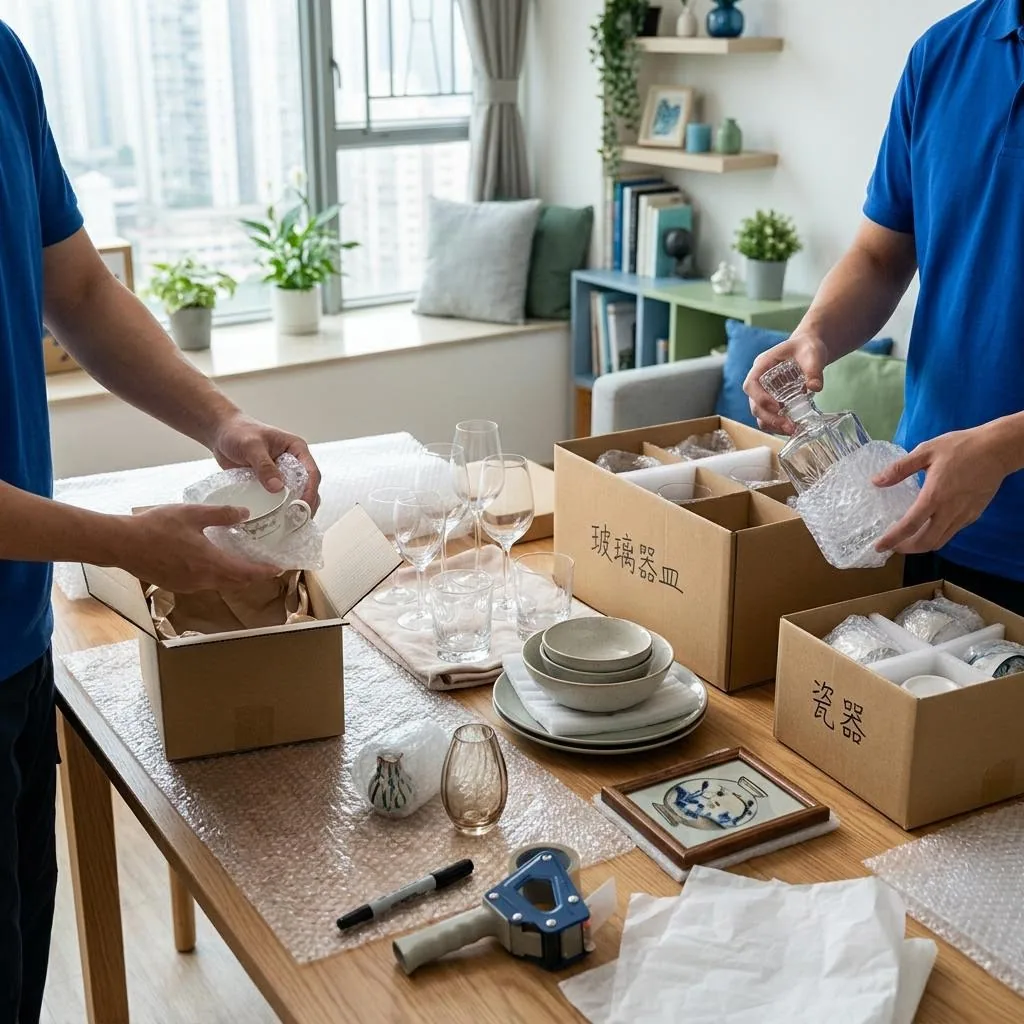
Fragile items should not rely on the cardboard box alone. Wrap each cup, bowl, plate, frame, and small decorative item with packing paper, bubble wrap, towels, or soft cloth. Pay extra attention to handles, sharp corners, edges, and protruding parts. After wrapping, place the items into the box with cushioning between them so they do not touch directly; simple stacking alone can still lead to damage from normal vibration.
Weight distribution matters too. Heavier bowls, thick ceramic pieces, or dense decor should sit at the bottom, with lighter items on top and cushioning in between. Avoid putting too much weight into one box, because that makes carrying harder and can stress the base of the box. Using small to medium boxes is usually a better way to spread the load and keep the box stable.
Fill voids so the contents cannot shift
Too much empty space inside a box allows items to move during transport. After packing, use newspaper, bubble wrap, old clothes, or towels to fill the gaps and keep the contents locked in place. The goal is not to compress everything tightly, but to prevent visible movement around corners, between cups or bowls, and along the sides of the box.
Once packed, gently shake the box as a quick check. If you can hear items knocking together or feel them shifting, add more padding. Do not overfill to the point where the box bulges, softens, or the lid will not close flat. The cushioning should stabilise the contents without deforming the carton.
Stand plates upright, and reinforce mirrors and edges
Plates are more likely to crack under pressure if they are stacked flat. A safer method is to wrap each plate and place them upright in the box, like books on a shelf, with paper or bubble wrap between each piece. Bowls and cups should be grouped by shape so that handles, rims, and edges do not press against one another.
Photo frames, mirrors, glass shelves, and square decor pieces usually have more exposed corners and edges, which are the first points to take impact when turning corners or loading a vehicle. Wrap the corners with cardboard or bubble wrap first, then wrap the whole item. For larger pieces, add rigid cardboard to the front and back. Thin glass items should not share a box with tools, books, or other hard objects.
Label clearly, and plan the unpacking order
After packing, mark each box clearly with labels such as "Fragile", "Handle with Care", or "Do Not Stack". It helps to write the message on the top and at least two sides, so it remains visible after stacking. If an item must stay upright, such as a vase, lampshade, or certain glass decor, add "This Side Up" as well. Labels help, but they cannot replace proper packing.
Once you arrive, you do not need to open every fragile box immediately. Keep daily-use dishes, cups, and basic kitchen items in a separate group, while decor, collectibles, and seasonal items can wait until the main furniture is in place. Opening fragile boxes too early, when walkways are still crowded with cartons and furniture, only increases the risk of accidental knocks. Planning the unpacking order makes the whole move calmer and more organised.
If there are many or unusual items, confirm the moving plan in advance
If your home has a large number of fragile items, or includes large glass pieces, artwork, valuable collections, or unusually shaped objects, tell the mover the sizes, weights, stair conditions, lift limits, and doorway widths before moving day, and ask for the packing and carrying plan in writing. Different items need different box types, dividers, and protection methods, so early communication helps avoid last-minute confusion.
If the job involves internal electrical parts, power connections, light fitting removal, glass installation, or other specialist technical work, use a properly qualified professional instead of trying to do it yourself. A mover may help with ordinary packing and carrying, but you should still confirm what is included, what is excluded, and any special handling instructions in writing before booking.
Frequently Asked Questions
Can fragile items be packed together with ordinary household items?
It is not recommended. Books, tools, and hard objects can crush glass, ceramic, or mirrored items, so fragile items should be boxed separately with enough cushioning.
Should plates be packed flat or upright?
They are usually safer when wrapped individually and packed upright, like books on a shelf, with paper or bubble wrap between each piece.
Should I fill the box as tightly as possible?
Fill the empty space, but do not force the box into shape. The aim is to stop movement, not to compress the contents too hard.
Which items need extra protection?
Photo frames, mirrors, glass shelves, vases, lampshades, sharp-cornered decor, and thick ceramic pieces need extra corner and edge protection because those points are easiest to damage.
How should I brief the mover if I have many fragile items?
List the item types, quantities, sizes, and moving conditions, then ask the mover to confirm packing, carrying, and on-site arrangements in writing. Specialist technical work should be handled separately by qualified professionals.


