MOVING TIPS & ADVICE
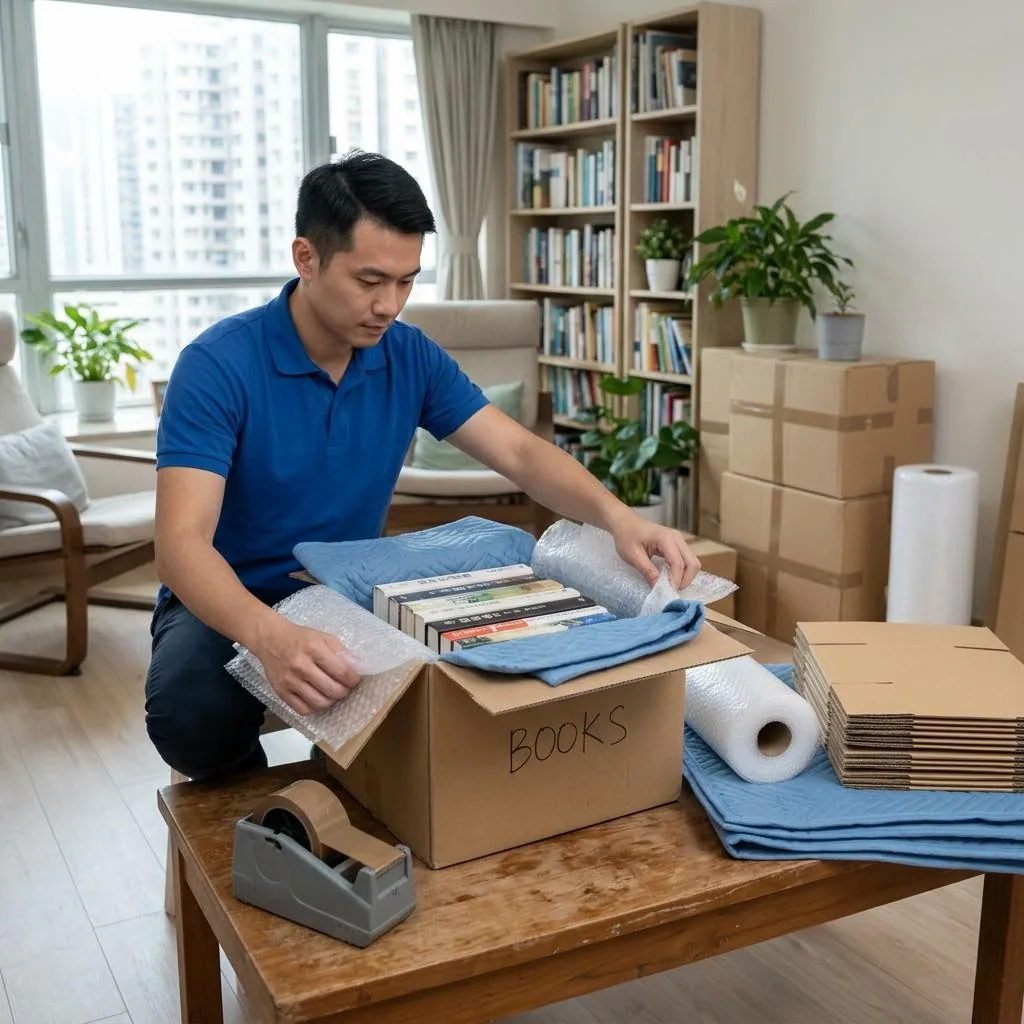
How to pack books for moving without overloading boxes or causing breakage
Key answers
Books are deceptively heavy. Use smaller sturdy boxes, keep each box at a manageable weight, reinforce the base, and fill empty gaps properly to reduce burst boxes, damaged corners, and lifting strain.
Sort the books first, then decide box count and weight
Do not try to force every title into one big box. Sort your books by type first, such as hardcovers, paperbacks, magazines, textbooks, and art books, because the size and weight differ a lot. The practical approach is to set a weight limit for each box first, then work out the number of boxes based on shelf volume and the moving distance, so you do not discover an overloaded box only after sealing it.
If you have collector editions, out-of-print titles, or books that are easily affected by moisture, keep them separate from ordinary items. Wipe away dust with a clean dry cloth, check for loose pages, bent corners, or damaged covers, and protect the outer surface before packing if needed to reduce rubbing during the move.
Choose the right box and sealing method so the base holds
Books should go into small, sturdy, good-condition boxes first. It is better to use more boxes than to force too many books into one large box. Once a large box is filled with books, the weight can become unmanageable, and the base is usually the first point to fail when the box is lifted. Old, damp, or crushed boxes are especially risky on stairs.
Do not seal only the center seam at the bottom. Close and reinforce the base properly, then add extra tape across the edges if needed. If a box has cracks, dents, or weak tape adhesion, replace it instead of taking the risk of a box failure in the middle of the move.
How you place books matters for corner and spine protection
When packing books, keep the heavier items at the bottom and the lighter ones on top, with a neat layout whenever possible. Flat stacking is usually the most stable, especially for large reference books, photo albums, and art books. If you must stand them upright, place the spine downward and the page edge upward so the pages are not pressed open for too long. Do not jam different sizes in at an angle, because corners and covers can be damaged easily during movement.
Leave only small gaps inside the box. If there is empty space between books or between the books and the box wall, fill it with soft paper-based padding or similar filler so the books cannot slide around. Avoid hard or sharp filler that can dent the corners. In humid weather, be extra careful with moisture absorption, and do not pack damp items together with paper goods.
Separate mixed packing, plastic bins, and common mistakes
If you do not have many books, light mixed packing can work, but only if the total weight stays controlled and the books are not squeezed by hard objects. A common mistake is mixing books with tableware, appliance parts, or metal tools, which makes the box either too heavy or likely to scratch and dent the books.
Home storage bins may look strong, but they are not always better than sturdy cardboard boxes for heavy books. Their handles, weight distribution, and stacking stability are often less suitable for a long carry. If you choose to use them, check the base structure, handle strength, and usable capacity first, and do not overfill them. Items such as power cords, batteries, or other sensitive belongings should be sorted separately and not packed together with books.
What to check before and after moving so nothing is missed
Before moving day, label each box with a short contents note, such as living room novels, study textbooks, or collectible art books, and mark which side should face up. If there are many book boxes, plan the loading order in advance so the heavier and more delicate boxes can be placed in a safer position, reducing repeated handling in corridors or stairwells.
After arrival, inspect each box for burst bottoms, moisture, crushing, or corner damage before stacking them high. If a box smells damp, shows wet marks, or has a loose seal, open it at once and check the contents so the books are not left sealed in a humid box for too long.
When to ask for moving help, and what to confirm first
If you have a whole wall of books, or if the route includes narrow stairs, walk-up floors without a lift, slopes, or long corridors, it is often difficult to manage safely with only family or friends. In that case, the key is not speed, but planning the route, box count, and weight distribution in a controlled way.
Before hiring a mover, ask whether book boxes are accepted, whether the job can be handled in stages, how stair-only access or other limits are managed, and whether you should finish sorting and sealing in advance. If any item needs special handling, request written confirmation of the arrangement first, and check Service terms and Moving house price list for the applicable details instead of relying on verbal assumptions.
Frequently Asked Questions
What is a reasonable weight for one box of books?
It should stay manageable for a single person to lift steadily. It is better to split books into more boxes than to overload one. The right limit depends on the book type, stairs, and carrying distance, so a trial lift before sealing is the most practical check.
Should books be packed flat or upright?
Large books, art books, and heavier titles are usually safer when stacked flat. If books must stand upright, keep the spine down and the page edge up so the pages are not stressed. In either case, avoid leaving too much empty space inside the box.
Can I use a large box for books?
It is not recommended. A large box full of books can become too heavy very quickly, and the base is more likely to fail because the load is concentrated. Smaller boxes are usually safer and easier to move.
Are plastic bins always better than cardboard boxes?
Not always. Plastic bins are not necessarily better for heavy books because handle design, stacking stability, and load behavior are different. Check the base, handles, and actual weight before choosing one.
Can collectible books be packed together with regular books?
Yes, if the packing method and protection level are suitable and they will not rub against each other. For collector editions, out-of-print books, or moisture-sensitive items, separate packing is usually the safer choice.


