MOVING TIPS & ADVICE
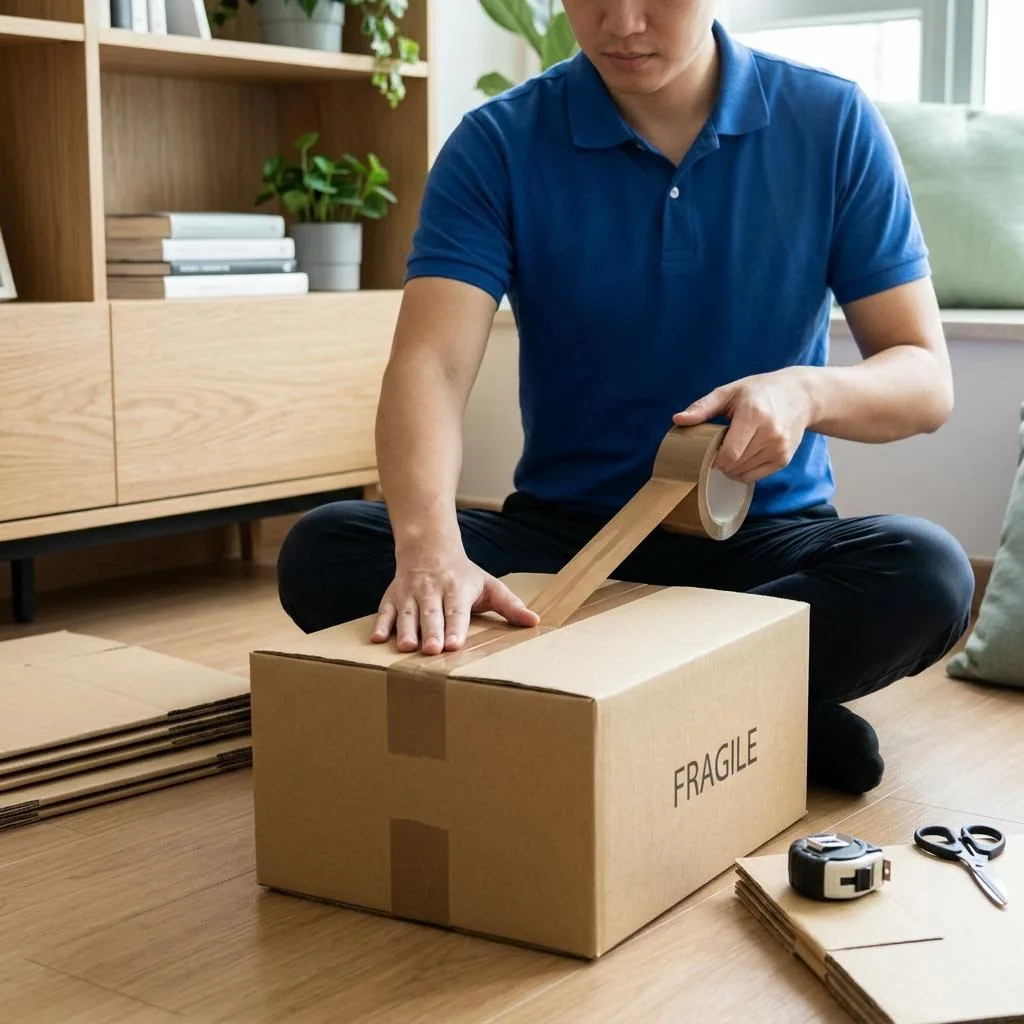
Why Do Carton Bottoms Split Open? How to Tape a Moving Box Properly
Key answers
A moving box bottom often fails because of the taping method, not just the carton itself. Learn how one-strip, cross, and reinforced taping spread the load, reduce bottom failure, and help heavy items stay secure.
Understand why a box bottom fails
A carton bottom usually splits because of a mix of weight, load balance, and sealing method, not simply because the box is bad. If the contents are too heavy, unevenly packed, or the bottom already has creases, moisture damage, or old tape residue, the base can fail when you lift it.
A common mistake during moving is to fill the box first and only then tape a single strip across the center seam. That may look finished, but the weakest point is still exposed to concentrated tension. Before adding more tape, check whether the carton is suitable for the items you want to pack.
One-strip taping: fine for light items, weak for heavier loads
The most basic method is one-strip taping, where a single tape line runs along the bottom center seam. It is quick and uses little tape, so it works for light items such as clothing, towels, empty containers, or soft goods. However, its load-bearing ability is limited, and heavier items can pull the seam open during lifting.
If you do use one-strip taping, make sure the bottom flaps are fully closed first. The tape should run from one end to the other with a little extra length at both ends, and you should press it down firmly with your palm. Pay special attention to the edges and fold lines, where poor adhesion often starts.
Cross taping: spread the load over more contact points
Cross taping adds a second strip across the bottom after the center seam has been taped, forming a cross. The goal is not simply to add more tape, but to spread pulling force across a larger contact area so the base is less likely to lose balance under pressure when lifted or set down.
This method suits medium-weight items such as small kitchenware, books, documents, and everyday household goods. If the contents may shift in transit, fill the gaps with paper or other suitable cushioning first. Otherwise, even extra tape will not stop the box from wearing itself down from the inside.
Reinforced taping for heavier cartons
For heavier loads such as books, ceramics, canned goods, or tightly stacked household items, a reinforced pattern is usually more secure than a simple cross. The idea is to strengthen the center seam and the side edges so the base is supported at more than one point. That gives the bottom structure a better chance of staying intact.
More tape is not always better. If the carton material is weak or the folds are uneven, over-taping may still leave gaps where the adhesive cannot bond properly. Choose a carton that matches the load, keep the weight evenly distributed, and split heavy items into more than one box when needed.
Tape material, adhesion details, and common mistakes
Tape quality matters. A dedicated carton sealing tape is usually more suitable than thin or worn tape with weak adhesion. Before sealing, brush off dust and loose debris from the carton surface so the tape can bond cleanly. In humid conditions, poor surface contact can reduce holding strength even when the taping pattern looks correct.
Common mistakes include taping only the middle and ignoring the ends, making short strips that do not cross the fold lines, lifting the box immediately without pressing the tape down, and reusing damp, deformed, or previously split cartons for heavy items. If the bottom already has damage, replace the box instead of relying on patching alone.
How to check a box before moving day
After sealing, lift one side of the box slightly and check whether the bottom stays flat. Look for lifting edges, wrinkles, soft spots, or any crackling sound from the base. If the carton bends or opens even a little, repack the load instead of waiting for it to fail during transport. You can also mark the box as heavy, fragile, or this side up to make handling clearer.
If you are packing many boxes at once, separate the heaviest items first and keep them away from light goods. For large furniture, appliances, oversized items, or anything that may require dismantling or special handling, confirm the scope and precautions with the moving company in advance. Any electrical, gas, structural, or other specialist work should be handled by qualified professionals.
Frequently Asked Questions
How many tape strips do I need to seal a box bottom properly?
There is no single number. The key is the load and how the force is distributed. Light items may only need one-strip taping, while heavier loads usually need a cross or reinforced pattern with the tape pressed firmly into place.
Can I reuse an old carton for heavy items?
Only if it is still in good condition. If the carton is damp, bent, torn, or has old bottom damage, the risk is much higher. Use it for light items at most, and choose a sound carton for heavier goods.
Does more tape always make the box stronger?
Not always. Tape only helps if it bonds well and the carton is in decent shape. A better result usually comes from choosing the right box, distributing weight evenly, and reinforcing the weak points properly.
Does empty space inside the box affect the bottom seal?
Yes. If the contents can move around, they keep hitting the walls and base during transport, which gradually weakens the carton. Fill gaps with suitable cushioning before sealing the box.
If a box has already split once, can I just retape it?
It is not recommended for heavy items. The board fibers may already be damaged, so the box has less strength even if the tape looks fine on the outside. Repack the contents into a new box instead.


