MOVING TIPS & ADVICE
Sorting and Packing: A Practical Way to Improve Moving Efficiency
Key answers
Sort first, pack second, and label each box clearly. This reduces unnecessary hauling, speeds up unloading, and makes it much easier to settle into a new home in Hong Kong.
Sort first to reduce what you move
Before packing, the most useful step is to sort household items by use and whether they are worth keeping. A simple method is to separate essentials, items to store temporarily, items to donate or discard, and items that need special handling. Once these four groups are clear, you can see what truly needs to be moved.
In Hong Kong, where living space is often limited, moving is a good chance to cut down on duplicates, broken items, and things you have not used for a long time. Moving fewer boxes saves time and helps the new home stay tidy. For bulky furniture, appliances, or items that need dismantling, confirm the handling method before deciding whether to move them.
Pack by room and by purpose
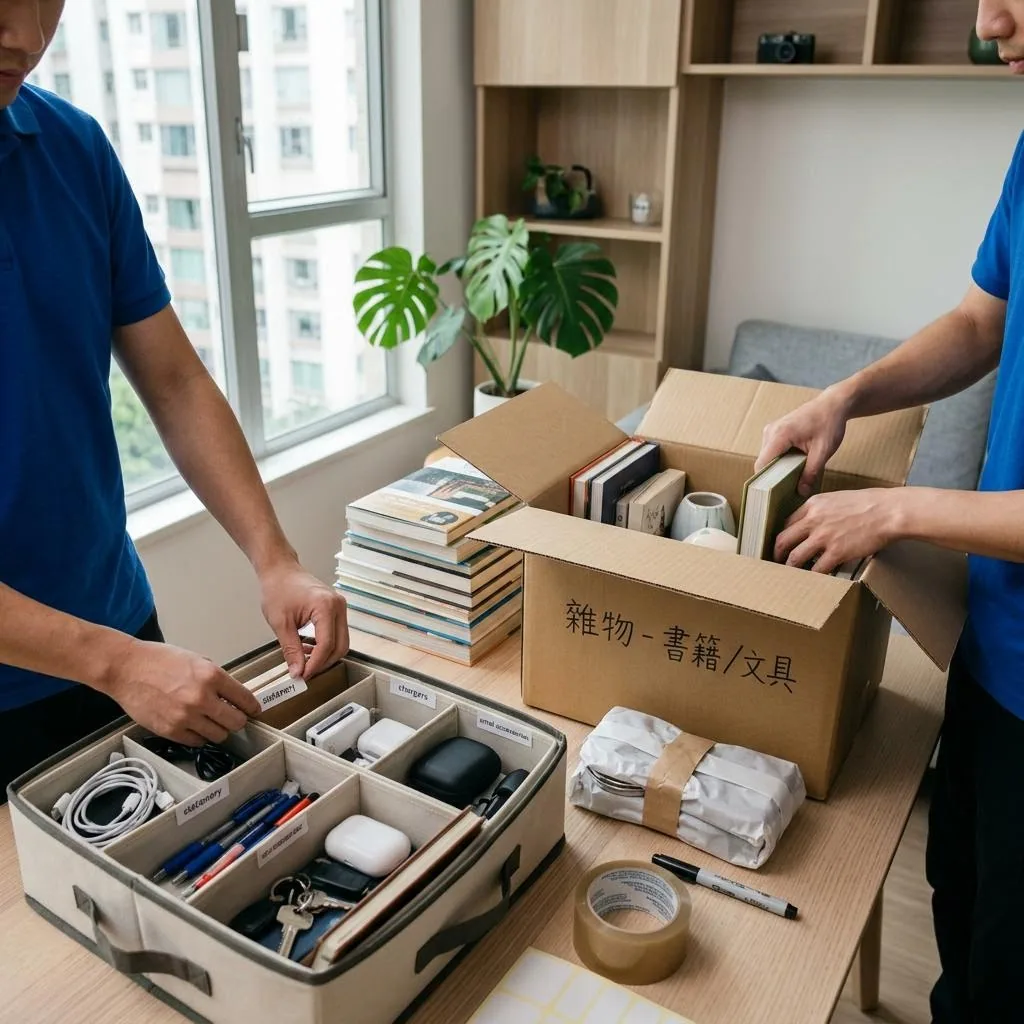
Do not put everything into the same box. It is better to pack by room, function, or frequency of use, such as kitchenware, bedroom items, study items, and cleaning supplies. This makes unloading easier because each box can go closer to where it belongs. It also saves time when you start unpacking.
After grouping similar items, pay attention to weight balance. Use smaller boxes for heavy things like books or canned goods, and larger boxes for lighter items such as clothes or towels. Do not overfill boxes just to make them look complete, because weak box bases and difficult lifting are common results.
Protect fragile and valuable items properly
Glassware, photo frames, ceramics, and electronics should be wrapped one by one with paper, bubble wrap, or soft cloth, then placed in a box with enough cushioning. Fill empty spaces so items do not knock against each other during transit. Keep each box to similar fragile items whenever possible.
Valuables, identity documents, cash, jewellery, and important papers should be carried by the household rather than mixed into general moving boxes. If an item is high value, unusual, or needs special care, explain it to the mover in advance and ask for written confirmation of the arrangement so there is no misunderstanding on the day.
Clear labels make unpacking much easier
Each box should show the room, contents, and whether it is fragile. You can also add notes such as "open first" or "open last" when needed. Labels do not need to be fancy, but they must be easy to read. Otherwise, boxes may arrive in place without being easy to sort.
If the new home has only a few rooms, color codes or simple numbering can also help. On moving day, keep labels on the top or side of each box so movers can see them quickly. This reduces repeated handling and lowers the chance of boxes being placed in the wrong room.
Plan the schedule early to avoid last-minute rush
Packing works best in stages, not on the night before the move. Start with items you rarely use, then move on to daily items, and leave only the essentials for the final day, such as chargers, toiletries, documents, and simple tableware.
If you need to clear the flat, hand back keys, or work around building access times, finishing the packing early becomes even more important. With good preparation, the moving day can focus on transport and coordination instead of last-minute packing. For busy households, starting one to two weeks ahead is safer.
When to ask a mover for help
If you have many items, a high floor, narrow passages, or large furniture that needs dismantling, it may be more practical to hire movers. Before booking, ask whether they can work with your sorting system, labelling method, and preferred sequence on site, and request written confirmation of the details.
For electrical work, gas work, structural changes, medical devices, data backup, or other specialist technical tasks, use qualified professionals instead of trying to handle them yourself. A mover’s job is transport and general loading or unloading. You should also prepare a list, the address, building restrictions, and any items that need special attention.
Frequently Asked Questions
Should I sort items before buying boxes?
Yes. Sorting first is more efficient. Once you know what will move, what will stay, and what will be stored, you can choose the right number and size of boxes.
Do I need to pack by room for everything?
Not for every item, but packing by room or by use is usually the clearest method. At minimum, keep kitchen, bedroom, study, and document items separate.
How should fragile items be packed?
Wrap them individually, cushion the box, and keep similar fragile items together. Avoid mixing heavy objects with breakable ones or leaving too much empty space.
What should I write on box labels?
Write the room, contents, whether the box is fragile, and whether it should be opened first or last. Add any special placement notes if needed.
When should I ask a mover for help?
If you have many boxes, a high floor, narrow access, or bulky furniture, a mover can be helpful. Ask for written confirmation of the plan and any limits before booking.


