MOVING TIPS & ADVICE
How to avoid wall and floor scratches when moving in a narrow Hong Kong home
Key answers
Hong Kong homes are often tight, so moving can easily scuff corners, door frames, and floors. Measure the route first, protect contact points, use the right carrying method, and dismantle items only when needed.
Measure the route before choosing the moving sequence
In Hong Kong homes, the most common damage during a move comes from tight corners, narrow door frames, and short corridors that force constant corrections. Before starting, measure the doorway width, the narrowest corridor point, lift depth, and stair landings, then decide whether to move smaller items first and larger items later so the route is planned in advance.
If a piece of furniture is close to the limit of the passage, consider dismantling it, changing the moving direction, or pausing to replan. The clearer the route, the less often you need to hug the wall, turn sharply, or backtrack, and the lower the chance of scratching walls and flooring. This also includes telling family members, building staff, or neighbours so no one opens a door or crosses the path unexpectedly.
Protect corners and floors before anything moves
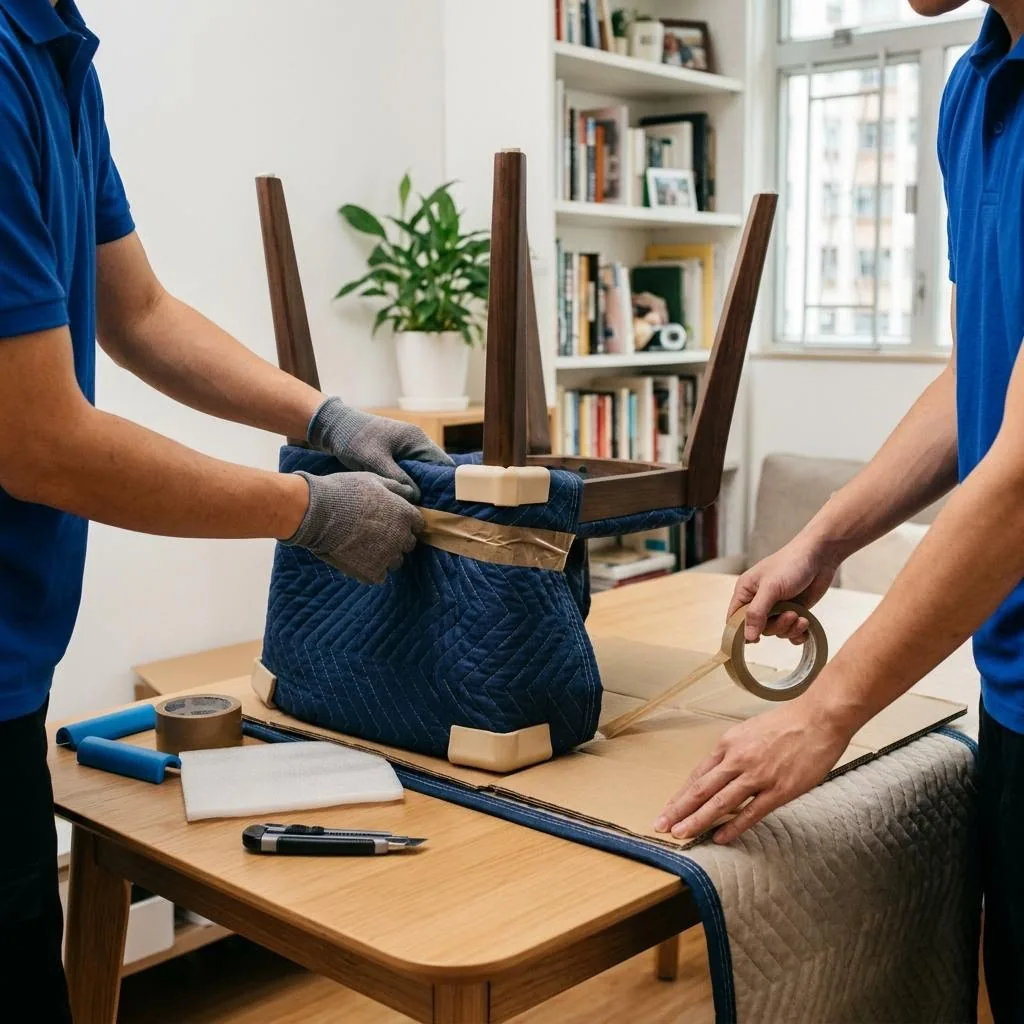
The most direct way to prevent scratches is to protect the high-risk areas first. Door frames, wall corners, turning points, lift entrances, and skirting boards are the parts most likely to be hit; temporary protection can be made with foam, blankets, corner guards, or thick cardboard, but it must be secured so it does not slip and create a trip hazard instead.
Floors such as timber, polished tile, stone, or newly finished surfaces are especially vulnerable to dragging and grit. Before moving, remove loose stones, sand, and water, then lay a suitable protective layer; on rainy or humid days, add extra anti-slip care and check whether the protection material will lose effectiveness when wet.
Avoid dragging, forcing, or pushing hard
When moving bulky furniture, the easiest way to scratch a wall is to push it hard along the wall or drag cartons directly across the floor. The safer method is to keep the item slightly off the ground, lift first, then move slowly; in tight spaces, make small angle adjustments instead of turning sharply in one go. If the item is very heavy, enough people should share the load and move in sync.
With two or more people, one person should watch the clearance and angle from the front while another controls the balance and stop signal from behind. At thresholds, platforms, or corners, stop first, check the height difference and wall position, then decide whether to lift higher, pass sideways, or turn back; if there is not enough room, do not force the move.
Decide item by item whether dismantling is safer
Not every item should be moved whole. Bed frames, wardrobes, bookcases, dining tables, and some modular cabinets often increase the risk of collision in narrow Hong Kong homes because the turning space is limited. If an item can be dismantled safely, remove shelves, doors, table legs, or other protruding parts first and move them separately; this makes passage easier and reduces surface contact.
Before dismantling, sort screws, fittings, and labels so reassembly at the new place is not confusing. Note that electrical wiring, appliances, gas, structural fixings, or built-in pipework should not be handled by amateurs; those items should be left to qualified professionals. Only safe, removable parts should be dismantled, and nothing should be forced apart just to save time.
Check again when moving into the new place and when setting items down
Many scratches do not happen on the way out, but when items are being placed in the new home. Before moving furniture in and while restoring the old place, check the walls, corners, floors, and lift entrance for new marks, then move items slowly instead of pushing them straight into position. Dust, sand, and leftover tape on the floor should also be cleared first, because even small particles can leave marks during movement.
After placing each item, inspect the feet, edges, and wall-contact points to see whether there is any looseness, denting, or scuffing; if needed, adjust pads, feet, or spacing before finalising the layout. After the move, it is wise to take photos of the site so you can later tell which marks already existed and which may have happened during the move.
What to ask a moving team before booking
If you hire a moving team, ask in advance how they will protect walls, floors, and corners, for example whether they will lay protection on door frames, skirting boards, and floors, and whether they will dismantle items, change the route, or add manpower when the space is tight. Also ask them to confirm the moving sequence before work starts and how they handle items that exceed the available space.
In addition, request written confirmation of the quote, the moving scope, responsibility boundaries, and any special-item handling, and check whether the terms spell out the details. If the flat is in a walk-up building, village house, has no lift, or involves a long carrying distance, provide the site details early so the arrangement matches the real conditions; if needed, review Moving access size tool and Moving house price list before confirming the booking.
Frequently Asked Questions
What is the most important anti-scratch step before moving?
Measure the route and narrow points first, then protect door frames, corners, and floors before moving anything. Good planning prevents many collisions from happening in the first place.
How should I protect a new floor?
Clear away grit and loose debris first, then lay suitable protection and avoid dragging heavy items. For timber or other easily marked surfaces, pay extra attention to hard feet and sharp edges.
Do all furniture pieces need to be dismantled?
Not always, but if an item is close to the passage limit, has difficult corners, or is likely to hit walls when moved whole, dismantling should be considered. Safe removable parts are usually better taken off first.
What should I do if the passage turns out to be too narrow?
Stop moving and do not force the item through. Re-measure, change the angle, dismantle the item, or use another route; if it still does not fit, ask a professional to adjust the plan.
What should I ask a mover before booking?
Ask how they protect walls and floors, how they handle narrow spaces, whether dismantling is needed, and whether the quote and responsibility boundaries can be confirmed in writing. Share special site conditions early.


