MOVING TIPS & ADVICE
How to Handle Valuable Items During a Move
Key answers
Sort valuables before moving day, keep a written inventory, pack them separately, carry the most important items yourself, and check condition again on arrival to reduce loss, damage, and disputes.
Sort valuables and make a clear inventory
Before moving, separate the items that need special attention into three groups: high-value, fragile, and items that must be kept under your own control. Common examples include jewelry, cash, ID documents, collectibles, cameras, laptops, tablets, luxury bags, antiques, paintings, and important papers. Do not rely on memory alone; list each item with its name, quantity, condition, and where it is kept.
If an item has a serial number, purchase record, or service history, gather that too. Take photos before packing, including the full item, any existing marks, accessories, and the packed condition. This gives you a practical reference for handover, follow-up questions, or checking whether anything has gone missing.
Keep valuable items separate from general boxes
The main rule is simple: do not mix valuables into ordinary moving boxes. IDs, cash, jewelry, keys, bank papers, contracts, and similar small items should stay with you or in a small lockable bag or case that you can check easily. If you must hand items to someone else during the move, count them carefully first and avoid repeated handoffs.
If you have many valuable items, group them by purpose, such as one bag for documents, one for electronics, and one for collectibles. Label each bag clearly. Do not leave valuables under furniture, in a car trunk, or in a building lobby just because they are light or easy to carry; in a busy move, that is exactly how items get overlooked.
Pack for impact, pressure, and moisture
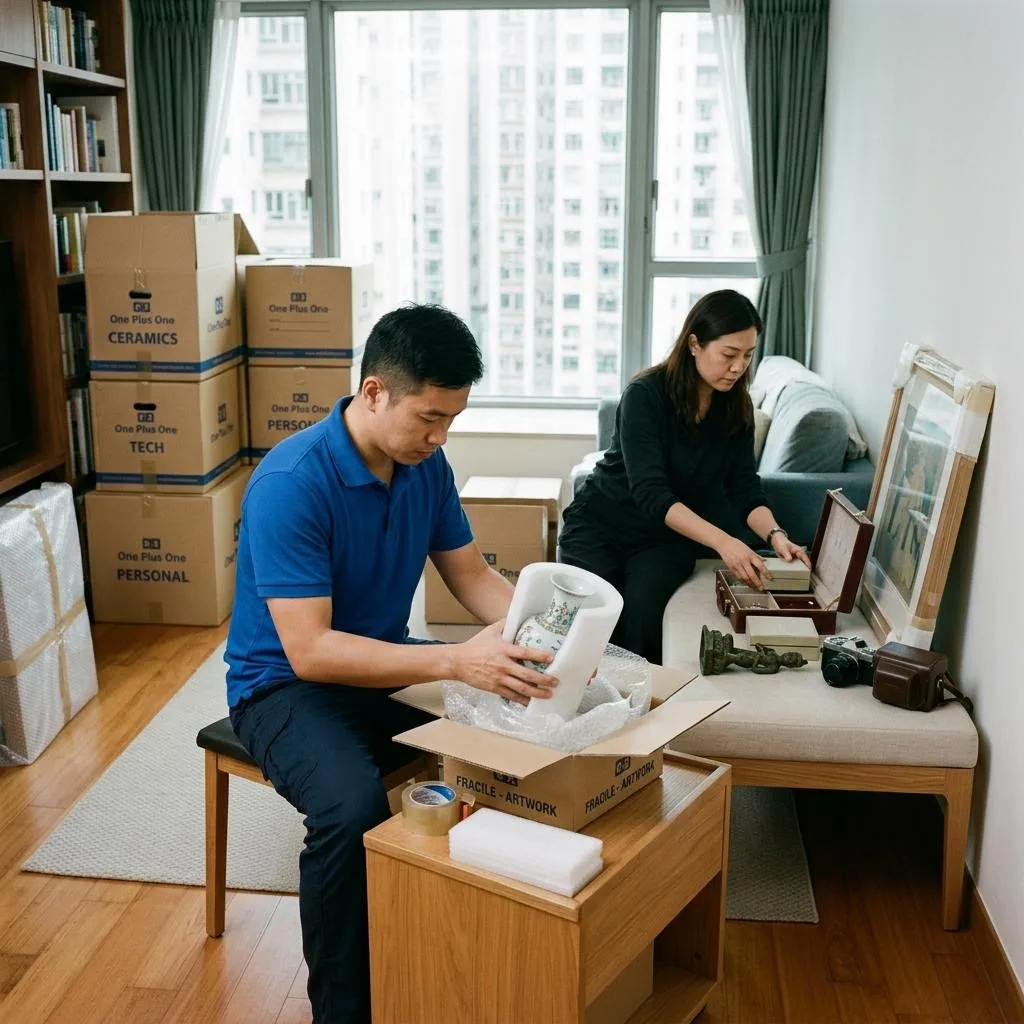
Packing should match the item type. Fragile items can be wrapped in bubble wrap, soft paper, or foam, then placed in a sturdy box of the right size. Fill any gaps inside the box so the contents do not move during transport. For electronics such as screens, cameras, and audio equipment, remove loose accessories first, and use the original box if available or a similar protective setup with padding around the item.
Antiques, paintings, glass ornaments, and keepsakes should not be packed together with heavy items, and the box should be marked with the correct orientation, fragile handling, and do-not-stack notes. Hong Kong is humid, so long waiting times at the curb or on the ground can matter. For valuable electronics or precision items, do not improvise on the spot; follow the maker's guidance or consult the right specialist before deciding how to pack them.
Hand over and check items carefully on moving day
On moving day, valuables should be the last items loaded and the first ones confirmed as taken with you. Before handover, count items, check the list, and review the condition with a family member if possible. If movers are handling the boxes, explain clearly which ones must not be turned over, stacked under heavy furniture, or placed with general household items.
After arrival, do not rush to put everything away. First check for dents, tears, water marks, or broken seals on the boxes, then compare each item with your photos and list. If you find missing pieces, visible damage, or odd packing signs, record it right away and follow up with the moving coordinator as soon as possible, keeping photos and messages for reference.
What to ask before you book moving help
If you have many valuables, large items, or access challenges such as stairs, narrow corridors, or slopes, tell the mover in advance and ask for written confirmation of the service scope, item list, floors, route, and any special limits. Do not just say you have
a few valuables,
Common mistakes and your last pre-move check
Common mistakes include mixing valuables into general boxes, skipping photos, forgetting a written inventory, failing to label boxes clearly, letting someone else keep cash or ID documents, and trying to pack valuable items at the last minute. These errors increase the risk of loss and arguments, especially in Hong Kong buildings with narrow common areas, busy lift traffic, and multiple floors.
At the final check, confirm that all valuables are in your possession, separately packed, kept away from bulky furniture, and noted on your handover list. If you need to check fees, service details, or terms, use Moving house price list and Service terms as the reference point; for general move preparation, Moving checklist is a practical starting place.
Frequently Asked Questions
Which items should not be mixed into ordinary moving boxes?
Cash, ID documents, jewelry, bank papers, keys, and other small high-value items should stay with you or in a separate lockable container, not mixed with general household goods.
Do valuables always need to be carried by the owner?
Not always, but the most important rule is clear counting and separate control. For documents, cash, and small valuables, carrying them yourself is usually the safest practical choice.
Why should I take photos before packing valuables?
Photos document the item's condition, accessories, and appearance before the move, which helps with comparison later if something is lost, damaged, or disputed.
What should I do if a box arrives dented or torn?
Keep the box, take photos, check the contents immediately, and report the issue to the moving coordinator as soon as possible with your records ready.
Can I disconnect electronics or other linked equipment myself?
Do not DIY work involving electricity, gas, medical devices, or structural connections. Use a qualified professional or follow the manufacturer's instructions where appropriate.


