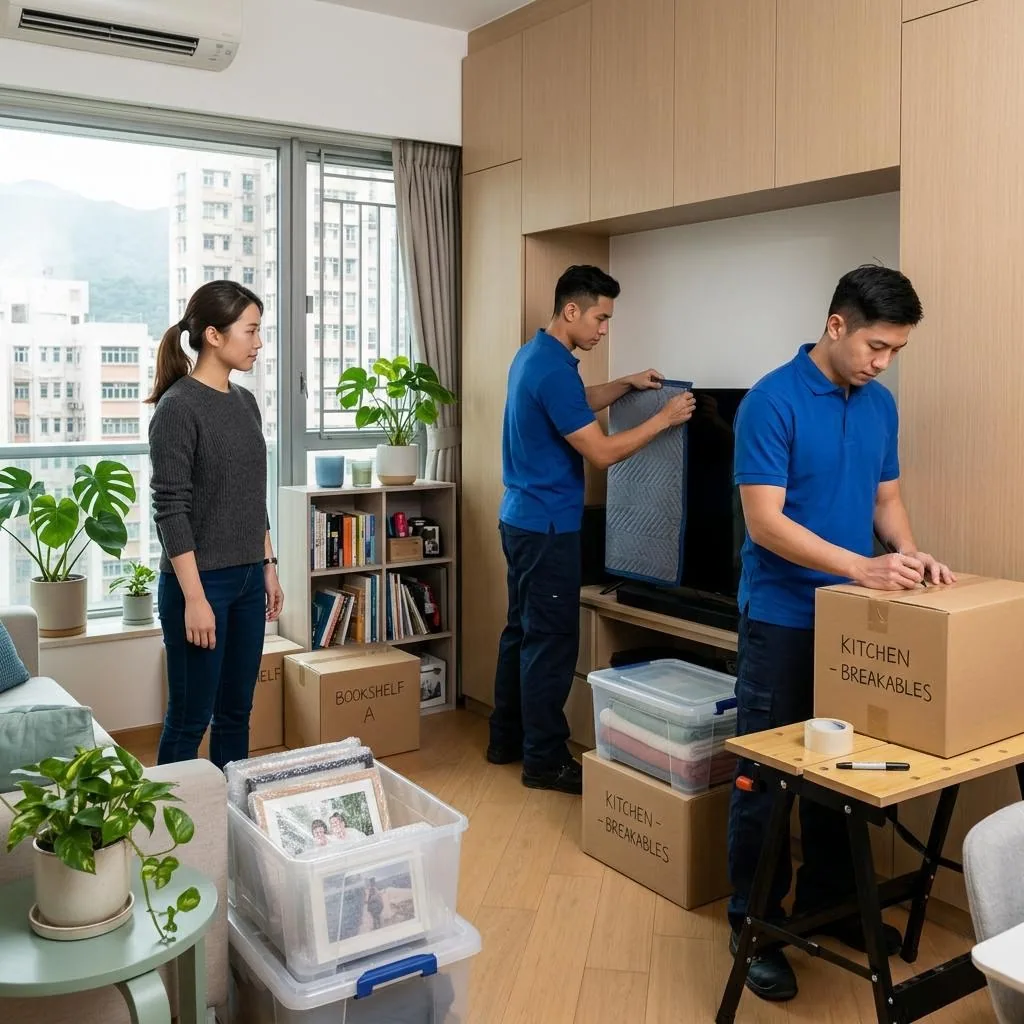
MOVING TIPS & ADVICE
Safe Moving Guide for Women Living Alone: Practical Tips from Packing to On-site Supervision
Key answers
For women moving alone in Hong Kong, the key issues are privacy, on-site safety, and clear planning. This guide covers packing, supervision, move-in checks, common mistakes, and what to ask before you book.
Clear privacy risks before you pack
Before moving, deal with information leaks one by one instead of simply putting everything into boxes. Remove or cover courier labels, utility bills, bank letters, old tenancy copies, and any stickers showing your name, address, or phone number. If the outside of a box still carries personal details, handle them before pickup so they are not visible during transport or recycling.
Keep ID documents, passbooks, cash, jewellery, medicines, and other important papers with you. For boxes that go to the mover, use opaque cartons or suitcases where possible, and label them only by room or category. Avoid writing too much personal information on the box surface.
Safer arrangements on moving day
If you will be alone on moving day, tell the building management, security staff, or a trusted neighbour in advance. If possible, ask one friend or family member to stay for part of the process. The goal is not to create alarm, but to give you support when checking items, opening doors, and dealing with unexpected issues.
Keep the main door accessible, but do not leave the flat entirely unattended. If you need to step away, take valuables and identification with you. If anyone asks for an extra charge, tries to move items not listed in advance, or presents a document you do not understand, pause and ask for written confirmation before agreeing.
Moving yourself, asking friends, or using a professional team
For a woman moving alone, the biggest risk is usually not just effort, but loss of control over the process. Moving by yourself or with friends can mean lifting heavy items, rushing through the schedule, and struggling to supervise, carry, and coordinate transport at the same time. Using a private car for multiple trips can also make timing and loading unpredictable.
A properly arranged move should let you confirm the item list, floor level, lift access, route, and any furniture dismantling in advance. Whatever option you choose, make sure the quotation, timing, scope of work, and any possible extra charges are confirmed beforehand and kept in writing.
The first checks to make after arrival
Once your items reach the new home, do not rush to unpack. First check the front door lock, windows, grille, peephole, and any balcony areas. If you are renting, it is not unusual to find that previous keys or old locks have not been fully changed, so confirm the handover details with the landlord or agent as soon as possible. Any lock, electrical, gas, or structural issue should be handled by qualified professionals, not by DIY.
Then set up curtains, blackout coverage, and basic lighting to restore privacy. Unpack by room and place boxes away from the entrance; do not leave cartons and tape stacked at the door for long. If you notice dampness, dust, or signs of leakage, take photos and report them promptly to the relevant party.
Common mistakes women moving alone often make
A frequent mistake is leaving everything until moving day, such as not removing labels, not sorting boxes, or not clearing a path. That creates delays and makes the flat harder to manage. Another common problem is writing too much detail on every box, which exposes personal information unnecessarily; room names and simple categories are usually enough.
People also forget building rules such as loading bay booking, lift reservation, permitted moving hours, and access routes. This can lead to delays or last-minute changes. Before the move, check the building’s entry rules, parking arrangements, and whether the moving vehicle must be registered at the front desk.
What to confirm before you book
Ask clearly what is included in the moving scope, whether furniture dismantling is covered, whether stairs or lift restrictions apply, and how weekends or bad weather are handled. If you have large furniture, fragile items, a long-distance transfer, or temporary storage needs, say so early so there are no surprises on the day.
It is best to request a written quote or written message confirming the address, date, floor level, travel time, item list, and any special requests. If privacy matters to you, ask how box labels and contact details will be handled and whether communication can be limited to one designated contact person.
Frequently Asked Questions
What is the most important privacy step for a woman moving alone?
Remove your name, phone number, and address from boxes, courier labels, and letters first, then carry ID, cash, jewellery, and important documents with you personally.
If I am alone on moving day, what makes the situation safer?
Notify building management in advance, ask a trusted friend or family member to stay for part of the move if possible, and keep valuables with you at all times.
What should I do if the mover suddenly asks for extra payment?
Ask for the reason and request written confirmation before agreeing. Do not argue on the spot or pay before checking whether the charge matches the original quotation.
What should I check first after moving into a new home?
Check the front door lock, peephole, windows, grille, and key handover immediately. Any lock or electrical issue should be handled by qualified professionals.
How should I dispose of moving boxes without exposing personal data?
Flatten the boxes first, remove any labels or stickers with personal details, and then send them for recycling or disposal so the information cannot be picked up by others.


