MOVING TIPS & ADVICE
Packing Shoes for a Move: How to Save Space Without Crushing Their Shape
Key answers
Shoeboxes waste a lot of moving space, but dumping shoes loose can scuff uppers and distort heels. Use shape fillers, sole covers, and layered packing to protect footwear while reducing box count and handling effort.
Why shoeboxes quickly become a space problem
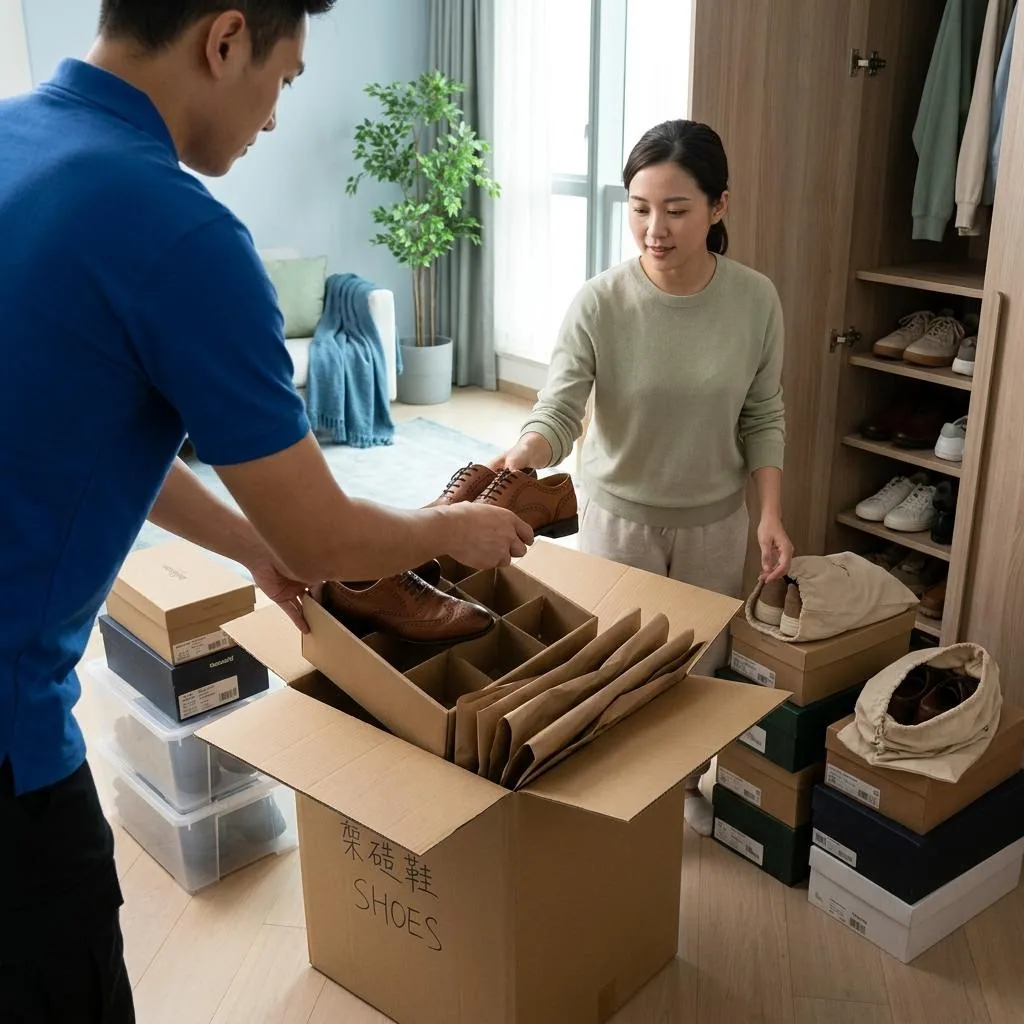
In many Hong Kong homes, keeping every pair in its original shoebox can make the moving load grow fast. Shoeboxes are neat and square, but they leave empty corners inside larger cartons and use up space in the truck far faster than most people expect.
Boxes stored for a long time may also absorb dampness, dust, or odours. If you move them as they are, you may waste space and carry over old smells and debris into the new home, creating more cleanup work after unpacking.
What to use instead of the original box
A practical option is to clean the soles first, then cover the bottom of each pair with a disposable shower cap, thin bag, or cloth sleeve to reduce dirt transfer. The elastic edge of a shower cap makes it easy to secure around the sole, which is useful for short moving trips; if the sole is rough, lightly tape the edges first and then wrap with a soft cloth.
This kind of wrapping is for transport only. For leather, suede, or shoes with decorative parts, avoid keeping them sealed for long periods. Before the move, take photos of each pair and any accessories so it is easier to check for missing items, damage, or mix-ups when unpacking.
How to pack and fill shoes so they keep their shape
Before boxing, stuff the toe and inner body with crumpled paper, clean thick socks, or tissue to support the shape and reduce creasing. Leather shoes, heels, and boots need more internal support; for soft canvas shoes or slippers, do not overpack them, or they may deform.
When arranging pairs, place the two shoes in opposite directions to reduce wasted space. Then layer by weight: heavier leather shoes or boots at the bottom, lighter and softer shoes above. Thin heels and delicate uppers should be wrapped separately and packed in a smaller carton so they are not crushed by harder items.
Separate packing methods for different shoe types
Sneakers, flats, and slippers are easier to stack, but they still need their laces and insoles separated so unpacking is not confusing. If sneakers have mud or stains, clean them before packing, or the dirt may transfer to other pairs or the inside of the box.
High heels, lambskin shoes, long boots, and collectible footwear need extra care. Heels should have the heel area protected separately; long boots should not be folded, and should be stuffed with paper rolls or clean cloth to keep the shaft upright. If the shoes have their original dust bags, use them first and handle the pair with a single-light-layer approach.
What to check on moving day, and common mistakes to avoid
Before sealing the cartons, check each pair for insoles, receipts, heel pads, or accessories left inside. Remove any sand or stones from the soles, and make sure laces are not tangled around other shoes. After arriving, confirm the count first, then wipe dust off the surfaces and let the shoes rest in a ventilated area.
Common mistakes include overfilling one large box, placing heavy shoes on top of thin heels, packing damp shoes directly into cartons, or wrapping shoes in sealed plastic bags for too long. If the moving schedule is tight, separate daily wear, seasonal pairs, and rarely worn shoes in advance to reduce last-minute confusion.
When to ask the mover, and when to use a specialist
If you have many pairs, complex styles, or a lot of boots, heels, and expensive footwear, ask the mover in advance whether they can advise on box counts, packing order, and suitable wrapping arrangements. For special materials, collectible shoeboxes, or items that need longer storage, request written confirmation of the handling method before deciding what to do.
If a pair needs professional cleaning, restoration, mould treatment, or structural repair, do not force a DIY fix. Electrical, gas, medical, structural, and other specialist technical work should be handled by qualified professionals. For shoes themselves, the practical goal is simple: keep them clean, protected from pressure, and easy to identify when they arrive.
Frequently Asked Questions
Do I have to keep every original shoebox when moving?
No. Most everyday shoes can be packed without the original box if you protect the soles, support the shape, and separate pairs properly. Original boxes are mainly worth keeping for highly delicate or collectible shoes.
Is it okay to leave shoes wrapped in shower caps for months?
No. Shower caps are for transport only. If shoes will be stored for months after the move, remove the wrapping and keep them in a dry, ventilated area.
What part of high heels is most likely to be damaged?
The heel joint and the upper surface are the main weak points. Wrap the heel separately and pack the pair in a smaller, stable carton away from heavy items.
How can I stop long boots from creasing?
Do not fold or flatten them. Fill the shaft with paper rolls, thick cloth, or a clean towel so it stays upright, then place them flat on the top layer of the box. Expensive pairs should be packed separately.
What should I do first after arriving at the new home?
Check the pair count and styles first, remove the protective wrapping, and let the shoes air out in a ventilated spot. If anything is damp, bent, or loose, separate it before putting it back into a closed cabinet.


