MOVING TIPS & ADVICE
Manual Moving for Tight Tong Lau Slopes: Practical Planning Guide
Key answers
Tong lau moves are hardest where narrow slopes, stairs and tight turns meet. Measure access first, reduce weight, pack in smaller boxes and plan a staged carry to cut delays, damage and strain.
Assess the building and access limits first
Before moving from a tong lau, check whether there is a lift, how wide the stairs are, where the turns are, and how many steps or slopes sit between the truck and the unit. If the entrance, rear stairs or street access is narrow, some large items may not pass upright, so measure width, height and turning space in advance instead of discovering the problem on moving day.
Also check for renovations, refuse collection, road works or wet weather that can make access slower and riskier. If you need to use common areas, a parking bay or property management space, confirm the permitted route and time window with the landlord, tenant representative or management office, and list the size, weight and dismantling needs of each large item.
Reduce weight and pack by category
The biggest mistake in tong lau moves is overpacking. Separate clothes, books, dishes, documents and loose items first. Books, ceramics and tools should be split into smaller boxes, with each box light enough to carry steadily on stairs; wet items, metal parts and liquids should not be mixed together. Dismantle beds, shelves, dining tables and cabinet doors where possible, and keep screws, fittings and manuals in clearly labelled bags.
Wrap corners, glass, mirrors and easily scratched surfaces with blankets, bubble wrap, cardboard or stretch film, then secure them without sticking tape directly onto painted or leather finishes. Mark each box with the room, weight level and any fragile note. Keep daily essentials, documents, medication and chargers separate so you do not have to search through every box after arrival.
Handling narrow slopes and stairways
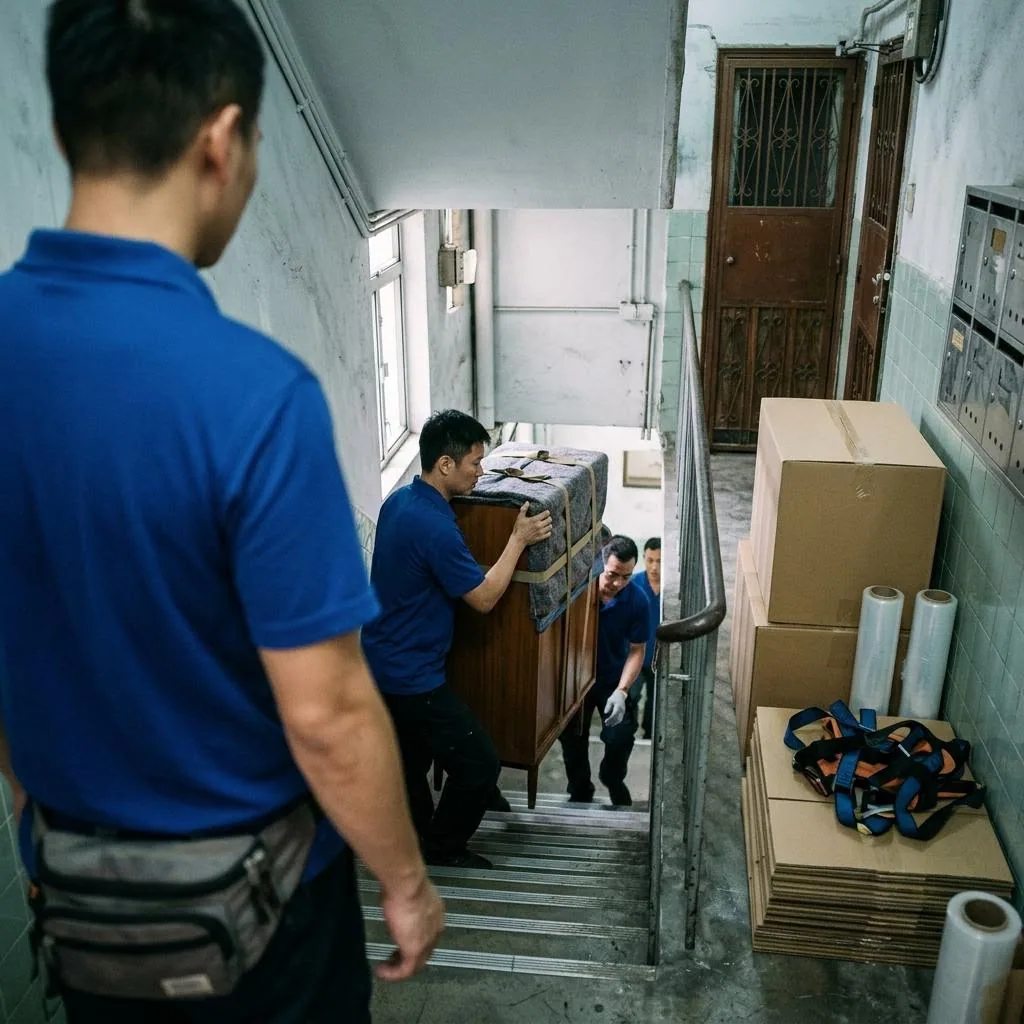
The outdoor slopes and steps around many tong lau buildings are much more demanding than level ground. A safer method is to move in stages: place the item on a flat resting point, then have two or more people relay it up the next section instead of forcing one long carry. Keep heavy items close to the body, slow the pace, and pause before each turn to confirm the route is clear.
If the slope is wet, the steps are uneven, or pedestrian traffic is heavy, be extra careful with balance and footing. Wheels are not always the answer on a steep incline and may be hard to control, so whether to use them depends on the actual site. For items that are too large, too heavy or need a special angle to pass, consider dismantling, changing the route or arranging a different handling plan rather than forcing the move.
Dealing with stairs, turns and the doorway
The hardest part is often not the climb itself but the stair landing, railing edge and doorway. Measure the stair width, landing space and clear door opening before the move. Items such as mattresses, sofas, fridges, wardrobes or long tables may need dismantling or a different entry angle if they exceed the available space. Protect wall corners, door frames and flooring before carrying anything through.
Once inside, do not pile every box at the entrance. Place large furniture where it is meant to stay, then bring in medium boxes and loose items so the path remains clear for adjustments. If the handrail, hinges, glass door or window edge is especially tight, stop and re-angle the item instead of forcing it through. If needed, decide first whether a temporary obstacle should be removed before continuing.
Check items, position furniture and restore the unit
After everything reaches the new home, the first step is not unpacking but checking the count against the labels and confirming whether anything is missing, damaged or placed in the wrong room. Inspect fragile items, documents and small valuables first, then position the heavier furniture so that later adjustments do not require repeated lifting. In a small unit, keep a clear walkway until the bed, wardrobe and desk are in their final positions.
To restore the home properly, keep the unit ventilated and the floor dry. Remove cartons, wrapping and packing waste in batches so the stairwell and corridor stay clear. If a large item needs reassembly, sort the parts first and rebuild it step by step. Any work involving electricity, gas, plumbing, wall fixing or window installation should be handled by qualified professionals, not as a DIY task.
When to ask a professional moving team for help
If the tong lau is high-floor, the slope is long, the stairs are many, or the items are large and heavy while the route is narrow, moving on your own can increase the risk of injury and damage. In that case, consider a moving team familiar with tong lau access and explain the floor level, doorway size, slope condition, dismantling needs and expected moving time in advance so they can judge whether the job is suitable.
When choosing a mover, focus on practical questions rather than slogans: do they need photos or an on-site check, how do they handle stairs and turns, which items should be dismantled first, what happens if the route is too narrow on arrival, and how should damage or delay be handled. For price, terms, liability and any extra charges, request written confirmation and refer to Moving house price list and Service terms.
Frequently Asked Questions
What should I measure before moving from a tong lau?
Measure the stair width, landing space, door opening, any lightwell area and the street slope. If a sofa, bed, wardrobe or fridge is wider than the route, plan for dismantling or a different carrying angle in advance.
How should boxes be packed for manual stair carrying?
Pack books, dishes and tools into smaller boxes so no single box becomes too heavy. Keep heavy items separate from clothes or loose goods, and label each box with the room, weight level and fragile notice.
What can reduce risk on narrow slopes and steps?
Move in stages, use a relay method, and pause before turns. Do not force one person to carry a long item alone. If the surface is wet or crowded, reassess the route, timing or dismantling plan.
What should be checked first after arrival?
Check the item count and look for damage before unpacking. Then place the main furniture first, keep walkways clear, and unpack the rest gradually so the entrance does not become blocked.
When should a qualified professional handle the job instead?
Any work involving electricity, gas, plumbing, structural fixing, window installation, medical devices or other specialist technical tasks should be done by qualified professionals. The movers should only handle the moving work they are responsible for.


