MOVING TIPS & ADVICE
Practical Tips and Prep for Moving Large Furniture
Key answers
Before moving sofas, bed frames, wardrobes, and other bulky items, measure the route, clear the path, dismantle removable parts, and confirm door, lift, and stair limits to reduce damage, delays, and injury risk.
Measure First and Map the Route
The main problem with large furniture is often not the weight, but whether it can fit through the entrance, turns, lift, and stairs. Before moving day, measure the furniture, then measure the lobby, corridors, door frames, stair landings, and corners. Check for protruding railings, lights, shoe cabinets, and any narrow points that may cause a blockage.
If a piece is close to the limit, plan an alternative route in advance, such as using another staircase, removing a door, or moving it in parts. For estate blocks or old tenement buildings, also check whether lift protection or building management arrangements are needed. If the route is uncertain, ask the mover to confirm it in advance and request written confirmation of any limitations.
Dismantle, Empty, and Label Parts
Whenever possible, dismantle items such as bed frames, wardrobe doors, table legs, shelves, and removable armrests. Breaking a piece into smaller sections makes turning corners easier and lowers the chance of knocking into walls. When you remove screws, bolts, plugs, and tools, keep them in one bag and label it clearly with the furniture name so reassembly is not delayed.
Drawers, shelves, storage compartments, and sofa storage areas should be emptied before moving. A loaded piece is easier to tip and can strain the frame. Wrap glass panels, mirrors, loose shelves, and decorative parts separately. If the furniture is already loose, cracked, or badly damaged, assess whether it should be moved at all before attempting the job.
Protect the Furniture and the Property
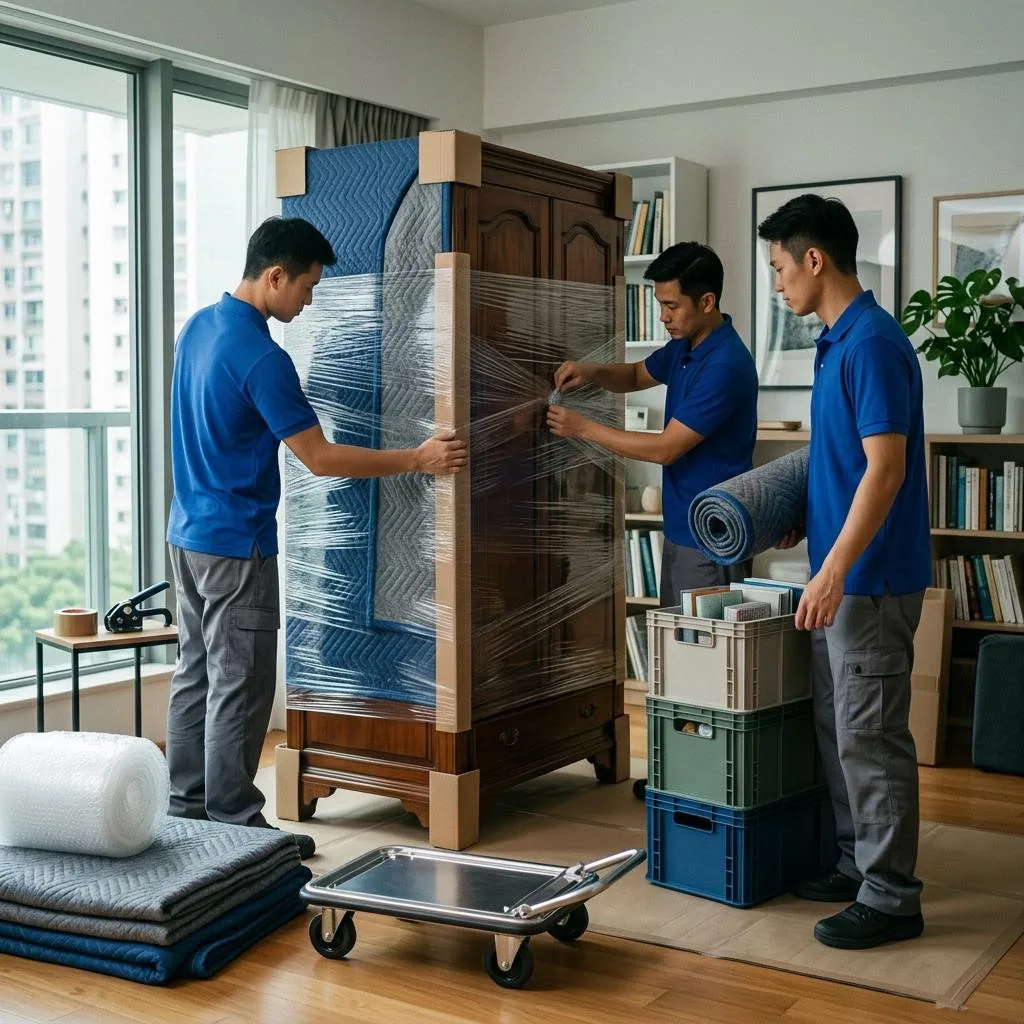
Large furniture is easily scuffed at corners, lift doors, and stair railings. Use blankets, bubble wrap, and stretch film, but always protect the edges first and secure the wrapping so it does not slip during the move. Avoid taping directly onto wood finishes, as adhesive may leave marks or damage the surface when removed. For leather or fabric sofas, do not wrap too tightly, or the cushions and shape may be damaged.
Floors, skirting, walls, and door frames should also be protected, especially in renovated flats, wooden flooring, or stone surfaces. Lay down protective pads, cardboard, or floor coverings before the route is used. If the path is narrow, clear rugs, shoe racks, loose items, and decorations first so there is less chance of tripping, dragging, or scratching.
Use Safe Lifting Technique and Clear Roles
A common mistake is trying to lift with the arms alone, or twisting the body while walking. Stand firmly, bend the knees, keep the back naturally straight, and move in small steps. When a turn is needed, stop first and then adjust the direction. Do not twist suddenly, because that can strain the back or throw the furniture off balance.
When more than one person is moving the item, decide in advance who is front, back, left, and right. Agree on simple commands such as lift, stop, and slow down before starting. If the item is too heavy, too large, or the movers have back or joint issues, do not force a family-only move. Use a more suitable method or hire a professional mover instead.
Tools Help, but Only When Used Properly
Dollies, moving straps, sliders, and padded blankets can improve efficiency, but only if the size is right and the people using them know how to control them. Dollies are suitable for flat indoor routes, not for narrow stairs or steep slopes. Moving straps can share the load, but if the users are of very different heights, balance can become unstable. Test a few steps first to check the rhythm.
Sliders reduce floor wear and are useful for short indoor repositioning. However, they work poorly on wet floors, rough concrete, or loose debris. If the base of the item is uneven, or if there are fragile objects nearby such as glass, TVs, aquariums, or ornaments, do not rush to push or drag it. Clear the area first, then move it step by step. If needed, ask the mover to inspect the site in advance.
When to Ask for Professional Help
If the furniture is oversized, awkwardly shaped, or has to pass through narrow stairs, old walk-up buildings, or floors without a lift, moving it yourself can take longer and create more risk. A professional mover can help assess the route, plan labour, and sequence the job, but you should still give clear details about size, floor level, lift access, dismantling needs, and any fragile items nearby.
Before booking, ask whether dismantling is needed, how edge protection is handled, what happens if the item gets stuck, and whether the quote includes waiting time or extra stair carrying. Before the move starts, take out valuables, cash, documents, and personal items yourself. After arrival, check each item for damage or missing parts and raise any issue immediately with a written record.
Frequently Asked Questions
What is the most important preparation before moving large furniture?
Measure the furniture and the route first, including doors, lifts, stairs, and corners, then decide whether dismantling, wrapping, or an alternate route is needed.
Which furniture items should usually be dismantled first?
Bed frames, wardrobe doors, table legs, shelves, and removable sofa feet or armrests are common candidates, but if the structure is unclear, check the manual or ask a qualified person.
How can I reduce scratches on floors and walls?
Clear the path, add protective coverings to the route, reinforce corners and door frames, and avoid dragging or making sudden turns.
When should I avoid moving large furniture myself?
Do not force a self-move if the item is very heavy, the route is narrow, stairs are involved, or the movers have back problems. Use proper tools or professional help instead.
What should I ask a mover before booking?
Ask about dismantling, route limitations, edge protection, how stuck items are handled, and whether the price includes extra floors or waiting time. Request written confirmation.


