MOVING TIPS & ADVICE
How to Reduce Stress for Pets During a Home Move
Key answers
The best way to help pets through a move is to keep routines familiar, prepare them for the new environment early, and set up a quiet, secure space on moving day. Good planning before, during, and after the move usually makes the transition smoother.
Build a sense of safety before moving day
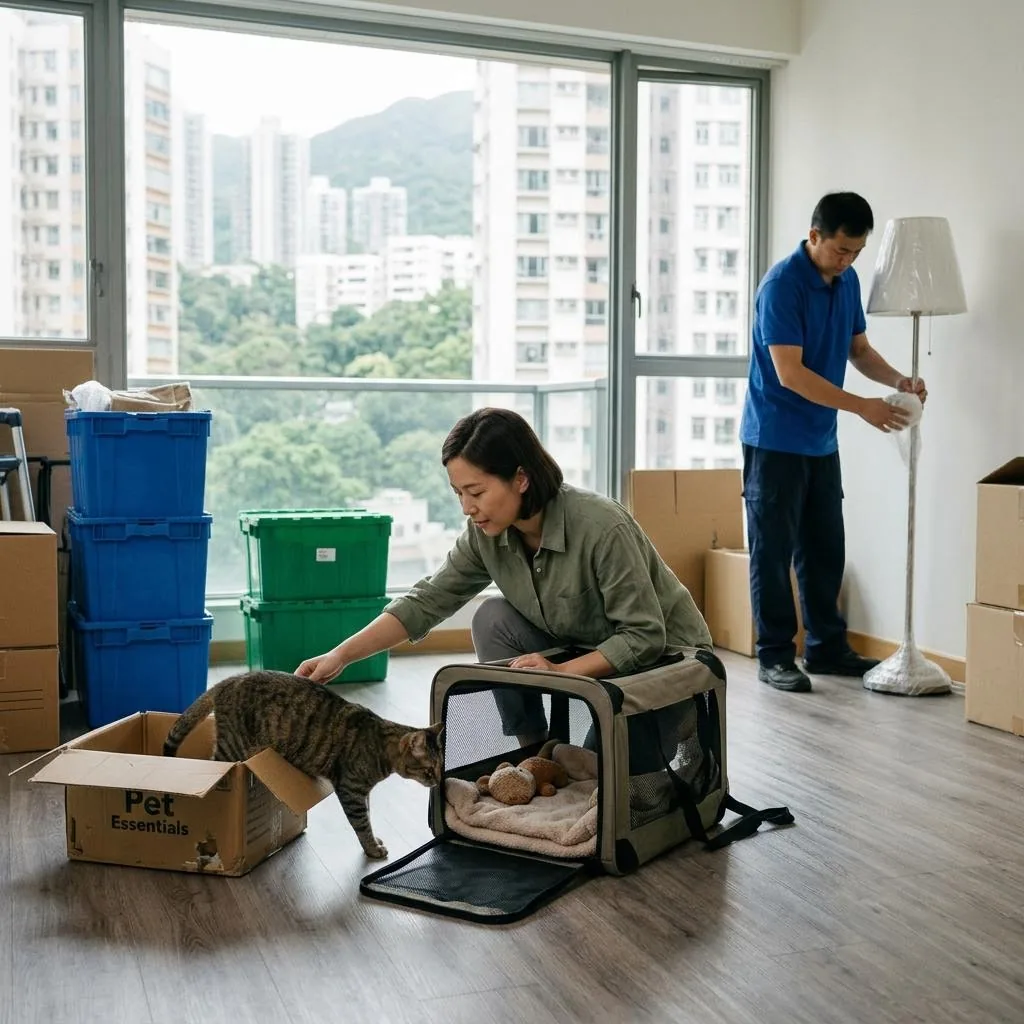
Pets cannot understand why the home is changing, so boxes, furniture shifts and extra people can already make them uneasy. In the weeks before moving, let them see boxes, carriers or pens gradually, and create positive associations with treats, toys and a familiar blanket instead of forcing them into a strange space at once.
If your pet is timid, hides, barks, or loses appetite easily, watch the signs early rather than waiting until moving day. When health issues, medication or behaviour concerns are involved, ask a qualified veterinarian; do not try to solve medical problems on your own.
Keep routines and familiar items as stable as possible
What unsettles pets is not only a new address, but also a sudden break in daily rhythm. Try to keep feeding, walking, toileting and play times close to normal, especially for dogs and young animals. If exact timing is not possible, aim to stay consistent enough that the pet still recognises the pattern.
Do not throw away every familiar item at once. Beds, scratching posts, bowls, blankets and toys carry familiar scents that help pets settle. Before the move, sort out the items your pet needs first, and label one box clearly so you can unpack those essentials immediately after arrival.
Set up a safe place on moving day
Moving day is noisy and busy, with frequent door opening, heavy lifting and unfamiliar people in and out of the home. The safest approach is to place the pet in a quiet room before loading starts, close the windows and door, and leave water, a small amount of food, bedding and a familiar toy inside. Mark the room clearly so movers do not open it by accident.
If family or friends can help, consider keeping the pet with someone trusted for the day so the move is less overwhelming. If you use a carrier, make sure it fits properly, has enough ventilation and is introduced well before moving day. Never force a frightened pet into a carrier at the last minute.
Let the pet adjust step by step after arrival
Once you reach the new home, do not let the pet roam freely everywhere right away. Start with one quiet room and place familiar items there, such as a water bowl, bed, litter tray or pee pad. This gives the pet a small, manageable base before the rest of the home is introduced.
When the pet begins exploring, stay calm and avoid forcing contact. Let them choose when to come out, observe and approach. If you notice hiding, reduced eating, frequent vocalising or inappropriate toileting, return to the familiar routine and monitor closely; if the behaviour continues, speak to a veterinarian or qualified animal behaviour professional.
Watch for stress signals and avoid common mistakes
Many owners are busy unpacking and may overlook the pet’s state. Common mistakes include changing food too quickly, leaving the pet alone for long periods in an unfamiliar space, or clearing away all old items at once. After the move, pay close attention to eating, drinking, toileting, sleep and activity so the pet has time to adjust.
If your pet is prone to separation anxiety, startle responses or escape attempts, strengthen door and window control before, during and after the move. Also avoid changing leash, collar or feeding equipment at the same time as everything else, because too many new variables can make the transition harder.
What to confirm with your movers before the move
If there is a pet in the home, tell the moving team which room should remain closed, whether a quiet holding area is needed, and which entrances or exits need extra care. You may ask them to move noisy or bulky items first to reduce disturbance, but pet care, supervision and any medical or behavioural needs should still be handled by the owner, with important points confirmed in writing.
It is also worth asking about the route, lift access, door protection and the order of entry so the pet is not exposed to unnecessary confusion. If you have large pet items or specialist equipment that need separate handling, check the limits in advance and arrange suitable qualified help where needed. See Online Quote, Box packing service and Moving checklist for planning support.
Frequently Asked Questions
How early should I start helping my pet adjust before moving day?
A few weeks in advance is ideal. Let the pet get used to boxes, carriers and small routine changes gradually, while keeping daily habits stable. If your pet is especially sensitive, ask a veterinarian earlier rather than later.
Should my pet stay at home or be taken elsewhere on moving day?
It depends on the pet’s temperament, the amount of activity and whether you have trusted help. A quiet, secure temporary space is usually better than leaving the pet in the middle of a busy move.
Do cats and dogs need different adjustment methods after a move?
Yes. Cats usually do better with a smaller area first, then gradual expansion. Dogs can often explore the new neighbourhood sooner, but they still need familiar routines and controlled exposure to new sights and sounds.
Is it normal if my pet hides or refuses food after the move?
A short period of stress can be normal, but ongoing refusal to eat, vomiting, diarrhoea, lethargy or unusual toileting should not be ignored. Reduce stimulation and seek veterinary advice if the signs continue.
Can the moving company take care of my pet during the move?
Movers can work around your pet plan, but they should not be expected to supervise the pet. If you need special timing or room-by-room coordination, confirm it in advance and request written confirmation of the arrangement.


