MOVING TIPS & ADVICE
Moving Packing Labels: How Color Coding Helps You Settle In Faster
Key answers
To restore daily life quickly after a move, the key is not faster unpacking but better packing labels, clear color coding, priority boxes, and a simple arrival check that prevents confusion and wasted time.
Build a labeling system before you seal the boxes
The slow part of moving is often not the transport itself, but arriving at the new home and facing a pile of nearly identical boxes with no easy way to find daily essentials, documents, or bedding. The best way to reduce confusion is to decide on a labeling system before you pack, so every box has a clear purpose.
A simple method is to sort first by room, then by use: bedroom, kitchen, living room, bathroom, documents, and miscellaneous items. If you have many belongings, split each room into urgent and non-urgent items as well. That way, you can open the most important boxes first and leave the rest for later.
Use colored tape instead of only writing in black
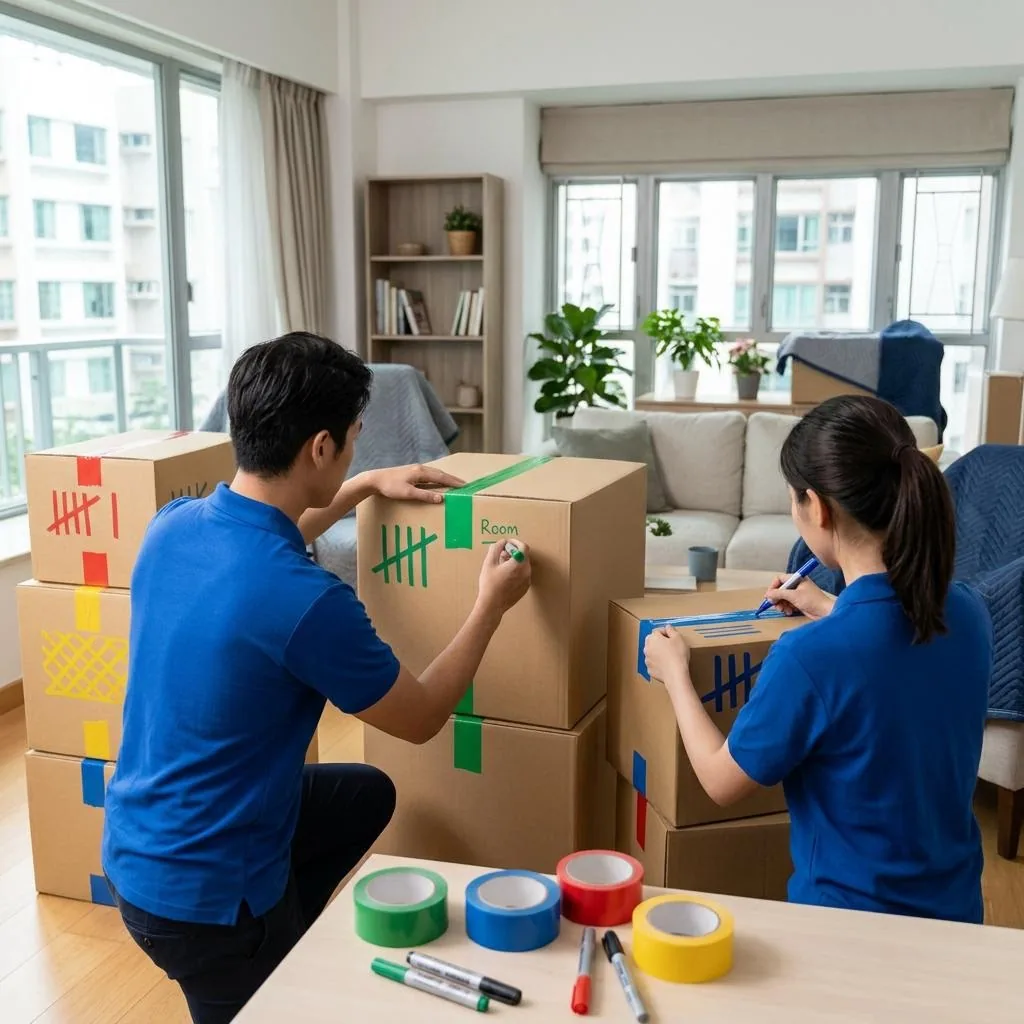
Black marker labels are easy to miss from a distance, especially when boxes are stacked or placed in dim corridors, stairwells, or a moving vehicle. Colored tape or large color stickers are much easier to spot and help both you and the movers sort boxes faster.
Give each area one fixed color, such as one color for the bedroom, one for the kitchen, one for the living room, and one for the bathroom. Also write a short contents note on the box, such as clothes, pots, books, or cleaning supplies. Color handles the quick sorting, while words confirm what is inside.
Mark more than one side of each box
Many people only label the top of a box. Once boxes are stacked, that top label disappears, and you end up moving boxes around just to see what is inside. A better method is to label the top and at least two sides, and if the box will be stored for a while, label all four sides.
For fragile items, boxes that must stay upright, or boxes that need to be opened first, use a clear note in a visible spot. Simple wording like fragile, this side up, or open first is enough. If the box contains glass, lamps, or other delicate items, prepare an item list before packing and make sure the cushioning is sufficient.
Priority matters more than the number of boxes
Not every box needs to be opened on day one. Add an opening priority to each box, such as first wave, second wave, or numbers like 1, 2, and 3. The first box to open should contain overnight essentials such as toiletries, towels, spare clothes, chargers, basic tableware, and any regular medication.
Keep these boxes separate from the rest and let the movers know where they should be placed first. Seasonal clothes, collections, books, and other non-urgent items can wait. If the moving day is long, keep a separate small bag with your ID, cash, keys, and phone charging cable so the most important things never get buried in a box.
Align the labeling method with the moving crew
Before moving day, explain the color code clearly and repeat it on a simple sheet near the door or in your room list. If the mover offers a site visit or a pre-move check, ask whether they will place boxes by room or by color, so you do not assume the system is understood when everything ends up in the living room.
Ask practical questions in advance: which boxes must go into which room first, which items should not be stacked, how dismantled furniture parts will be packed, and who will check the box count on arrival. These questions are not about adding extra steps; they are about avoiding misunderstandings. If you have large furniture, valuable equipment, or unusual items, explain the size and limits early and request written confirmation where needed.
Check first, then unpack
When the boxes arrive, do not rush to open the most convenient one first. Do a basic check: whether the box count is roughly correct, whether the labels match the rooms, and whether any boxes show signs of crushing or tilting. If a box is damaged, take a photo, note the box number, and inspect the contents before you unpack everything else.
When settling in, start with the bedroom and bathroom before moving on to the kitchen and living room. That gives you a basic living space for the first night. If a label is unclear, duplicated, or does not match the contents, do not keep unpacking blindly. Gather the problem boxes in one place and re-sort them first; that is usually faster than correcting things while unpacking.
Frequently Asked Questions
How should color coding be used for a move?
The most practical method is to assign one color per room and add a short contents note on each box. Color gives quick sorting, while words confirm what is inside. Using both is the clearest approach.
Is a label on the top of the box enough?
Usually not. Once boxes are stacked, top labels are easy to hide. It is better to label the top and the sides so the box can be identified from more than one angle.
What should go into the first box to unpack?
Toiletries, towels, spare clothes, chargers, basic tableware, and regular medication should go into the first-to-open box so you can use them on the first night.
What should I ask the moving company about labels?
Ask whether they sort by color or by room, how fragile items are handled, how furniture parts are packed, and who checks the box count on arrival. Request written confirmation if needed.
What should I do if the label does not match the contents?
Set the problem boxes aside first instead of unpacking them immediately. Check the box number and exterior marks, then reassign the opening order. That is usually more efficient.


