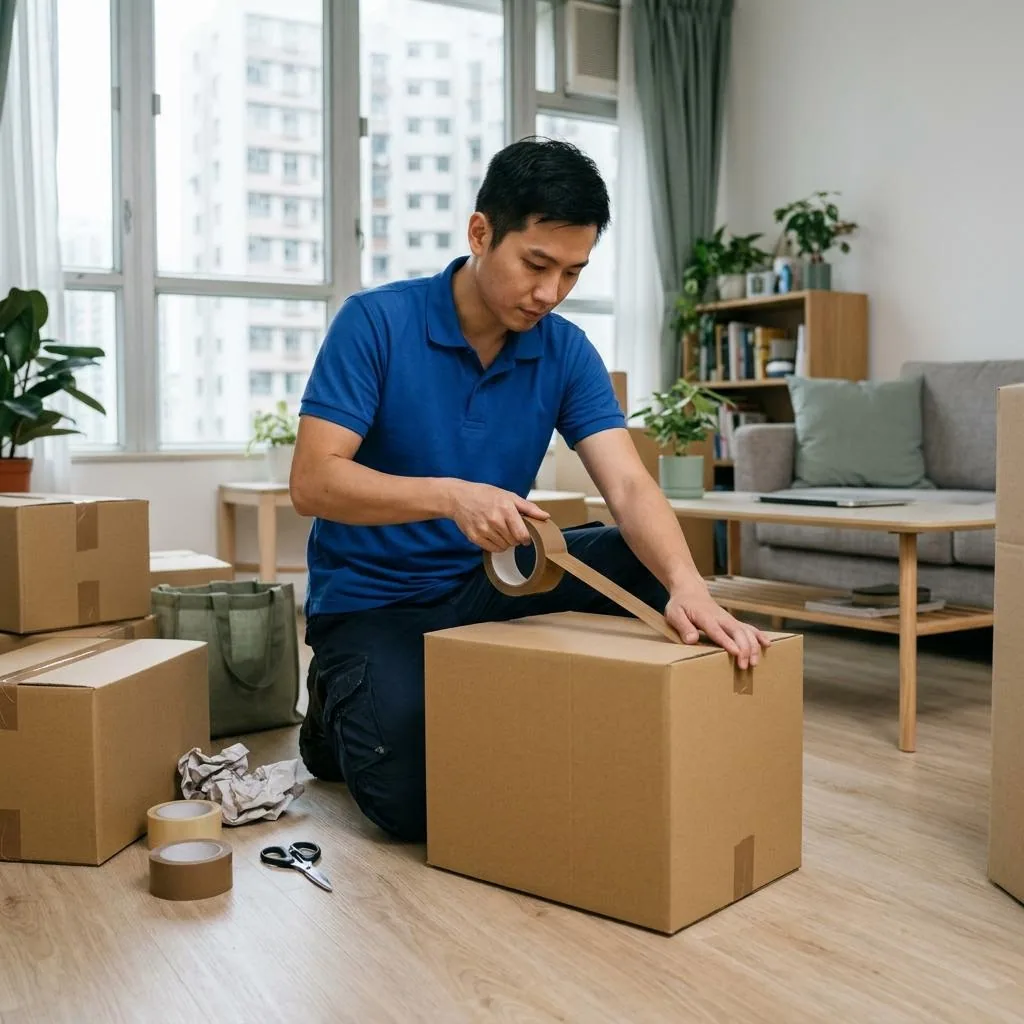
MOVING TIPS & ADVICE
How to Tape a Moving Box Bottom and Prevent Blowouts
Key answers
A moving box bottom can fail if it is only folded or lightly taped. Learn the safer sealing methods, how to choose tape and boxes, what to check before loading, and when to split heavy items into smaller boxes.
Secure the bottom first before you pack anything
When moving house, the biggest risk is often not the box top but the bottom. The base carries the full load, so if the flaps are only interlocked or the tape is applied poorly, the box can open when lifted. This happens easily with books, crockery, tools, or files because the weight concentrates along the centre seam.
Before sealing, check whether the box is dry, flat, and free from crushed corners or split edges. If the carton is already soft or warped, more tape alone may not solve the problem. Also avoid loading all the heavy items on one side, because uneven pressure makes the bottom more likely to fail during lifting or pushing.
Common mistakes: folding only, or taping only the centre seam
A frequent mistake is to fold the four bottom flaps together and assume that is enough. That may work for very light contents such as towels, tissues, or a few soft items, but once heavier items are added, the flaps can shift under movement and the bottom seam may open.
Another common mistake is using only one narrow strip of tape across the centre seam, or replacing box-sealing tape with thin stationery tape. A moving box faces shaking, twisting, short lifts, and sudden changes in direction, so one strip is rarely enough to spread the load. In humid weather, adhesion can drop further and the chance of failure rises.
Safer sealing methods: H seal and cross reinforcement
For ordinary household items, use an H seal. Apply one long strip along the centre seam, then add one strip over each side seam so the bottom looks like the letter H. This locks the centre seam and the side flaps together and helps prevent the bottom from lifting during handling. Press the tape down firmly and make sure it overlaps both sides of the seam.
For heavier items such as books, cans, glass jars, or file folders, add strips perpendicular to the centre seam to create a cross or denser reinforcement. The goal is not to use as much tape as possible, but to distribute the load more evenly. If the box contains very heavy items, split them into smaller boxes instead of forcing everything into one carton. Even a well-taped box can deform if it is overloaded.
Choose tape and cartons with strength in mind
Not every tape is suitable for moving. Box-sealing tape with strong adhesion and enough width is usually more reliable than thin stationery tape. Before using it, test a short strip to see whether it lifts at the edges or loses grip, especially in damp conditions. The right tape should bond cleanly and resist peeling.
Carton condition matters too. A tidy-looking box is not always reusable for heavy contents. If the bottom has been damp, the corners are crushed, or the carton has old crease lines from carrying heavy loads, its strength may already be reduced. For fragile items or books, check that the base is flat and consider adding a second layer of cardboard inside or outside the bottom to spread pressure more evenly.
Practical packing steps before and after sealing
Pack heavy items into smaller boxes and lighter items into larger ones. Add a small amount of padding such as paper or soft cloth at the bottom, but do not treat padding as a substitute for proper sealing. After packing, gently lift or shake the box. If you hear movement at the base, see flared flaps, or notice bending, reseal it before it leaves the room.
Mark the box with its contents and weight, such as heavy, fragile, or this side up, so movers can place it correctly. At pickup or arrival, check for damp patches, cracks, or lifted tape before carrying the box upstairs. If the bottom has started to open, do not force it. Reseal or transfer the contents into a better carton first, especially near stairs, corners, and lift doors.
When to consider help from a moving team
If your move includes many books, documents, kitchen items, or fragile goods, sealing every box yourself can take a lot of time and strain your back. It can also become difficult in old buildings without lifts, in narrow corridors, or during humid weather, especially when many cartons need to be completed quickly. In those cases, it is reasonable to ask a moving team whether packing support is available, how heavy items should be split, and whether the arrangement can be confirmed in writing.
Even so, sorting items, marking fragile boxes, and keeping valuables separate should still be done by the household in advance. Electrical reconnection, gas work, medical equipment, structural dismantling, and other specialist tasks should be handled by qualified professionals. If you want to plan your packing sequence or compare box types, use the moving guides first and then decide whether to book support based on your actual needs.
Frequently Asked Questions
How many tape strips does a moving box bottom need?
There is no single number for every box, but an H seal is the basic standard. Heavier items need cross reinforcement as well. The right method depends on the weight, the carton condition, and how fully the seams are covered.
Can I use stationery tape to seal the bottom?
It is not recommended. Stationery tape is usually too narrow and not strong enough for lifting and transport. Use moving-grade box-sealing tape for the bottom.
Which items most often cause a box bottom to fail?
Books, cans, glass bottles, tools, and file folders are common causes because they are dense and heavy, so the load concentrates on the bottom seam.
If a box looks fine, is it definitely safe to use?
Not always. A box that has been damp, crushed, or reused many times may have weaker cardboard even if it looks intact. Check the bottom and corners before loading heavy items.
How do I know whether a sealed box needs to be retaped?
Lift it slightly and look for bending, lifted edges, or gaps at the bottom. If you hear shifting, see flap movement, or notice warping, reseal it or replace the box.


