MOVING TIPS & ADVICE
How to Handle Fragile Items When Moving House
Key answers
Fragile items need careful sorting, wrapping, packing and labeling before moving day. Use sturdy boxes, fill empty space, keep breakables upright where possible, and inspect them again on arrival to reduce the risk of chips, cracks and hidden damage.
Identify which items need fragile handling
Common fragile items include glassware, plates, ceramics, picture frames, mirrors, lampshades, ornaments and some display pieces. Sort them by material and size first, then decide whether each item needs individual wrapping, extra padding or a separate box to avoid mixed shapes rubbing against one another.
If an item already has cracks, loose parts or chipped corners, photograph it before moving and decide whether it should be moved at all. For large mirror surfaces, valuable artwork or structurally delicate pieces, tell the mover the dimensions, weight and placement in advance, and request written confirmation of the handling plan.
Prepare the right packing materials and tools
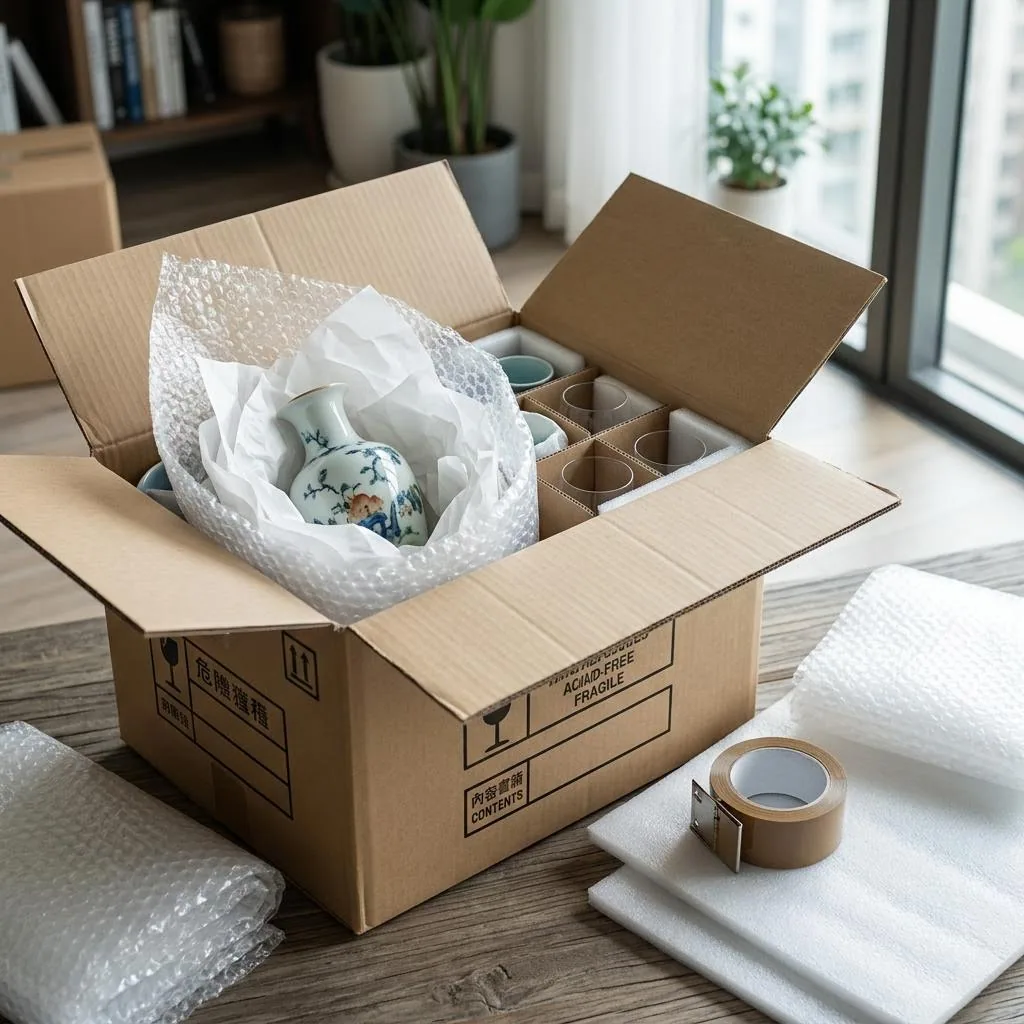
Fragile packing works best with strong cartons that match the item load; oversized boxes are harder to control and more likely to shift. Useful materials include bubble wrap, packing paper, soft filler, sealing tape, labels and dividers; if needed, use partitions so cups and plates do not strike each other inside the box.
Do not rely on old newspaper for everything, because it offers only light cushioning and limited protection for heavy or sharp-edged items. Before you start, clear a table, prepare scissors, tape and labels, and pack room by room so you are less likely to miss an item or rush the wrapping.
Wrap each item and fill every gap
Wrap each fragile item on its own and add extra protection around corners, handles and protruding parts. Plates and bowls are better packed one by one, then separated with dividers; glass items should not be packed too tightly, and the box bottom, sides and top should all be cushioned so nothing can slide around.
After closing a box, give it a gentle shake. If you hear movement or knocking, there is still too much empty space and more filler is needed. Keep the weight balanced, place heavier items lower, and avoid overfilling; using more smaller boxes is usually safer than forcing too many fragile items into one carton.
Label clearly and confirm the handover details
Every box should be labeled with its contents, such as glass, ceramics or mirror, and marked fragile, this side up and with the destination room. For especially delicate boxes, add a short contents list so unloading is easier and the mover knows which cartons must never be stacked underneath heavier ones.
Before moving day, confirm which boxes cannot be stacked, which items need two people to carry, and whether tight corridors, stairs or lift entrances may create problems. If the building has moving-hour restrictions, floor protection rules or management registration requirements, prepare these in advance so the move is not delayed.
Check movement on the way and inspect again after arrival
During carrying and loading, avoid sudden stops, sharp turns and any dropping from height. Pay extra attention on stairs, around door frames and at corners; fragile boxes should stay upright where possible, and heavy cartons should never be placed on top of them during transport.
After arrival, check the outer boxes for dents, torn corners, dampness or loose tape before opening them. Count the boxes against your list, then inspect glass surfaces, edges and joints for cracks; if you find damage, photograph it immediately and follow up with the mover and any relevant party as needed.
Common mistakes, limits and when to call a professional
The most common mistakes are mixing fragile items with general clutter, leaving too much empty space, forgetting labels, or wrapping items too thinly because of time pressure. Another frequent issue is underestimating weight, which makes boxes too heavy to lift safely and increases the chance of drops or injuries during carrying.
For oversized mirrors, valuable artwork, special display pieces with wiring or items that need dismantling, ask a qualified professional to handle the technical side first. If you are unsure about the packing method, the stair route or whether an item is suitable for self-moving, request a moving plan and written confirmation before committing.
Frequently Asked Questions
Do fragile items always need bubble wrap when moving?
Not always, but they do need enough cushioning. Bubble wrap, packing paper, dividers and filler can be combined depending on the item; the key is to wrap each piece, fill the box, and prevent movement and impact.
Can glassware and plates go in the same box?
Yes, but they should not be packed loosely together. Wrap each piece separately, use dividers, keep heavier items lower, and add cushioning around the sides to reduce rubbing and impact.
Is it okay to label fragile boxes only in English?
It is better to label clearly in both Chinese and English, with fragile and this side up markings. Clear labels help avoid misplacement and reduce the chance of boxes being stacked incorrectly.
What should I do if a box is damaged on moving day?
Do not rush to bring it inside. Check whether the contents have shifted or been damaged, take photos of the outer box and the item condition, and handle important items separately before carrying them upstairs.
Which fragile items should I tell the mover about first?
Tell them first about large mirrors, valuable artwork, oversized glass items, special display pieces and anything that needs dismantling. Give the dimensions, weight and location, and ask for written confirmation of the handling plan.


