MOVING TIPS & ADVICE
Five Packing Mistakes to Avoid When Moving Home
Key answers
Good packing starts with sorting by weight, fragility and room use. Choose the right box size, leave no empty gaps, protect surfaces properly and label everything clearly to reduce breakage, confusion and last-minute stress on moving day.
Sort by weight and purpose before choosing box size
Do not start packing by throwing whatever is nearby into the first box you see. Sort items by weight, fragility and how soon you will need them after the move. Books, tools, tableware, clothing and electrical accessories should be packed separately so you can unpack in a practical order.
As a rule, heavy items belong in smaller, sturdier boxes, while lighter items can go into larger ones. Try to keep each box to one category where possible, because mixed contents can make the box unstable and harder to carry safely.
Avoid overloading heavy items and leaving too much empty space
One of the most common mistakes is putting books, bowls or small appliances into an oversized carton. A box that is too heavy may collapse before it even reaches the door, and a failed bottom can spill items and cause injury. Every box should stay within a weight that can be lifted steadily.
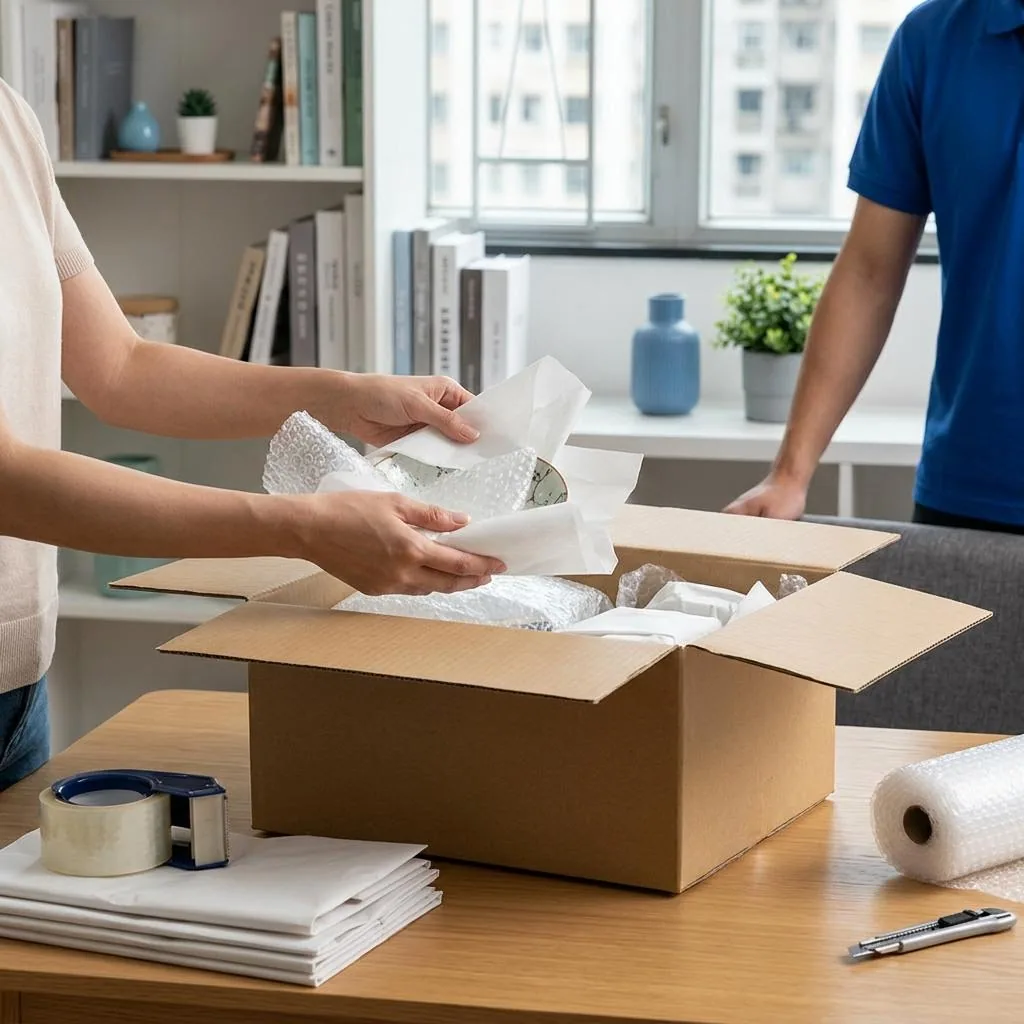
Too much empty space is also a problem. Items move during transport and can strike each other, especially glass, ceramics, frames and small appliances. After packing, fill the gaps with bubble wrap, packing paper, towels or filler paper so the contents stay fixed in place.
Protect furniture surfaces instead of taping directly on them
Some people tape directly onto wood grain, lacquered surfaces or appliance shells to secure doors or drawers, but removing the tape later can pull off the finish or leave stubborn residue. This is especially risky for veneer, gloss coating and other delicate surfaces.
A safer approach is to wrap the surface first with stretch film, packing paper or suitable protective material, then secure the outer layer with tape. For moveable parts, use straps or soft ties as temporary restraint. If an item is valuable or has a fragile finish, ask the mover in advance how they recommend packing it and request written confirmation of what you should prepare yourself.
Use proper cushioning for fragile items
Old clothes and towels can help fill space, but they should not be the only protective material. Plates, glassware, photo frames, light fittings and ornaments can still break if they are wrapped only in soft clothing and then hit each other during transit, especially at edges and corners.
Wrap fragile pieces individually and stand them upright rather than stacking them flat. Use dividers, bubble wrap or paper pads to separate each item, then mark the box clearly as fragile and note the correct upright side and destination room. This helps movers place the box properly and makes unpacking much easier.
Label boxes clearly and check them before handover
Without clear labels for contents, room and fragility, unpacking becomes messy and time-consuming. Label each box with its destination room, main contents and unpacking priority, such as kitchen items, winter clothes or documents. Keep the same labelling style across similar boxes so you can sort them quickly at the new home.
Before handover, check for crushed corners, loose tape, dampness or visible deformation, especially if the move involves a long route or any transfer. If a box already looks weak, ask for repacking or a stronger box before it is loaded. Also confirm that the box count matches your inventory so nothing is missed.
When to ask for moving help
If you have many items, narrow stairs, a long carrying route or heavy pieces such as wardrobes, bed frames, pianos or safes, packing everything on your own is often slow and error-prone. In these cases, make a short inventory, pack in priority order and ask the mover about box sizes, packing advice, access limits and how the items will be checked on arrival.
Before booking, confirm whether any electrical, gas, structural or specialist technical work must be handled by qualified professionals, and do not attempt high-risk tasks yourself. If you are unsure whether an item can be packed at home, send photos to the mover and ask for written confirmation on whether it can be moved, whether special packing is needed and what you should prepare in advance.
Frequently Asked Questions
What are the most common packing mistakes when moving home?
The most common mistakes are overloading large boxes with heavy items, leaving too much empty space, failing to cushion fragile items properly and not labelling boxes clearly. These all increase the risk of damage and confusion.
Can books, bowls and clothes go in the same box?
It is not recommended. Books are heavy, bowls are fragile and clothes are light, so mixing them can make the box unstable and increase the chance of damage. Pack them separately whenever possible.
Can old clothes replace bubble wrap?
Old clothes can help as extra filler, but they should not fully replace proper cushioning. Fragile items such as glass, ceramics and frames still need enough packing paper or bubble wrap to stay protected.
How can I tell if a box is fit for moving?
Check for moisture, crushed corners, loose bottom flaps and visible bending. If the box feels soft or distorted, replace it instead of risking a collapse during the move.
How should I ask a mover about packing requirements?
Prepare a list with photos of your items and ask which boxes you should provide, whether extra protective wrapping is needed, which items require special handling and how to confirm the box count on moving day. Important points should be confirmed in writing.


