MOVING TIPS & ADVICE
Moving Box Packing Tips: How to Reduce Damage
Key answers
To reduce damage, pack by weight and fragility, use the right box size, add proper cushioning, fill voids, and check every box before sealing.
1. Choose the right boxes and packing materials first
Before you start packing, sort items by weight and shape instead of reusing any old box at hand. Used supermarket boxes may be damp, misshapen, or weak at the corners, so they can fail when stacked or lifted. In general, use clean, sturdy moving boxes that match the load: small boxes for heavy items, larger boxes for light and bulky ones.
Prepare tape, bubble wrap, packing paper, towels, or clean clothes as cushioning. Do not rely only on newspaper, because ink can stain surfaces. For glass, ceramics, or electronics, use multiple layers of protection and an outer buffer. If you are unsure whether an item should go in a box, sort it by material and weight first, then decide on the packing method.
2. Keep heavy items low and light items on top
When packing, place heavier and firmer items at the bottom, such as books, files, cookware, or small storage containers. Put lighter and more compressible items on top, such as clothing, blankets, or pillows. This reduces crushing damage and keeps the box stable when it is lifted or carried.
Do not overfill a box until it bulges. Once the carton loses its shape, the flaps are harder to seal and the box is more difficult to stack safely. Also avoid making any single box too heavy, especially if there are stairs, narrow corridors, or tight turns, because excess weight increases the risk of strain and dropped boxes.
3. Wrap fragile items one by one and separate them
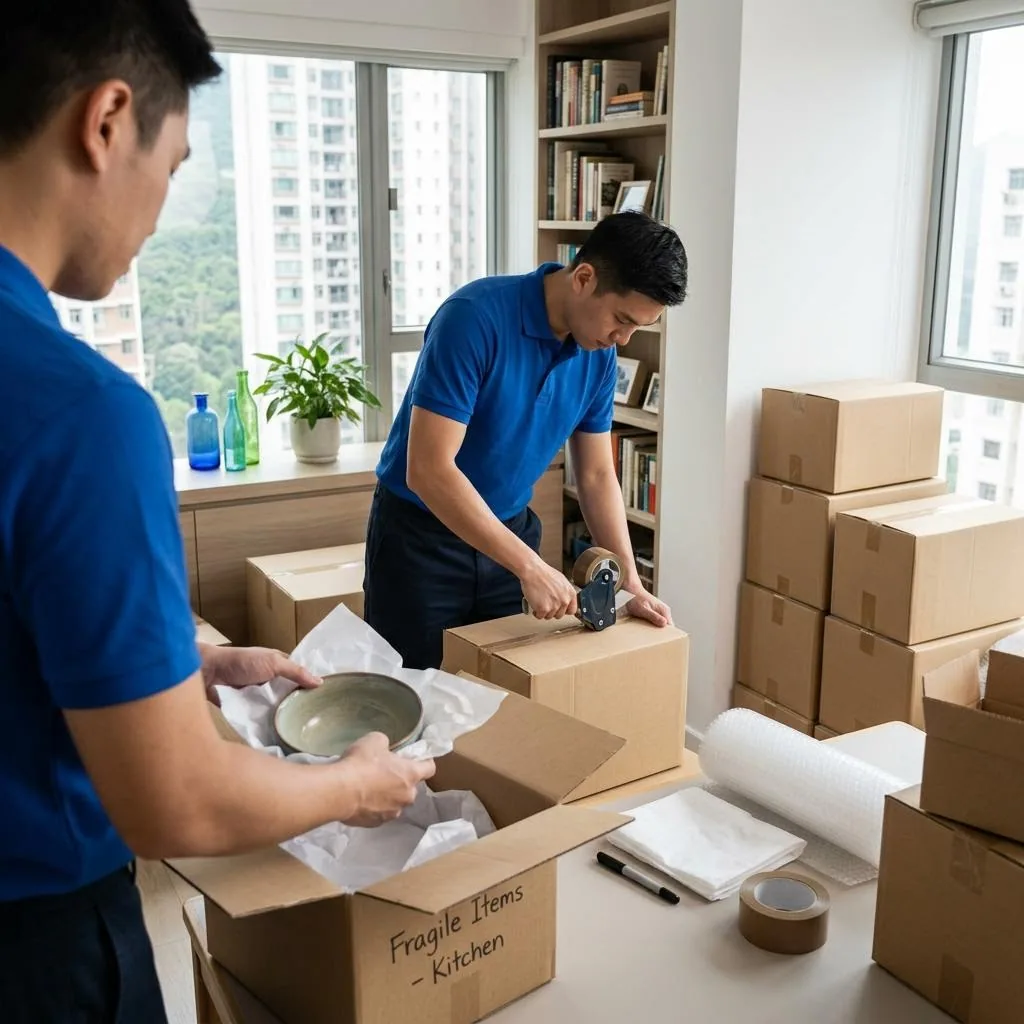
Fragile items such as bowls, glasses, photo frames, and ceramic decor should be wrapped individually before being placed in a box. Cups should be packed according to the wrapping method used, while plates are usually safer when stored upright rather than stacked flat in a tall pile, with cushioning between each piece.
Line the bottom, sides, and top of the box with soft material such as towels, bubble wrap, or crumpled paper. Before sealing, gently shake the box. If you hear items knocking together, there is still too much empty space or not enough separation, and the packing should be adjusted before transport.
4. Fill voids so items do not shift in transit
Damage often happens not from a direct drop but from movement inside the box. That is especially true for irregular items, appliance accessories, toys, or collectibles, where gaps are easy to create. Use soft filler to keep the contents locked in place so they do not strike each other while the box is being carried or loaded.
You do not need to buy all new materials. Clean towels, T-shirts, socks, and bed linen can work well as fillers, as long as they are dry and will not scratch surfaces. If one box contains different kinds of items, use cardboard dividers and mark the box clearly with notes such as 'Fragile' or 'This Side Up' so movers can handle it correctly.
5. Check every box before and after sealing
Before sealing, check three things: whether the box is intact, whether the weight is reasonable, and whether there is enough cushioning inside. Use tape to reinforce the bottom and top seams, especially for heavier boxes or longer moves, so the flaps do not open when the box is lifted.
After sealing, make sure the label is clear and shows the room, contents, fragility, and whether the box should be opened first. When you arrive at the new home, place the box on a stable surface before opening it. If a box looks damp, dented, or misshapen, inspect it before stacking it higher.
6. When to consider help from a moving team
If your home has many books, glass decor, valuable collections, bulky furniture, or a stair-only route, DIY packing often takes much longer and mistakes become more likely. In that case, sort items in advance and make a list of anything important, then ask the moving team about packing arrangements, the loading process, and any limits that should be confirmed in writing.
If electrical reconnection, gas appliances, medical devices, structural disassembly, data recovery, or other specialist technical work is involved, it should be handled by qualified professionals rather than attempted as DIY. If you want a team to pack for you, request written confirmation of the service scope, packing responsibility, arrival plan, and terms so expectations are clear before moving day.
Frequently Asked Questions
What is the most common packing mistake when moving?
The most common mistakes are using weak or oversized boxes, putting heavy items too high, leaving too much empty space, and failing to wrap fragile items individually.
Do fragile items always need bubble wrap?
Not always, but they always need enough cushioning. Bubble wrap, packing paper, towels, or clothing can all work if the items cannot bump directly into each other.
Can books and clothes go in the same box?
Yes, but not in a messy mix. Books should sit at the bottom, and clothes can be used as filler or placed on top. If the box becomes too heavy, split it into separate boxes.
How can I tell if a packed box is secure?
Gently shake the box. If you hear knocking or feel the contents shifting, there is still too much movement and you need more filler or better separation.
What should I do first after arriving at the new place?
Place boxes in the correct rooms according to their labels, check for dampness, dents, or damage, and only then open them. Fragile boxes should be handled first.


