MOVING TIPS & ADVICE
What to Do When Old Bubble Wrap Has Gone Flat: Proper Packing for High-Risk Fragile Items
Key answers
Flat or deflated bubble wrap has very little cushioning left. For moving day, identify high-risk fragile items first, then use suitable padding, proper separation, and secure box packing to reduce breakage, scratches, and pressure damage.
Why flat bubble wrap is unreliable
Bubble wrap protects items by trapping air in sealed bubbles and absorbing impact. Once the bubbles are flattened, deflated, or repeatedly folded, the sheet may still look usable, but the cushioning space is almost gone. During a move, damage often comes from stacked pressure, sudden braking, and repeated jolts, not just from a single drop.
For fragile items, old flattened bubble wrap should only be treated as a light outer anti-scratch layer. If you can feel the hard shape of the item through the wrap, or the bubbles collapse immediately under hand pressure, it is better to replace it with fresh material.
High-risk items one: tableware, glassware, and tea sets
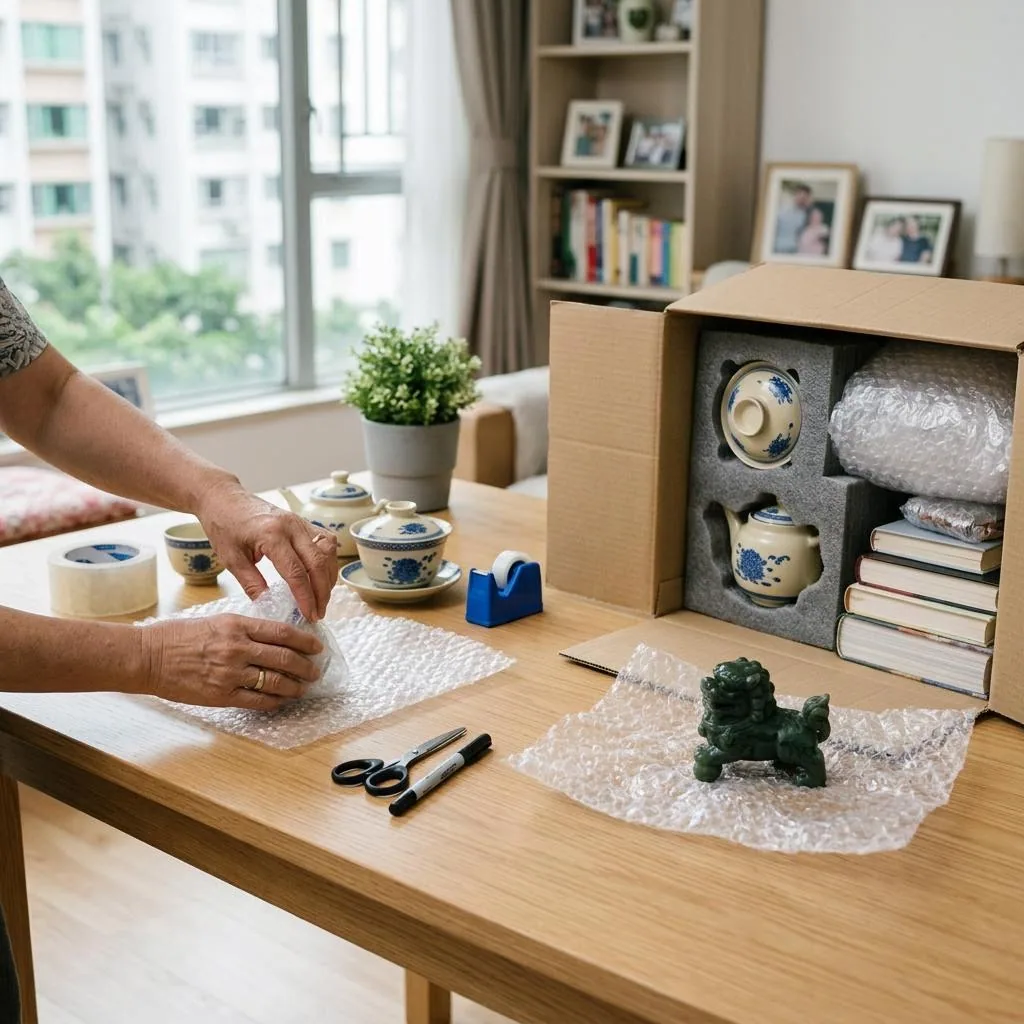
Bone china, glass cups, crystalware, and delicate tea sets are especially vulnerable to side pressure and edge impacts. A common mistake is to wrap an entire set with one old sheet of bubble wrap and place it neatly into a box. If there is too much empty space inside, cups and handles can knock against each other during transport and crack before they break completely.
A better method is to separate each item with soft paper first, then wrap every piece individually with at least two layers of intact bubble wrap. Light paper padding can be placed inside cups for support. Keep each item separate, line the bottom of the box with cushioning, and fill all gaps so the contents cannot slide around.
High-risk items two: screens, tablets, and precision electronics
TVs, computer monitors, tablets, and cameras are sensitive to panel pressure, corner impact, and vibration. Even if the outside looks fine, internal damage can still appear as black spots, cracks, or display problems. For these items, the key is not simply wrapping them once, but preventing any direct pressure on the screen or body.
If you do not have the original box, switch the device off, disconnect it, and remove loose accessories first. Cover the surface with a soft protective layer, then place it in a rigid box and secure it so it cannot move. Screens are best kept upright, with extra edge protection and no heavy objects stacked on top.
High-risk items three: marble, glass tabletops, and mirrored furniture
Marble tables, glass coffee tables, mirrored cabinet doors, and stone-look tabletops are large, heavy, and rigid. Their weakest points are usually the corners and edges. If old bubble wrap is used loosely around these areas, a narrow staircase turn, lift entrance, or corridor corner can easily cause chipping, edge cracks, or a full break.
Check whether the item can be dismantled first; if so, move it in parts. Protect the corners carefully, wrap the flat surface with intact cushioning, and secure it so the packing does not loosen in transit. Also measure doorways and movement routes in advance to avoid forceful contact.
How to choose practical packing materials
Besides bubble wrap, you can combine foam sheets, corrugated cardboard, packing paper, and filler paper. Foam sheets are useful for surface protection and scratch resistance, corrugated cardboard works well for separating flat items, and filler paper helps remove empty space inside the box. Different materials serve different purposes, so no single material should do everything.
When choosing materials, check thickness, resilience, and whether the sheet is still intact. If the wrap is creased, torn, damp, or already flattened, the protection drops noticeably. Before packing, group items by type, separate fragile goods from heavy ones, and label boxes clearly with their contents and orientation.
What to check before and after the move
Before departure, make sure every box is fully sealed, the weight is manageable, and the bottom is secure. Fragile boxes should not be overpacked, because heavy cartons are more likely to crush contents when carried. After arriving, open fragile boxes first and check each item for cracks, chips, and scratches before putting anything on shelves or into storage.
If you are moving many glass items, artwork, or oversized furniture, or if your route includes narrow stairwells, long corridors, or repeated turns, prepare a full inventory and confirm packing requirements, access routes, and entry limits with the mover in advance. Electrical reconnection, gas work, structural dismantling, and other technical tasks should be handled by qualified professionals.
Frequently Asked Questions
Can I still use old bubble wrap if it looks intact?
If the bubbles are flat, deflated, or hard to the touch, it should not be used as the main protection for fragile items. It may only serve as a light outer scratch layer, not as real cushioning.
Which items should not be packed with flattened bubble wrap?
Bone china, glass cups, crystal items, screens, tablets, mirrors, and marble tabletops should not rely on flattened bubble wrap. These items need proper cushioning and edge protection instead.
How should I pack a monitor if I do not have the original box?
Power it down, disconnect it, remove loose accessories, cover the screen with a soft layer, place it in a rigid box, secure it so it cannot move, and keep it upright during transport.
What is the most important protection for marble or glass furniture?
The corners and edges matter most. Those points are most likely to take the first impact, so they should be reinforced before the whole item is wrapped and moved through tight spaces.
How can I tell whether a box has enough cushioning inside?
When you gently shake the box, the contents should not shift or knock against each other. If you can feel empty spaces or hard contact, add more paper padding or cushioning material immediately.


