MOVING TIPS & ADVICE
Items Most Commonly Lost During a Move and How to Prevent It
Key answers
The items most often lost in a move are small valuables, documents, dismantled parts and easy-to-miss clutter. Separate, label and check them early to reduce mistakes, mix-ups and last-minute losses.
Understand where loss usually happens during a move
Most moving losses do not happen because an item was literally carried away and vanished. They usually happen when packing, temporary placement, dismantling and handover all overlap, so things get put in the wrong place, mixed into another box, or left behind during the final clear-out. In Hong Kong, compact homes mean you need to check every corner, including the entryway, under beds, top of cabinets, storage rooms, helper rooms and kitchen drawers.
Instead of waiting until after the move to search item by item, divide belongings in advance into four groups: carry yourself, hand over the same day, open later, and keep aside for now. Put the most important items in one fixed bag or clear box, and let one person do the final check. That is far more reliable than last-minute verbal reminders.
Keep small valuables separate and under personal control
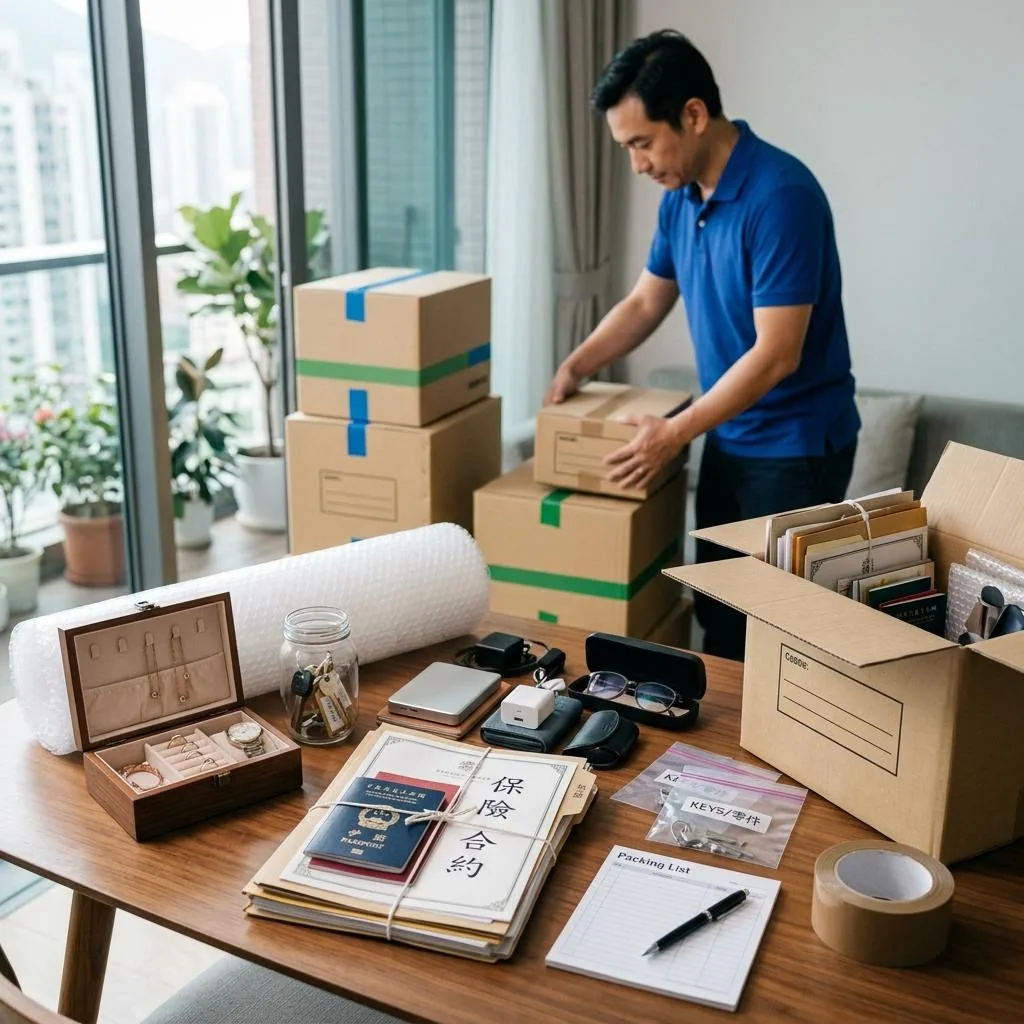
Jewellery, watches, cash, transit cards, credit cards, identity documents, passports and daily-use electronics are small but easy to lose in moving chaos. They should not go into ordinary cartons, and they should not be left in drawers or shoulder bags that will be opened and closed repeatedly during loading. Otherwise, they can easily be treated as ordinary clutter.
A better approach is to prepare one valuables list for move day and keep those items with the family, or lock them away before leaving the old home. Small accessories such as chargers, earphones, power banks, camera cards and adapters should also be packed separately and labelled clearly so you do not discover missing parts only after unpacking.
Sort documents and agreements before packing
Tenancy agreements, title documents, insurance papers, bank records, school papers, medical records, work contracts and tax letters are all easy to misplace during a move. Some need originals, and some take time to replace, so if they end up inside a mixed box, finding them later can be slow and stressful. This can also affect handover, renewal or application processes.
A practical method is to split paperwork into three groups: needed immediately, needed soon, and file later. Store them in a waterproof document pouch or an A4 file box, and label the outside clearly. If you have similar papers in multiple sets, add an outer label and keep a backup copy. For any official, legal or medical use, still keep the original yourself.
Dismantled parts are easy to overlook
Wardrobes, beds, dining tables, bookshelves and racks often need to be dismantled, and that is where screws, nuts, hinges, shelf pegs, foot pads and small tools get lost most easily. These pieces may look minor, but if even a few are missing, the furniture may not be reassembled properly at the new home, or it may wobble and sit unevenly.
The safest practical method is to keep the parts for each item in its own sealed bag, then attach the bag to that furniture or place it in the matching numbered box. Do not mix parts from different items, and do not leave small bags loose at the bottom of a large carton. If original fittings are already incomplete, check before moving whether replacements are needed.
Check storage corners, old-home areas and shared access items
Many losses are not in the main rooms but in easy-to-forget places such as air-conditioner remotes, mailbox keys, building access cards, car park permits, terrace keys, the backs of cleaning supplies, cabinet tops and under beds. If the old home has a storage room, helper room, roof space or mini storage unit, each area should be photographed and cleared one by one, or you may only discover the missing item after handover or lease return.
Use a final room-by-room checklist: inside cabinets, on cabinet tops, drawer bottoms, windowsills, corners, under sinks, beside the washing machine, behind the fridge, on shoe cabinets, under beds and on the balcony. If building cards or shared access keys are involved, confirm whether they must be returned to management or the owner representative so you do not create handover problems.
Use a checklist and real-time verification at handover
Even well-packed items can still go missing if there is no check during loading and handover. This is especially true when several households move on the same day, the vehicle makes multiple trips, or the cartons look similar. If box markings are unclear, confusion becomes much more likely. Every carton should show the room name, a number and whether it is fragile, while important boxes should have a clear marker for quick identification.
Once you arrive, first confirm the total box count, then check that the valuables bag, document bag, parts bag and daily essentials are all present before dealing with non-urgent boxes. If something is missing, ask immediately and keep your photos and checklist. If you need help from the mover, request written confirmation of how they will handle the issue. For extra protection, also refer to a moving timeline, box labelling guide and starting checklist.
Frequently Asked Questions
Which items are most often lost during a move?
The most common losses are small valuables, documents, dismantled parts, chargers and shared-access items such as keys, cards, remotes and small electronics.
Should valuables be packed into boxes with everything else?
No. Keep them in a separate bag or fixed box under personal control so they do not get mixed with ordinary household items.
How can I avoid leaving important documents behind?
Sort them by purpose, pack them in a document pouch or file box, label them clearly and carry the originals yourself when needed.
What is the best way to store screws and fittings from furniture?
Keep the fittings for each item in a separate sealed bag, label it, and attach it to the matching furniture or box.
What should I do first if something is missing after moving in?
Check the checklist and box numbers right away, trace where you last saw the item, then contact the mover and keep a record of the situation.


