MOVING TIPS & ADVICE
Moving Box Packing Guide for Beginners: Practical Steps from Sorting to Sealing
Key answers
The easiest way to pack for a move is to sort first, use small boxes for heavy items and larger boxes for light ones, cushion fragile items properly, then label each box clearly and check them against a list.
Sort first, pack later, and avoid last-minute chaos
Do not start by stuffing random items into any box you find. Sort everything by room, use, and urgency first, then group items into keep, discard, and pack later piles. This reduces duplicate handling and helps you decide what must be packed first.
If time is limited, begin with clothes, books, documents, kitchenware, and cleaning items. Starting one or two weeks before moving day gives you more control over what stays, what goes, and what can be packed without rushing.
Choose the right box size and control the weight
The basic rule is simple: heavy items go in small boxes, light items go in larger boxes. Books, files, canned food, and similar dense items should not be packed into a large carton until it becomes too heavy to lift or the bottom weakens.
When packing, estimate the weight before you fill the box. Avoid overfilling to the top, but do not leave too much empty space either. If you have unusually heavy or awkward items, ask the mover what packing method is suitable before you seal the box.
Protect fragile and irregular items before they go in
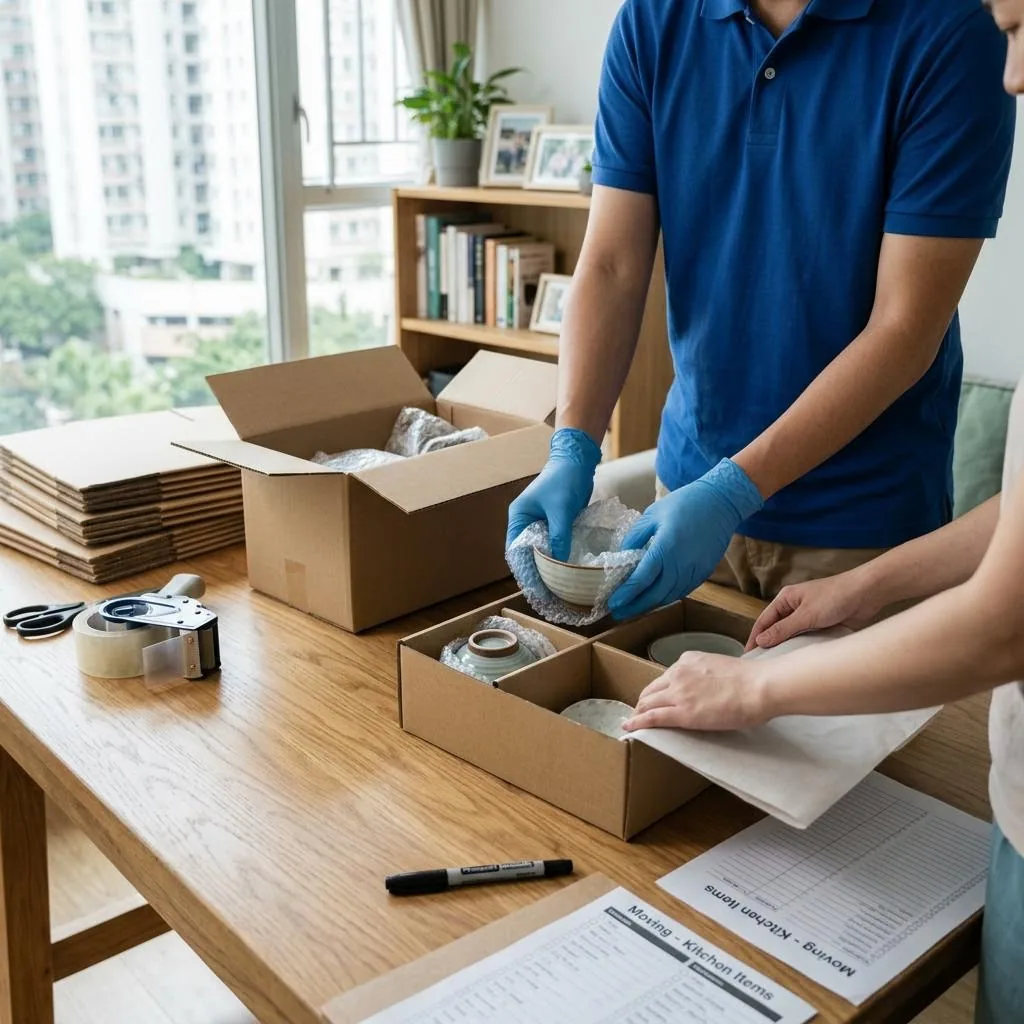
Glassware, plates, frames, and small decor items should be wrapped individually with paper, bubble wrap, or towels before being placed in the box. Add padding on the base and along the sides so the items do not press directly against the carton edges.
For liquids, cleaners, and toiletries, check that caps are tightened and place them in sealed bags for extra protection. Keep accessories, screws, and manuals together in one clearly labelled pouch so nothing is missing when you unpack.
Pack by room so unpacking is faster
Packing by room makes both delivery and unpacking easier. Keep kitchen items, bedroom items, and study items in separate boxes whenever possible, and avoid mixing unrelated categories in the same carton. This helps movers place boxes in the right room faster.
Try to keep each box to one main category, such as daily toiletries, winter clothing, or cups and tableware. Prepare one separate essentials bag for your ID, charger, towel, medication, and a change of clothes, and keep it out of the main cartons.
Seal and label boxes clearly before moving day
Do not seal only the middle seam. Reinforce the bottom and every joint properly so the box does not open when it is lifted. After sealing, shake the box lightly; if you can hear items shifting, add padding, but do not overfill it until the carton bulges.
Write the destination room, contents, and priority on the top and at least two sides of each box. A simple numbering system, such as living room 01 and bedroom 02, plus one master list, makes checking much easier when the boxes arrive.
Useful checks on moving day, and when to ask for help
Before departure, check the number of boxes, fragile labels, floor access, and lift arrangements. Leave enough space for the mover to carry boxes in and out safely. At the new place, confirm the large and essential items first, then unpack the rest. If something is damaged or missing, record it with photos immediately and follow the moving paperwork and terms.
If you are busy, have many belongings, or need help organising books, clothes, and kitchenware, you can ask a moving company for packing assistance. Before booking, confirm the scope, who provides the materials, what items are excluded, and whether electrical wiring, gas, structural work, medical items, or other specialist tasks must be handled by licensed professionals.
Frequently Asked Questions
What should I do first before packing for a move?
Sort everything first, then decide what to keep, donate, or discard. Grouping items by room and use is faster and helps you control the weight of each box.
Why should heavy items go into small boxes?
Books, files, and canned food become too heavy quickly. Smaller boxes reduce the risk of bottom failure and make lifting safer and easier.
Do fragile items need to be wrapped one by one?
Yes, that is recommended. Wrap them individually and add padding so they do not knock against each other during transport.
What should I write on each box label?
Write the destination room, contents, and priority, and add a number if possible. Labels on the top and two sides are easier to read when boxes are stacked.
What if I do not have time to pack everything myself?
You can ask a mover for packing support and confirm the service scope and limits in advance. Specialist technical work should still be handled by qualified professionals.


