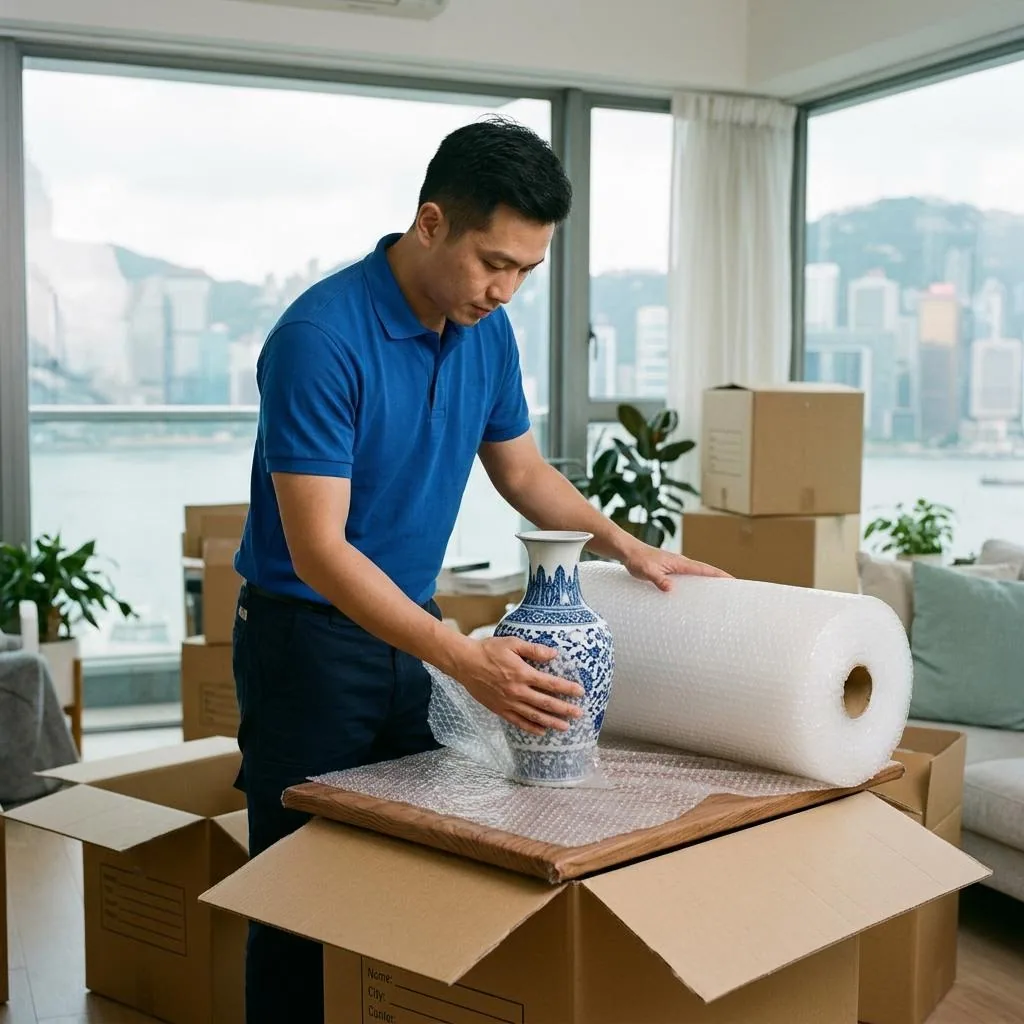
MOVING TIPS & ADVICE
Bubble Wrap Orientation: Should the Bubbles Face Inward or Outward When Packing Fragile Items?
Key answers
For most fragile items, the bubbled side of bubble wrap should face the item, with the smooth side facing out. That helps cushioning and sealing, but safe packing also depends on layer count, box fill, bottom padding, and whether anything can move inside.
Get the direction right first: which side should touch the item
When packing fragile items, the bubbled side of bubble wrap should usually face the item, while the smooth side faces outward. The point is to let the cushioning layer touch the surface directly and help absorb bumps during handling and transport.
The reverse side is not useless, but for uneven shapes or items with corners it often fits less neatly and can loosen more easily. Before wrapping, flatten the sheet, measure enough length for full coverage, and leave extra material for corners and edges.
Why bubbled side inward is more practical: fit, cushioning, less wear
The air pockets are designed to absorb local pressure, which is useful for cups, plates, frames, lampshades, and electronic casings that are delicate or prone to scratches. Wrap with the bubbles against the item and add extra layers at corners, handles, and raised parts.
The smooth side is easier to tape down and to layer with an outer wrap or box. If the wrap is too loose, the item can still shift inside the bag or carton, so the goal is not just direction but a firm fit, stable placement, and minimal empty space.
One layer is often not enough: cover layers, corners, and the base
For glass, ceramics, plaster ornaments, and similar fragile items, one thin layer is usually not enough. Add layers according to weight and shape, especially for thin edges or sharp corners, and secure seams with tape without sticking tape directly to easily marked surfaces.
Before boxing, line the bottom with cushioning material, then place the wrapped item upright or in a stable position. If the carton is too large, fill the gaps with crumpled paper or suitable packing fillers so the item cannot slide or knock against the sides.
Different items need different wrapping methods: cups, electronics, frames
For cups and plates, wrap each item separately and place padding between stacked pieces; do not stack them directly. If a cup has a hollow interior, fill it lightly with soft paper before wrapping. Frames and flat items need extra corner protection because corners take the first impact.
For electronic items, power them off, remove accessories, and place them in their original box or a suitable inner box before adding bubble wrap. If there are movable parts inside, secure them first; otherwise, even thick outer wrapping may not stop internal damage.
Check before and after boxing: shake, press, and inspect
After wrapping, gently shake the carton. If you hear movement, knocking, or feel obvious shifting, the fill is insufficient and needs to be reinforced before sealing. Also consider weight balance, because one heavy side can tilt the box and increase strain during carrying.
On arrival, check whether the outer carton is crushed, damp, torn, or has loose tape before opening it slowly. If the box is already damaged, take extra care when opening so the contents do not fall out. Even if the outside looks fine, fragile items should still be checked one by one.
When to ask for professional moving help: many, heavy, or especially fragile items
If you are moving a large number of fragile items, collectibles, or objects that are large and irregularly shaped, basic home packing may not be enough. Stair carries, village-house access, or cross-district moves also require advance planning for packing order, route, and unloading position.
For high-value, oversized, structurally delicate, or specially handled items, ask the mover clearly about packing responsibility, carrying method, stair limits, any extra protective materials, and arrival inspection steps. Electrical reconnection, gas work, medical equipment, structural dismantling, and other specialist technical tasks should be handled by qualified professionals, and important details should be confirmed in writing.
Frequently Asked Questions
Should bubble wrap face bubbles inward or outward?
In most cases, the bubbled side should face the item, with the smooth side facing out. That gives better contact, cushioning, and easier taping.
Is one layer of bubble wrap enough for fragile items?
Usually not. More fragile items often need two or more layers, depending on shape, weight, and transport distance, plus proper box filling.
Do I need to fill every gap inside the box?
Not every tiny gap, but any space that lets the item move should be filled. Movement inside the box is what often causes damage.
Can I wrap electronics directly in bubble wrap?
You can use it as an outer cushion, but power the item off and protect the surface and corners as needed. If there is an original box or suitable inner box, that often helps stabilize the item better.
When should I ask a moving company for help?
If you have many fragile items, oversized pieces, stair carries, or high-value and especially delicate objects, ask in advance and request written confirmation of the packing and moving arrangement.


