MOVING TIPS & ADVICE
How to stop liquids from leaking when moving: bottle sealing, packing, and pre-move checks
Key answers
Liquids can leak, stain clothes, and damage electronics during a move. Seal each bottle properly, pack it upright in a separate bag, and do a final check before loading to reduce the risk of spills.
Start with the bottles most likely to leak
When moving, cleaning products, soy sauce, shampoo, lotion, and alcohol-based items can leak because of vibration and pressure. Simply tightening the cap is not enough, because cap threads, pump tops, and flip lids may loosen during transport.
Check each bottle first: clean off residue, and separate any item with a cracked cap, warped lid, or signs of dripping. For irritating or corrosive liquids such as bleach or drain cleaner, follow the product label and safety instructions carefully and do not mix them with ordinary household goods.
Seal the bottle, the pump, and the outer layer
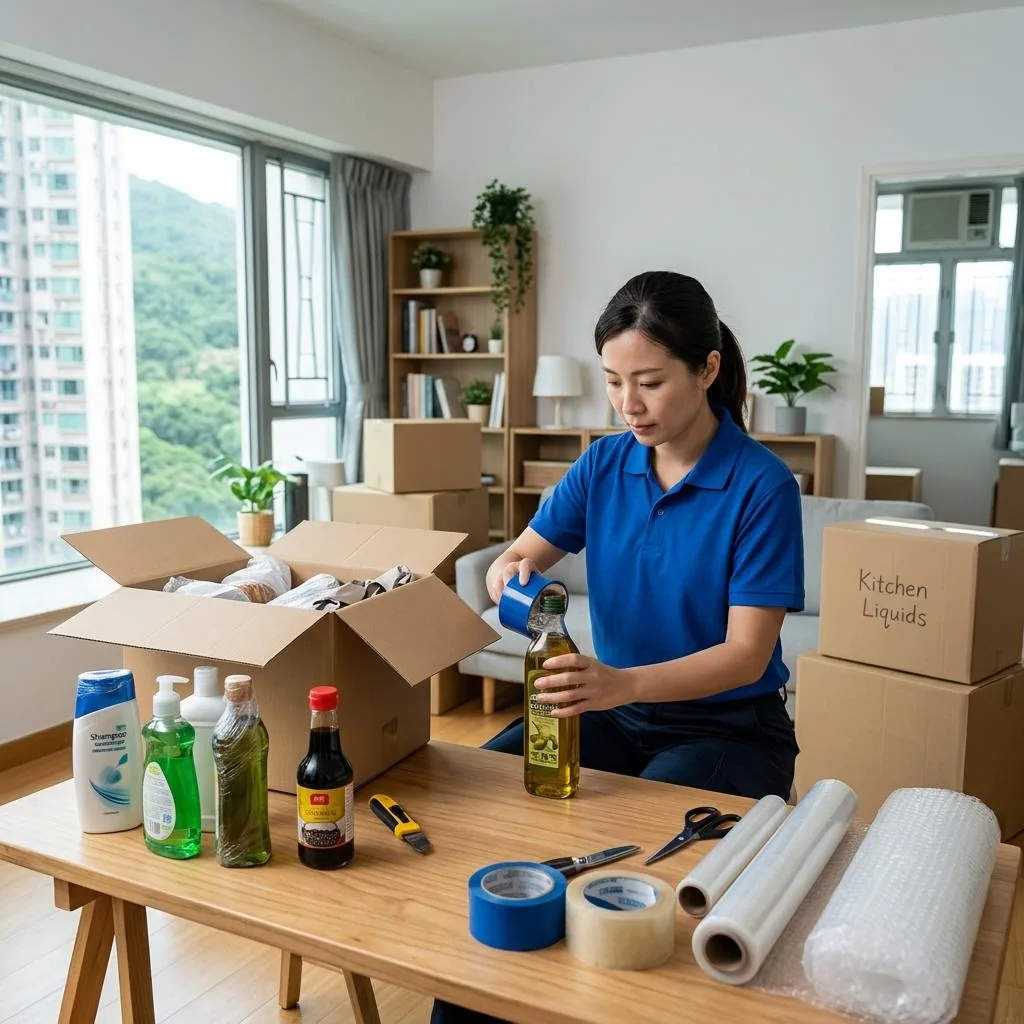
For ordinary liquids, place a thin layer of cling film or plastic wrap over the bottle opening, then screw the cap back on tightly. After that, secure the cap-to-bottle joint with tape so it is less likely to turn loose from friction during the move.
For pump bottles, lock the pump if possible. If it cannot be locked, tape the pump head in place to stop accidental dispensing under pressure. Once the opening is sealed, put the bottle into a zip bag or separate plastic bag and press out as much air as possible before closing it.
Packing rule: upright, separated, and cushioned
Liquids should always be packed upright. Do not lay them flat, turn them upside down, or wedge them into corners as if they were padding. Line the bottom of the box with a thick plastic bag, paper, or towels, then separate bottles with crumpled paper, bubble wrap, or soft cloth.
Group by type instead of trying to save space. Kitchen sauces, bathroom cleaners, and personal care products should go into separate boxes whenever possible. Put heavier or riskier items lower down, and do not mix them with books, clothes, extension cords, or paper goods.
Pre-move checks that reduce spills and accidents
Do a quick check before and after packing. Look for cracks in the bottle, crooked caps, or pump heads that rebound badly. You can also turn the bottle briefly to test for leakage; if any liquid appears, do not force it into a box and repackage it first.
If you have many half-used bottles at home, sort them early and use up items that are nearly finished where practical. On moving day, avoid packing liquids with valuable electronics, cameras, documents, or bedding, because cleanup is usually more costly than using one extra box.
Handle hazardous liquids with extra care
Bleach, drain cleaner, stain remover, and strong cleaning agents may be corrosive, irritating, or produce strong fumes. Read the label and warnings before moving them. Do not repack them into food containers, and do not combine different products, as that can create a dangerous reaction.
If a bottle has already leaked, is broken, or you are unsure whether it can be moved safely, isolate it first and reduce the risk before deciding what to do next. For chemical items, medical products, or other regulated materials, consult the appropriate qualified professional or relevant authority instead of trying risky DIY handling.
Before handing items to movers, ask clearly and confirm in writing
If you want a moving company to help with liquid packing, ask in advance how they classify the items, whether any bottles must be emptied first, and which items they will not accept. Request written confirmation of the scope, especially for items that are prone to leakage or staining, so there is no misunderstanding on arrival.
Before handover, check again for wet marks on the outer box, loose caps, and labels such as upright or liquid. When you unpack at the new home, open the highest-risk box first on top of old towels or newspaper so that any small spill can be handled immediately and nearby items stay clean.
Frequently Asked Questions
What is the safest way to pack liquids for a move?
Check for cracks and loose caps first, seal the opening, tape the cap in place, put the bottle in a zip bag, and pack it upright with cushioning material.
Is tightening the cap enough?
Usually not. Vibration and pressure during transport can loosen pump tops and lids, so you need outer sealing and separate packing as well.
Can liquids be packed with clothes?
It is not recommended. If a bottle leaks, clothes can absorb smell and stain easily, so keep liquids in separate boxes or bags.
What should I do with bleach or drain cleaner before moving?
Read the label and safety instructions first, do not mix them with other chemicals, and do not use food containers for repacking. If the bottle leaks or breaks, stop and reduce the risk before handling it further.
What should I ask the mover before handing over liquids?
Ask whether they accept liquids, how they want them packed, how they will be separated, and request written confirmation if there is any special arrangement.


